Glædelig Jul! Welcome to the seventh day of your Christmas Advent Calendar course.
In our last lesson, we experienced the peaceful and purifying traditions of Finland, from the sacred Christmas sauna to the lucky almond hidden in the morning's rice porridge. We also touched upon the folklore of elves and spirits who were believed to share in the celebrations.
Today, we'll delve deeper into that folklore as we travel to Norway and Denmark. Our lesson focuses on one of Scandinavia's most iconic and beloved mythical figures: the Nisse. You will learn about this creature's origins as a temperamental farm guardian and its evolution into the cherished Christmas gift-bringer, the Julenisse.
1. Who is the Nisse? The Original Household Spirit
Before becoming associated with Christmas, the Nisse (or Tomte in Sweden) was a central figure in Scandinavian folklore, a household spirit believed to inhabit and protect a farmstead.
Let's start with a brief article that introduces this fascinating creature.
Scandinavian Christmas Traditions: The Nisse and Its Role as Farm Guardian and Christmas Helper
The article 'Scandinavian Christmas Traditions: The Nisse and Its Role...' from Arctic Portal provides a great introduction to the Nisse, its various names, and its fundamental role as a farm guardian.
Please read the introduction and the section 'Origins and Role of the Nisse'. Focus on the Nisse's appearance, its pre-Christian origins, and its dual role as a helper and a potential troublemaker.
As you've just read, the Nisse is a complex character. It's not just a cheerful gnome but a powerful, ancient spirit with a strong sense of justice. The name itself varies, but the core characteristics remain consistent across the region.
To explore these variations and the Nisse's appearance in more detail, let's watch a short video.
Tomte, Nisse, Nis Puk - The House Spirit in Scandinavian and Northern German Folklore
The video 'Tomte, Nisse, Nis Puk' from The Norse Witch channel offers a detailed look at the folklore of these house spirits.
Watch from 03:04 to 05:41. This segment covers the different names for the spirit (Nisse, Tomte) and describes its classic appearance: small, old, bearded, and wearing a distinctive red, pointy hat.
2. A Temperamental Helper: The Rules of Cohabitation
Living with a Nisse was a transactional relationship. The spirit would protect the farm and its inhabitants, ensure the livestock thrived, and even help with chores. However, this support was conditional. The Nisse had a notoriously short temper and demanded respect.
The rules for interacting with a Nisse were simple but strict: treat the farm and its animals well, work hard, and, most importantly, provide the proper offerings. Failure to do so could result in anything from minor pranks to severe retribution.
The Wikipedia article on the 'Nisse' provides extensive detail on its behavior. These sections describe its helpful duties and its fearsome temper.
Please read the sections titled 'As helpers' and 'Wrath and retribution'. Note the kinds of work the Nisse would perform and the consequences of offending it.
The folklore is filled with cautionary tales. A lazy farmhand might get a thrashing, cows' tails might be tied together, or worse, an animal could be harmed or killed if the Nisse felt slighted.
3. The All-Important Offering: Christmas Porridge
The most crucial tradition for keeping a Nisse happy was leaving it a special treat, particularly on Christmas Eve. This offering was a bowl of porridge, known as risengrøt in Norway and risengrød in Denmark.
This wasn't just any porridge. It had to be made just right, and it absolutely had to be served with a generous pat of butter on top.

The story of the missing butter is one of the most famous tales in Nisse folklore. Let's return to The Norse Witch video to hear it.
Tomte, Nisse, Nis Puk - The House Spirit in Scandinavian and Northern German Folklore
This segment explains the critical importance of offerings, especially the porridge with butter. It recounts the classic tale of what happens when a Nisse thinks the butter is missing.
Watch from 05:41 to 08:38. Pay close attention to the consequences of neglecting the offering or trying to trick the spirit.
This tradition of leaving food for a household spirit is an ancient one, and as we'll see, it has echoes in modern Christmas customs far beyond Scandinavia.
Christmas Before Christ: Yule & Other Northern European Traditions
The video 'Christmas Before Christ' briefly touches on the Nisse, connecting the practice of leaving offerings for these spirits to the modern tradition of leaving cookies and milk for Santa Claus.
Watch from 30:20 to 31:47. This clip places the Nisse within the broader context of household spirits and their role in winter celebrations.
4. The Christmas Transformation: The Julenisse
In the 19th century, the image of the Nisse began to change. As Christmas traditions evolved across Europe, the old farm guardian merged with figures like Saint Nicholas and Father Christmas. The Nisse became the Julenisse (Yule Nisse) or Julemand (Yule Man)—the bringer of Christmas gifts.
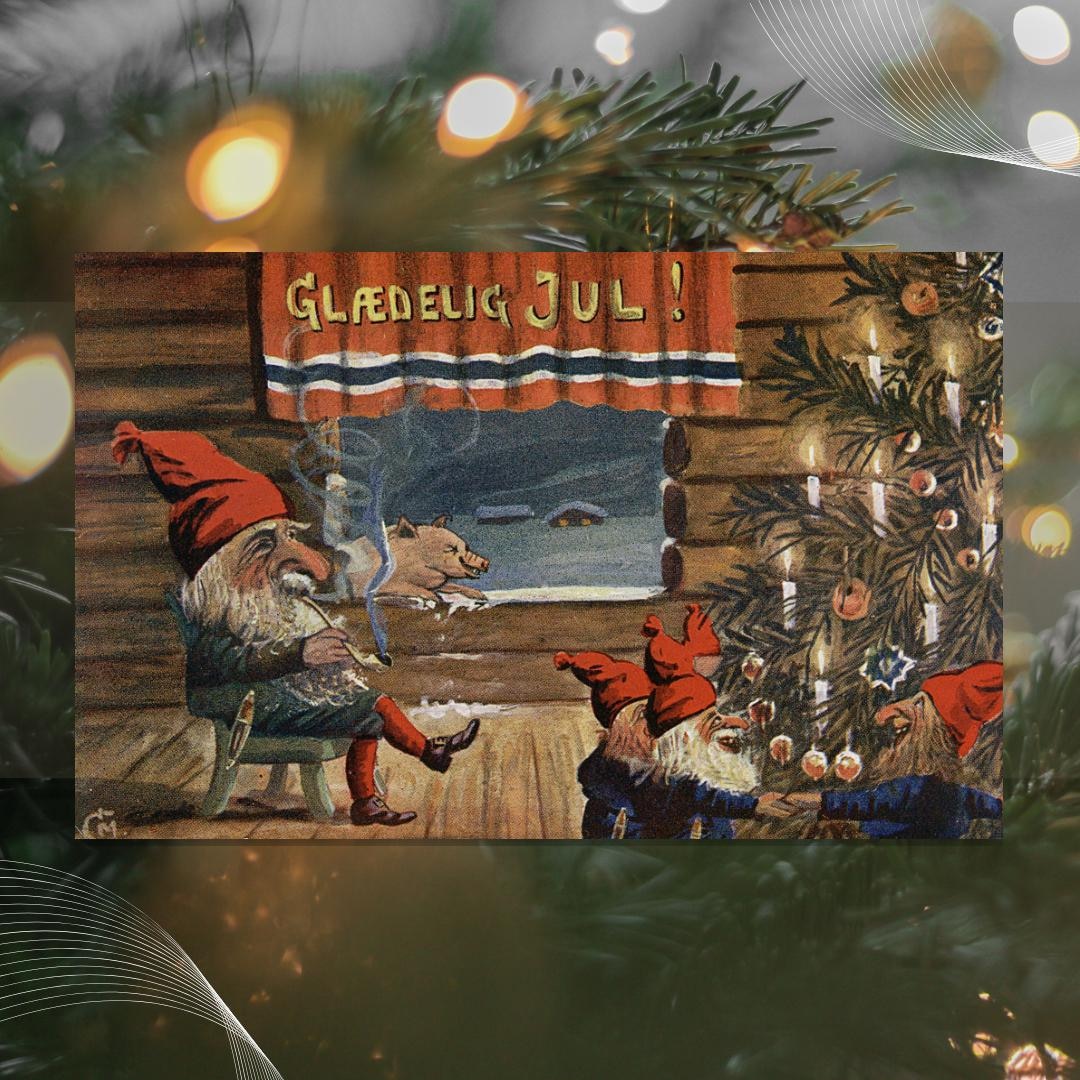
This transformation was heavily influenced by artists and writers who reimagined the spirit in a new, festive role.
The Wikipedia article on 'Nisse' explains this evolution in detail, showing how the farm spirit was reinvented as a Christmas character.
Please read the sections 'Modern Julenisse' and 'Present-day'. Focus on how the Nisse's appearance and role changed, and how the Scandinavian gift-bringer still differs from the American Santa Claus.
Today, the Julenisse is an indispensable part of a Danish or Norwegian Christmas. Unlike the American Santa who lives at the North Pole and comes down the chimney, the Julenisse is believed to live nearby—in the barn, the attic, or a forest—and delivers presents in person by knocking on the front door on Christmas Eve.
This tradition is often kept alive through televised Julekalender (Yule Calendar) series—advent calendar shows with 24 episodes, many of which feature Nisser as main characters. This is a lovely parallel to the goal of your own course!
Conclusion
Our visit to Norway and Denmark has introduced us to the Nisse, a figure that perfectly embodies the blend of ancient folklore and modern celebration in Scandinavian Christmas. From a feared and respected farm spirit to a beloved gift-bringer, the Nisse remains a powerful symbol of tradition, generosity, and the magic that fills the cold winter nights.
Key Takeaways:
- The Nisse (in Norway/Denmark) or Tomte (in Sweden) is a household spirit from pre-Christian folklore, acting as a guardian of the farm.
- It has a dual nature: helpful and protective when respected, but mischievous and vengeful if offended.
- The most important tradition was leaving out a bowl of Christmas porridge with butter to show gratitude and ensure the farm's prosperity.
- In the 19th century, the Nisse evolved into the Julenisse, the Christmas gift-bringer who delivers presents in person on Christmas Eve.
Preview of the Next Lesson:
We now leave the snowy landscapes of the north and travel south to Italy. In our next lesson, we will explore a completely different set of traditions, from the grand Christmas Eve seafood feast known as the Feast of the Seven Fishes to the tale of a friendly witch, La Befana, who delivers gifts in January.