Hello! Welcome back to your "Christmas Advent Calendar" course.
Today, we're opening the second door, which takes us from the Netherlands to the heart of Central Europe. The festive season here is defined by the magical glow and enticing aromas of its world-famous Christmas markets.
Introduction
In our last lesson, we traced the journey of Sinterklaas from a Dutch tradition to the American Santa Claus. We saw how a celebration can be deeply rooted in a specific culture while also influencing others. Today, we'll immerse ourselves in another iconic European tradition.
This lesson will focus on the key traditions of Christmas markets (Weihnachtsmärkte or Christkindlmärkte) in Germany and Austria. By the end, you'll be able to identify their typical foods, drinks, and festive activities, giving you a real taste of a classic European Christmas.
Let's step into the festive bustle of a German Christmas market.
1. The Origins and Atmosphere of Christmas Markets
Christmas markets are more than just a place to shop; they are a centuries-old tradition. Their origins trace back to the Late Middle Ages in the German-speaking parts of Europe, not as festive gatherings, but as practical winter markets where townspeople could stock up on supplies for the cold months ahead.
To understand how these markets evolved, let's start with a short video that covers their history and what you can expect to find there today.
German Christmas Markets 101: The Ultimate Guide | Feli from Germany
The video 'German Christmas Markets 101' by Feli from Germany provides an excellent overview of the history and general atmosphere of these markets.
Please watch from the beginning until 02:52 to learn about the historical origins, and then from 05:08 to 06:23 to get a feel for the modern market atmosphere. Focus on how their purpose shifted from purely transactional to social.
As the video explains, what began with a December market in Vienna in 1296 gradually transformed. Over the centuries, craftsmen began selling toys and treats, and by the 1700s, the markets had become the social hubs we recognize today.
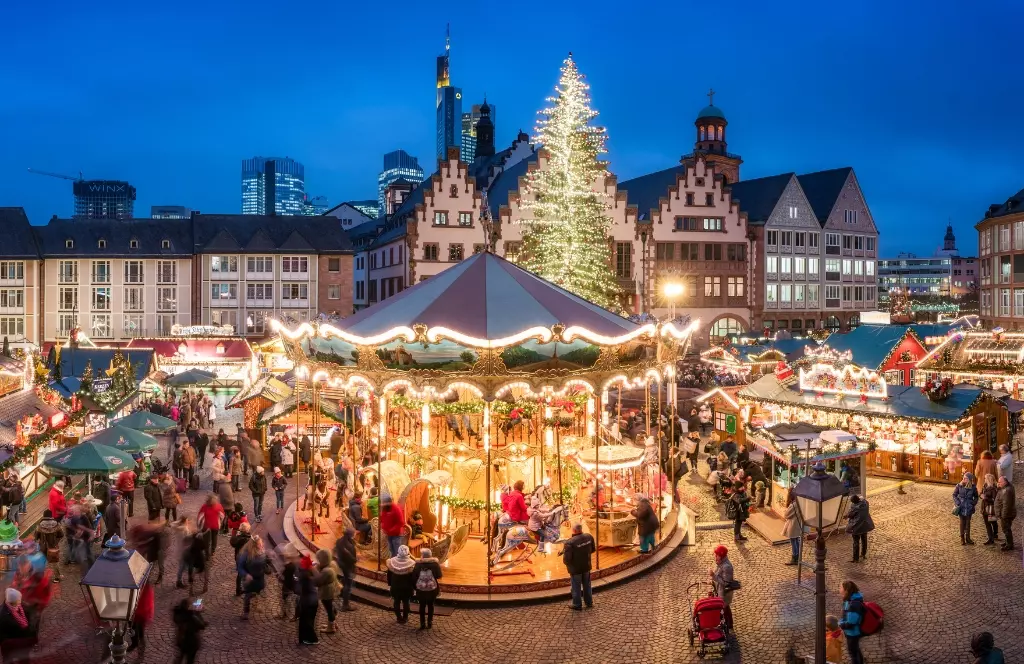
Modern markets are a collection of charming wooden stalls where local vendors and artisans sell everything from handcrafted Christmas ornaments and warm winter clothing to unique gifts. However, the main draw for many is the food, drink, and chance to socialize in a festive setting.

2. A Feast for the Senses: What to Eat and Drink
The cold winter air at a German or Austrian Christmas market is filled with the smells of roasting chestnuts, spiced wine, and grilled sausages. The food and drink are central to the experience, designed to be enjoyed while standing and chatting with friends.
Let's take a quick food tour to see some of these classics in action.
What to eat and drink on a German Christmas Market
The 'What to eat and drink on a German Christmas Market' video from DW Food takes us on a tour in Bremen, showcasing some of the most popular savory and sweet options.
Watch from 00:21 to 06:12. As you watch, notice the variety of foods, from regional specialties like 'Grünkohl' to universal favorites like sausages and sweets. Pay attention to the segment on drinks, especially the famous 'Glühwein'.
The videos give a great overview. Let's break down the must-try items you'll find.
The Drinks: Staying Warm and Merry
The most iconic Christmas market beverage is Glühwein (literally "glow wine").
- What it is: Hot mulled red wine, sweetened and infused with spices like cinnamon, cloves, and star anise. White wine versions (weißer Glühwein) are also common.
- Variations: You can often get it mit Schuss ("with a shot") of rum or amaretto. A spectacular version is the Feuerzangenbowle, where a rum-soaked sugarloaf is set on fire above the mug, caramelizing as it drips into the wine.
- The Mug System: Drinks are served in festive, collectible ceramic mugs. You pay a deposit (Pfand) of a few euros for the mug, which you can either return to get your money back or keep as a souvenir.
- Other Drinks: Other popular choices include Eierpunsch (a warm, creamy egg liqueur drink similar to eggnog), various fruit Punsch (often with rum), and non-alcoholic Kinderpunsch for children.
Savory Staples
To counter the cold and the sweetness of the drinks, there is a hearty selection of savory foods.
| German Name | Description |
|---|---|
| Bratwurst | The classic grilled sausage, served in a bread roll (Brötchen). You'll find many regional varieties. |
| Kartoffelpuffer | Fried potato pancakes, often served with applesauce (sweet) or sour cream (savory). Also called Reibekuchen. |
| Flammkuchen | A very thin, crispy flatbread, like a pizza, traditionally topped with cream, onions, and bacon. |
| Käsespätzle | Germany's answer to mac and cheese: soft egg noodles mixed with cheese and topped with fried onions. |
| Champignons | Mushrooms sautéed in a large pan with garlic and herbs, often served with a creamy garlic sauce. |
Sweet Treats
No visit is complete without indulging in something sweet.
| German Name | Description |
|---|---|
| Gebrannte Mandeln | Candied, roasted almonds. Their sweet smell is everywhere. |
| Lebkuchen | A traditional gingerbread-like cookie, often sold as large, decorated hearts with messages. |
| Maronen | Roasted chestnuts, served warm in a paper cone. A simple, classic Christmas snack. |
| Kaiserschmarrn | A fluffy shredded pancake, mixed with raisins, dusted with powdered sugar, and served with fruit compote. An Austrian specialty, but popular in Bavaria too. |
| Apfelstrudel | Apple strudel. Layers of thin pastry filled with spiced apples. Another Austrian classic beloved in Germany. |
For a more exhaustive list of the culinary delights you can find, the article "41 German Christmas Market Food & Drinks to Try" is a fantastic resource to browse. The Austrian markets share many of these traditions but also have their own specialties, like Germknödel (a steamed yeast bun with plum jam) and Ofen Kartoffel (a baked potato with various fillings), as detailed in "Must-Try Austria Christmas Market Food".
3. Activities and a Touch of Folklore
While food is a huge part of the experience, Christmas markets are also about the festive atmosphere and activities.
German Christmas Markets 101: The Ultimate Guide | Feli from Germany
Let's return to 'German Christmas Markets 101' to look at the social aspect and a darker piece of local folklore.
Watch from 09:11 to 11:12. The first part discusses the social nature of the markets. The second introduces the fascinating figure of Krampus.
As the video highlights:
- Socializing: Markets are a popular place to meet friends and family after work or on weekends. The lack of seating encourages mingling and wandering.
- Shopping: They are ideal for finding unique, handcrafted gifts that you wouldn't see in large department stores.
- Themed Markets: Many cities host multiple markets, each with a unique theme, such as medieval markets or LGBTQ+-friendly "Pink Christmas" markets.
And, of course, there's Krampus. In the southern parts of Germany and especially in Austria, the festive season includes a visit from Saint Nicholas's demonic companion. This horned, furry creature from pre-Christian Alpine folklore is said to punish naughty children. In many towns, you can witness a Krampuslauf (Krampus run), a parade of people in terrifying Krampus costumes—a thrilling and slightly scary contrast to the otherwise cozy Christmas atmosphere.
Conclusion
Today we've opened the door to the German and Austrian Christmas markets, a tradition that beautifully combines history, community, and festive indulgence. They are a cornerstone of the holiday season in Central Europe, creating a unique atmosphere of warmth and cheer during the darkest time of the year.
Key Takeaways:
- Christmas markets originated in the Middle Ages as practical winter markets and evolved into major social and festive events.
- The experience is defined by a rich variety of traditional foods and drinks, most notably Glühwein, sausages (Wurst), potato pancakes (Kartoffelpuffer), and gingerbread (Lebkuchen).
- Beyond the food, markets are centers for socializing, shopping for artisanal crafts, and enjoying festive entertainment, sometimes including thrilling folklore traditions like the Krampus runs.
Preview of the Next Lesson:
For our third advent calendar door, we will travel to the United Kingdom. We'll discover some quintessentially British Christmas traditions, from the snap of a Christmas cracker to the cheers and boos of a holiday pantomime, and of course, a look at one of their most iconic Christmas films.