Hello! Welcome back to our fourth module, "Composing the Full Mandala."
In our last lesson, we put on our architect hats and learned how to create a high-level design plan for a multi-round mandala. We talked about establishing a geometric base and mapping out a progression from the center to the edge, much like creating a wireframe or a sitemap before building a website.
Now, we're going to layer in one of the most important principles of good design: rhythm. The goal for this lesson is to plan the visual rhythm of a mandala by alternating between simple/solid and complex/lacy rounds. We'll explore how this "pacing" creates flow, guides the viewer's eye, and transforms a flat circle into a dynamic piece of art.
1. What is Visual Rhythm in Crochet?
In web design, you strategically alternate content blocks—a simple text section, a vibrant image gallery, a clean call-to-action button—to guide a user's attention and maintain their engagement. This prevents visual monotony and creates a clear hierarchy.
Visual rhythm in a crochet mandala works on the exact same principle. It’s the planned sequence of different textures and densities that creates a sense of flow and pacing as the eye travels from the center outwards. We achieve this by alternating between two main types of rounds:
- Simple/Solid Rounds: These are the "quiet" parts of your design. They are characterized by uniform, dense stitches like single crochet (sc), half double crochet (hdc), or double crochet (dc) worked closely together. They create solid fields of color, provide structural stability, and give the eye a place to rest.
- Complex/Lacy Rounds: These are the "feature" sections that grab attention. They use a variety of techniques like post stitches, clusters, shells, puff stitches, and chain spaces to create intricate textures and open, airy patterns.
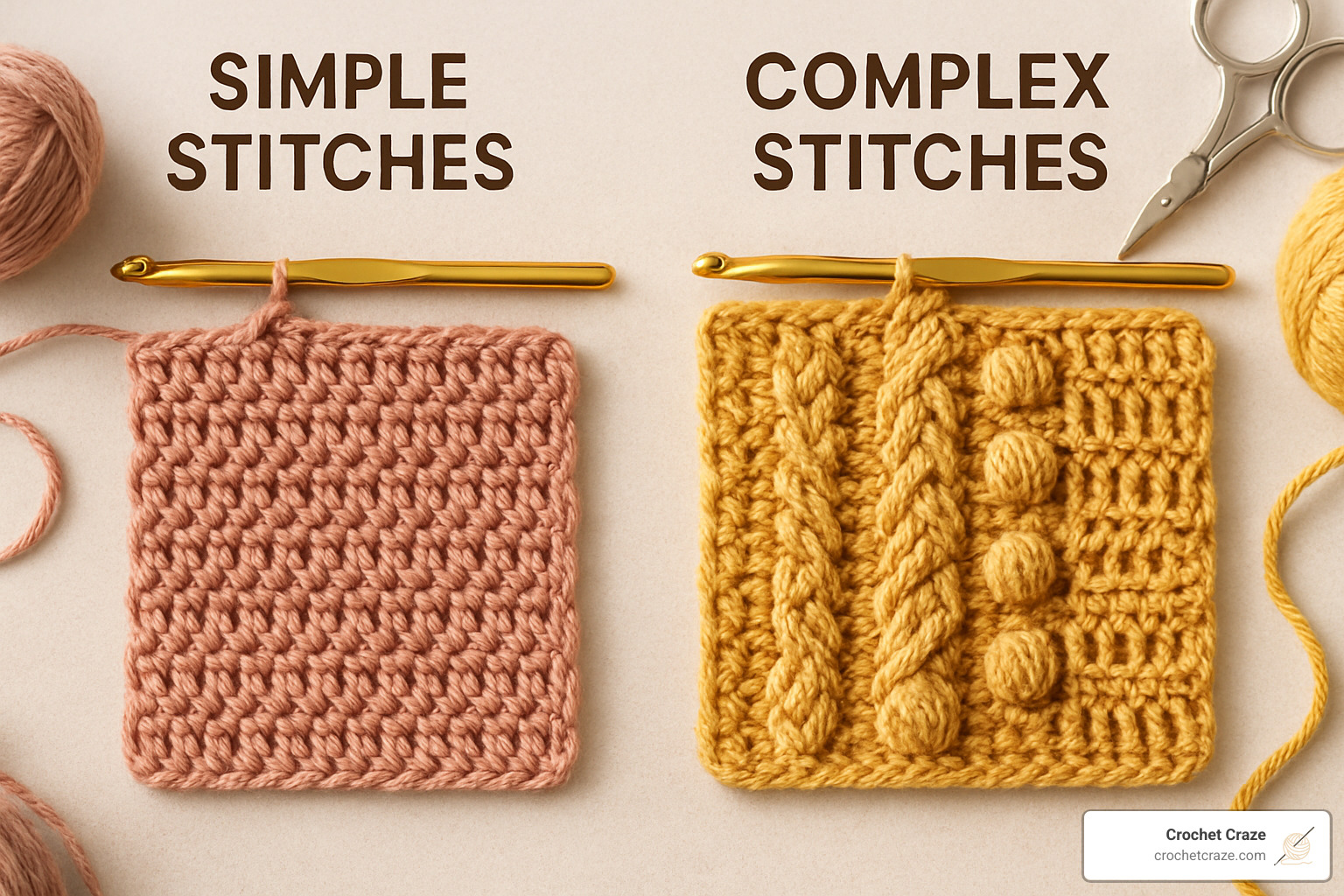
Alternating between these two types is the key to creating a design that feels balanced and intentional.
2. The Purpose of Alternation: Why It Works
Why not just make every round as intricate as possible? The strategic use of simpler rounds serves several critical functions, both aesthetic and structural.
- Creates Visual Hierarchy: Complex rounds act as focal points, drawing the eye. The simpler rounds that frame them act like whitespace in graphic design—they reduce clutter and make the featured elements pop.
- Establishes Pacing and Flow: A constant barrage of complex stitches can be visually overwhelming. Alternating creates a pleasing ebb and flow, a "story" that unfolds as you look from the center to the edge. A simple round acts as a pause or a transition, preparing the viewer for the next "wow" moment.
- Provides Structural Integrity: This is a crucial practical benefit. Lacy, openwork rounds can sometimes be flimsy or cause the work to ripple. A solid round worked before or after can add stability, pull everything back into a flat plane, and provide a firm foundation for the next set of stitches.
3. Deconstructing the Rhythm in Existing Patterns
The best way to understand this principle is to see it in action. It's like looking at the code of a well-designed website to see how the developer structured the components. We're going to "view source" on a few mandala patterns.
First, let's look at a text-based pattern that explicitly mentions this concept.
The 'Easy Shimmer Mandala' pattern from CelticKnot Crochet is a perfect starting point. The designer's introduction directly addresses the concept of alternating textures.
First, read the introduction section. Notice the sentence: 'It uses very basic stitches... to create solid rows alternating with lacy rows.' Next, look at the 'Instructions' for Rounds 1-6. Identify which rounds you would classify as 'solid' (dense stitches) and which are 'lacy' (relying on chain spaces).
You probably noticed that Round 1 (30 dc in a ring) and Round 4 (5 dc in each space) are the solid, grounding rounds, while Rounds 2, 3, 5, and 6 create the lacy, open effect with their chain loops. This is a classic example of creating rhythm.
Now, let's watch this principle unfold in a video tutorial.
Beautiful crochet mandala pattern full tutorial
The 'Beautiful crochet mandala pattern' video by Beyond Diary demonstrates a wonderful, flowing rhythm. As you watch, pay attention to the 'feel' of each round. Does it look dense and solid, or open and airy?
Watch the construction of the following rounds and note the contrast: Round 2 (02:25 - 03:39): Simple chain-4 scallops create a lacy, open feel. Round 3 (03:30 - 07:38): Complex front post treble crochet clusters add significant texture and visual weight. Round 5 (08:25 - 09:26): Very open and lacy, using long chain-7 spaces. This is a big 'breather' round. Round 6 (09:16 - 12:32): Another complex, textured round combining chain spaces and front post stitches.
The video shows how the design breathes—it expands with lacy rounds and then gathers itself with more complex, textured rounds.
Let's look at one more example that highlights the structural benefit of this technique.
Crochet: Joined By Heart Mandala Full Tutorial | The Loopy Stitch
In the 'Joined By Heart Mandala' tutorial by The Loopy Stitch, the creator explicitly points out how a simple round helps correct the shape of a complex one.
Watch these two segments back-to-back: Round 5 (11:58 - 17:24): This is a complex round with treble clusters and post stitches. At the end (around 17:00), the creator notes that the work 'does cup a little bit.' Round 6 (17:24 - 20:12): This is a very simple round of just single crochet. Notice her comment at 19:55: 'you can see that it has flattened out the round number five a lot.' This is the perfect demonstration of a simple round providing structural support for a complex one.
4. Planning Your Own Visual Rhythm
Now, how do we incorporate this into the design plan we learned about in the last lesson? It's as simple as adding another column to our planning table to define the rhythm.
Let's update our "Sunshine" Mandala plan from the previous lesson:
| Round | Design Purpose | Stitch/Technique Idea | Target Stitch Count | Rhythm Type |
|---|---|---|---|---|
| 1-2 | Center Core | R1: 12 dc in MR. R2: Inc x12. | 24 | Solid |
| 3 | Petal Base | (dc, inc) repeat. | 36 | Solid |
| 4 | Texture Feature | Popcorn stitches. | 48 | Complex |
| 5 | Breather/Separator | Plain hdc round. | 60 | Simple |
| 6 | Radial Lines | Front post stitches. | 72 | Complex |
| 7-8 | Lacy Section | V-Stitches or (dc, ch 1). |
96 | Lacy/Complex |
| 9 | Build on Lacy | Shells in ch-1 spaces. | 108 | Complex |
| 10 | Decorative Edge | Picot stitches. | 120 | Complex/Lacy |
By consciously labeling each round's purpose within the rhythm, you gain much more control over the final look and feel of your project.
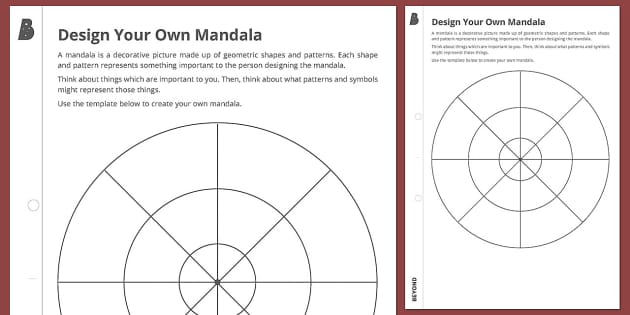
Test your understanding!
Below is a partial design plan for an 8-round mandala with 8-point symmetry. Your task is to fill in the "Rhythm Type" for the existing rounds and then suggest a stitch/technique and rhythm type for the two empty rounds (5 and 7) that creates a pleasing alternation.
| Round | Design Purpose | Stitch/Technique Idea | Target Stitch Count | Rhythm Type |
|---|---|---|---|---|
| 1 | Core | 8 dc in magic ring | 8 | |
| 2 | Solid Base | (inc) x8 | 16 | |
| 3 | Solid Base | (1 dc, inc) x8 | 24 | |
| 4 | Add Texture | (2 dc, FPtr around post below) x8 | 32 | |
| 5 | ??? | ??? | 40 | |
| 6 | Lacy Section | (V-stitch, sk 1) in every 4th st | 48 | |
| 7 | ??? | ??? | 56 | |
| 8 | Border | Scallops or picot edge | 64 |
Show answer
Here's one possible way to complete the plan, emphasizing rhythmic alternation:
| Round | Design Purpose | Stitch/Technique Idea | Target Stitch Count | Rhythm Type |
|---|---|---|---|---|
| 1 | Core | 8 dc in magic ring | 8 | Solid |
| 2 | Solid Base | (inc) x8 | 16 | Solid |
| 3 | Solid Base | (1 dc, inc) x8 | 24 | Solid |
| 4 | Add Texture | (2 dc, FPtr around post below) x8 | 32 | Complex |
| 5 | Breather/Stabilizer | (3 hdc, inc) x8 | 40 | Simple |
| 6 | Lacy Section | (V-stitch, sk 1) in every 4th st | 48 | Lacy/Complex |
| 7 | Build on Lacy | (Shells of 5dc in V-sts) x8 | 56 | Complex |
| 8 | Border | Scallops or picot edge | 64 | Lacy/Complex |
The key additions are Round 5, a simple hdc round to act as a "breather" after the textured post stitches, and Round 7, which adds a complex shell stitch to build on the lacy V-stitches of the previous round before the final border. This creates a clear Solid -> Complex -> Simple -> Complex rhythm.
Conclusion
Today, we've moved beyond the basic structure of a mandala and into the art of its composition. By planning the visual rhythm, you are consciously guiding the experience of looking at your work.
Key Takeaways:
- Visual Rhythm is the pacing created by alternating between simple/solid and complex/lacy rounds.
- This alternation serves both aesthetic purposes (creating hierarchy and flow) and structural purposes (providing stability).
- You can deconstruct the rhythm in existing patterns to learn how experienced designers control texture and density.
- Incorporating a "Rhythm Type" into your design plan is a powerful way to ensure your finished mandala is a cohesive and dynamic piece.
You now have a deeper understanding of how to compose your rounds into a harmonious sequence. In our next lesson, we'll refine this concept further by learning how to balance the visual weight of different sections to create a harmonious overall composition. We'll discuss how to ensure that your "heavy" textured sections and your "light" lacy sections feel balanced across the entire mandala.