Introduction
In our last lesson, we examined how the route of your breath—nasal versus oral—fundamentally alters respiratory efficiency and physiology, introducing the idea that the nostrils can act as a gateway to the autonomic nervous system. Today, we delve into another powerful parameter for autonomic modulation: Ratio. This refers to the relative duration of your inhalation compared to your exhalation.
This lesson will explain the precise physiological mechanisms by which you can intentionally steer your autonomic state towards either activation or relaxation simply by altering your breathing ratio. We will explore the direct link between inhalation and the sympathetic nervous system, and exhalation and the parasympathetic nervous system. By the end of our session, you will understand not just the "how" but the deep neurophysiological "why," supported by clinical data that demonstrates the powerful effect of a prolonged expiratory phase.
The Asymmetrical Effects of Inhalation and Exhalation
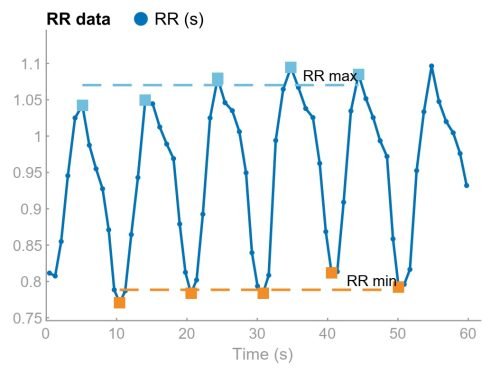
At the heart of ratio control is a phenomenon you are already familiar with: Respiratory Sinus Arrhythmia (RSA), where your heart rate naturally accelerates on the inhale and decelerates on the exhale. This isn't a biological quirk; it's a direct reflection of the autonomic nervous system's dynamic interplay with the respiratory cycle.
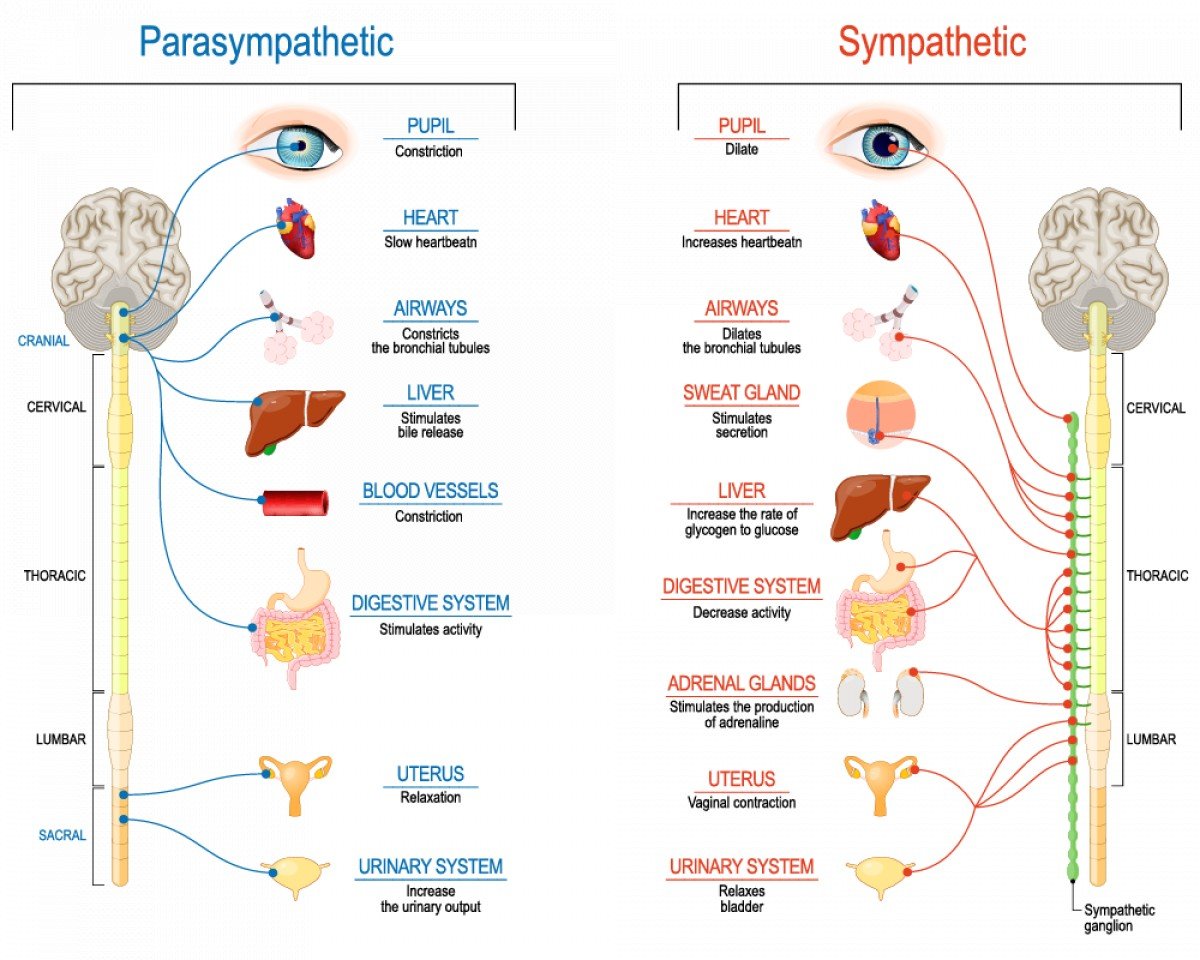
By consciously changing the ratio of our breath, we are essentially choosing to spend more time in either the sympathetic-dominant phase (inhalation) or the parasympathetic-dominant phase (exhalation).
- Inhalation: Is an active process. The contraction of the diaphragm decreases intrathoracic pressure. This mechanically reduces the inhibitory influence of the vagus nerve on the heart, allowing heart rate to increase. This phase is associated with sympathetic activation.
- Exhalation: Is typically a passive process. The diaphragm relaxes, increasing intrathoracic pressure. This stimulates the vagus nerve, which actively slows the heart rate. This phase is associated with parasympathetic activation.
The result is a rhythmic fluctuation in the time between heartbeats (the RR interval), which is the basis of Heart Rate Variability (HRV). Slow, deep breathing exaggerates these fluctuations.
The Neurophysiological Loop: SARs and Baroreceptors
The mechanical changes in the thoracic cavity during breathing trigger a sophisticated feedback loop involving two key types of sensory nerve cells (afferents) that report back to the brainstem. A 2019 paper in Frontiers in Physiology by Donald Noble and Shawn Hochman proposes a detailed model of this process.
Hypothesis: Pulmonary Afferent Activity Patterns During Slow, Deep ...
This paper provides an excellent neurophysiological model for how slow, deep breathing, and specifically the ratio, influences the autonomic nervous system. Your background in research will make the theoretical framework presented here particularly interesting.
First, read the Abstract (here) for a complete overview of the hypothesis. Next, navigate to the section "Inspiratory-Activated Pulmonary Afferents, Baroreflexes, and the NTS." Read the paragraph starting with "Sustained deep breathing". This introduces the two key players: slowly-adapting pulmonary receptor afferents (SARs), activated by deep inhales, and peripheral baroreceptors, which respond to changes in blood pressure. Continue to the next paragraph, focusing on the core mechanism: this section explains how SARs (activated on inhale) inhibit parasympathetic outflow, while baroreceptors (activated on exhale) stimulate it. Note the critical concluding sentence about "autonomic patterning." Finally, jump to the section "Optimal Parameters of Slow, Deep Breathing" and read the paragraph beginning "Future studies". This directly connects the neurophysiology to the practical application of using a prolonged exhalation to induce relaxation.
To summarize the model proposed by Noble and Hochman:
- During a long, deep inhalation, Slowly-Adapting Pulmonary Stretch Receptors (SARs) in the lungs are activated. They send signals via the vagus nerve to the Nucleus of the Solitary Tract (NTS) in the brainstem. This signal pathway ultimately inhibits the cardioinhibitory (parasympathetic) neurons, allowing the heart rate to rise—a sympathetic effect.
- During a long, deep exhalation, the SARs become silent. Simultaneously, the increase in intrathoracic pressure causes a temporary rise in blood pressure. This rise is detected by arterial baroreceptors in the aortic arch and carotid sinus. They also signal the NTS, but this pathway stimulates cardioinhibitory neurons, activating the vagus nerve to slow the heart—a parasympathetic effect.
This elegant reciprocal action explains why prolonging the exhalation is a reliable method for shifting the body into a "rest and digest" state. It maximizes the time the parasympathetic branch is dominant in each breath cycle.
Quantifying the Effect: A Clinical Trial on Breathing Ratios
This principle has been tested empirically. A fascinating study from 2017 investigated whether including a post-exhalation rest period—effectively prolonging the expiratory phase—could increase markers of parasympathetic activity. Given your expertise in clinical trial literature, you will appreciate the study's within-subjects crossover design, which cleanly isolates the variable of interest.
The researchers compared two breathing patterns, both at a rate of 6 breaths per minute:
- 5-5 Pattern: 5-second inhalation, 5-second exhalation (1:1 ratio).
- 4-2-4 Pattern: 4-second inhalation, 2-second exhalation, 4-second post-exhalation rest.
The primary outcome measure was High-Frequency Heart Rate Variability (HF-HRV), a well-established metric of vagal tone and parasympathetic activity.
Inclusion of a Rest Period in Diaphragmatic Breathing Increases ...
This paper provides direct quantitative evidence for the impact of breath structure on parasympathetic tone. I encourage you to scrutinize the methodology and statistical analysis.
Start with the Abstract (here) for a concise summary of the objective, methods, and key finding. Read the Introduction (here). It provides context on HF-HRV as a measure of autonomic balance and self-regulation. Review the Procedures section (here) to understand the experimental design, particularly the visual cues used for the 5-5 and 4-2-4 patterns. Now, examine the Results, specifically Table 4: Pairwise Contrasts. Look at the rows for HF-HRV. The comparison between the "4-2-4" stage and the "5-5" stage shows a mean difference of 0.36 with a p-value of 0.006. This indicates a statistically significant increase in parasympathetic activity for the pattern that included a post-exhalation rest. Finally, read the first two paragraphs of the Discussion (here). The authors conclude that the 4-2-4 pattern "increased the length between inhalations associated with increased vagal influence on cardiac activity and greater parasympathetic tone."
The results of this study are a powerful demonstration of the principle. By keeping the breathing rate constant but altering the structure to emphasize the expiratory phase (including the pause), participants exhibited a significant increase in parasympathetic tone. This provides a clear, data-backed rationale for using extended exhalations as a tool for relaxation and stress reduction. Techniques like 4-7-8 breathing, which we will cover later, are direct applications of this finding.
Conclusion
Today, we've established that the ratio of inhalation to exhalation is a primary lever for influencing the autonomic nervous system. This is not a vague or metaphorical concept but a direct consequence of the body's neurophysiological feedback loops.
Key Takeaways:
- Inhalation Stimulates the Sympathetic System: Driven by the activation of pulmonary stretch receptors (SARs), the inhale phase is inherently activating, leading to an increase in heart rate.
- Exhalation Stimulates the Parasympathetic System: Driven by the activation of arterial baroreceptors, the exhale phase is inherently calming, engaging the vagus nerve to slow the heart rate.
- Prolonging Exhalation Enhances Relaxation: To shift your autonomic balance towards a parasympathetic state, you can use a breathing ratio where the exhalation is longer than the inhalation (e.g., 1:2).
- Post-Exhalation Pauses Boost Parasympathetic Tone: As demonstrated in the clinical trial, including a pause after exhalation further increases the time between activating inhalations, significantly boosting markers of vagal tone like HF-HRV.
You now have a foundational understanding of four key breathwork parameters: Rate, Depth, Route, and Ratio. In our next lesson, we will briefly cover the final parameter, Posture, and examine how your body's physical orientation can influence the mechanics of your diaphragm and the efficiency of your breathing.