Welcome back. In our last lesson, we focused on the nut graf, a crucial paragraph that anchors your story by explaining its core significance. This skill helps you ensure your articles have a clear purpose from the outset.
Now, let's zoom out from individual components like leads and nut grafs to look at the entire process of refining a draft. Writing doesn't end when you have all the words on the page; that's often just the beginning. Today, you will learn to distinguish between substantive revision (structure, argument) and line editing (sentences, words). Understanding this distinction is the key to an efficient and professional editing process, helping you move your work from a rough draft to a polished, publishable article.
1. Two Stages of Editing: Architect vs. Interior Designer
Professional writers rarely try to fix everything at once. Instead, they approach editing in distinct phases. Trying to perfect a sentence in a paragraph that you might delete later is inefficient. It's like polishing the doorknobs on a house before you've confirmed the walls are in the right place.
The two primary stages are:
- Substantive Revision: This is the "big picture" edit. You act as the architect, checking the foundation, structure, and overall flow of your article. You're focused on the core message, not the specific words.
- Line Editing: This is the sentence-level edit. Here, you become the interior designer, focusing on style, word choice, clarity, and correctness to make the prose clean and impactful.
Let's watch a short video that introduces this crucial distinction using a helpful analogy.
Editing Techniques | Rhetoric & Composition | Study Hall
The video "Editing Techniques" from Study Hall provides a clear and concise explanation of the difference between revision and editing.
Watch from the beginning of the explanation at revision vs. editing. Pay attention to the pottery analogy—where revision is shaping the vessel and editing is applying the final glaze. This captures the essence of working from big to small.
As the video states, "we need to determine what meaning we're trying to convey before we can work on clarifying that meaning." This is the foundational principle of the editing process.
2. The Substantive Revision Checklist: Focusing on the Big Picture
Substantive revision, sometimes called structural or developmental editing, happens first. At this stage, you read your draft to assess its core strength and effectiveness. You're not looking for typos; you're looking for fundamental problems in the story's argument and structure.
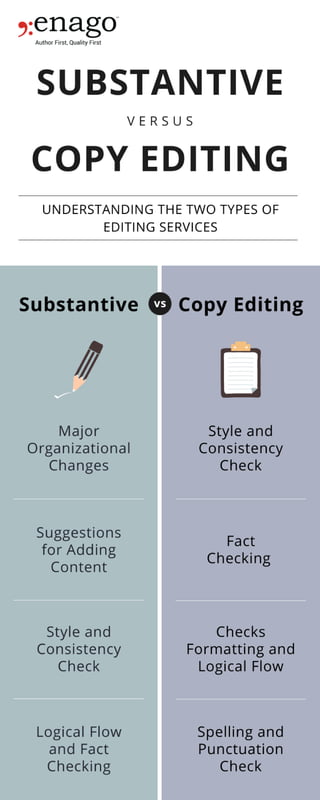
To get a more detailed understanding of what this looks like in a journalistic context, let's consult a resource that breaks down the process.
Exploring the Different Levels of Editing in Journalism
This article from Journalism.University clearly outlines the different stages of professional editing. We'll focus on the first major stage.
Read the section titled "Level 1: Structural editing (The architect’s view)." As you read, notice how the questions are all high-level. They concern the story's angle, evidence, and organization—not its grammar.
During your substantive revision, you should ask yourself questions like:
- Angle: Is the main point of the article clear and compelling? Does the lead and nut graf effectively establish this angle?
- Structure: Is the information organized logically? Does the story flow smoothly from one point to the next, or does it feel disjointed? (This is where creating a post-draft outline, as mentioned in one of our resources, can be very helpful).
- Evidence: Is the central argument well-supported with facts, quotes, and examples? Are there any logical gaps or unsubstantiated claims?
- Completeness: Is anything missing? Does the reader have all the context they need to understand the story?
Only after you are satisfied with the answers to these questions should you move on to the next stage.
3. The Line Edit Checklist: Polishing the Prose
Once the structure is solid, you can zoom in to the sentence level. Line editing (or copy editing) is where your background in linguistics will be a great asset. This stage is about making every sentence as clear, concise, and correct as possible.
Your complete self-editing checklist | Publication Coach
This checklist from Publication Coach offers an excellent, practical breakdown of the tasks involved in line editing.
Read the section titled "Copy-editing tasks." Pay attention to the concrete actions you can take, such as checking for passive voice, eliminating clichés, and ensuring antecedents are clear.
Your line editing checklist should include:
- Clarity & Concision: Can any sentences be simplified? (We've covered this in Module 1, addressing wordiness, nominalizations, etc.).
- Word Choice: Are you using strong verbs and precise nouns? Have you avoided clichés and jargon? (We'll dive deeper into this in the next module).
- Grammar & Punctuation: Are there any errors? Is everything compliant with the relevant style guide (e.g., AP Style)?
- Consistency: Are names, titles, and key terms used consistently throughout the piece?
- Rhythm & Flow: Read the piece aloud. Do the sentences flow well, or are there awkward phrases and clunky rhythms?
4. Your Turn: Diagnosing a Draft
Let's practice distinguishing between these two types of issues. Below is a rough paragraph from a fictional movie review. Your task is not to rewrite it, but to identify and categorize its problems.
Draft Paragraph:
Dune: Part Two finally hit theaters, and its a big deal for sci-fi fans. The movie was seen by many people on its opening weekend, breaking box office records. It was praised by most critics for its stunning visuals. The director, Denis Villeneuve, is at the top of his game, but some have said the plot is a little slow. It’s clear that adapting the complex book is a challenge. Overall, the film is an achievement that expands on the first movie in every way.
Now, list the issues you see under two headings: Substantive Issues and Line Editing Issues.
View the analysis
Here's a breakdown of the problems in the draft paragraph:
Substantive Issues (The Big Picture):
- Unclear Angle: The paragraph jumps between box office success, critical praise, a critique of the pacing, and the challenges of adaptation. What is the reviewer's main argument? It's not cohesive.
- Poor Flow: The ideas don't connect logically. The sentence about the director feels disconnected from the one about the slow plot that follows. The final sentence is a good summary, but it feels tacked on without being properly set up.
- Lack of a Clear Focus: Is this paragraph about the film's commercial success, its critical reception, or the challenge of adaptation? Trying to do everything at once makes it weak. A substantive revision would involve choosing one clear point for this paragraph to make.
Line Editing Issues (The Sentences & Words):
- Typo/Grammar: "its a big deal" should be "it's a big deal."
- Passive Voice: "The movie was seen by many people" is passive and weak. "Many people saw the movie" or a more specific metric would be better. "It was praised by most critics" is also passive.
- Vague Language: "a big deal," "many people," "stunning visuals." These are generic. More specific and powerful language is needed.
- Wordiness: "some have said the plot is a little slow" could be tightened to "some found the plot slow."
Notice how you would first fix the substantive issues—for instance, by deciding to focus the paragraph solely on the film's critical reception—before you would start correcting the passive voice or vague words.
Conclusion
You've now learned to separate the editing process into two distinct, manageable stages. This approach not only makes editing more effective but also less overwhelming.
Key Takeaways:
- Substantive Revision comes first. It focuses on the "big picture": the story's structure, argument, flow, and overall effectiveness.
- Line Editing comes second. It focuses on the sentence-level details: word choice, clarity, grammar, and style.
- Always fix the architectural problems (substantive) before you start polishing the furniture (line editing).
Now that we have established this crucial editing framework, we will spend the next module diving deeper into specific craft techniques. We'll begin by exploring how to write different types of compelling leads, moving beyond the summary lead to master the creative openings that are vital in entertainment journalism.