Introduction
Welcome to the first lesson of our new module, "The Psychology of Sexual Desire and Response." In the previous module, we focused on the external architecture of relationships—the models, structures, and agreements that people use to navigate consensual non-monogamy. Now, we shift our focus inward to the psychological and biological experiences that drive sexual connection.
Today's learning outcome is to describe major models of the human sexual response cycle, including how context and relationship factors modulate arousal. Understanding these models provides a crucial foundation for diagnosing and navigating the sexual dynamics you'll encounter, both personally and with partners. It moves the conversation from a simple mechanical act to a complex interplay of mind, body, and environment.
The Foundational Model: A Linear Path
Scientific understanding of sexual response began with a focus on observable physiological changes. The pioneering work in this area was done by William Masters and Virginia Johnson in the 1960s. They proposed a linear, four-stage model.
To get a clear overview of this foundational model, please read the first part of the following article from Blue Anchor Psychology.
Understanding the sexual response cycle
This article, 'Understanding the sexual response cycle,' provides a concise summary of the classic Masters and Johnson model and the subsequent addition of 'desire' by Helen Singer Kaplan.
Please read from the beginning of the article down to the end of the paragraph that starts with 'This model was later expanded...'. Focus on the four physiological stages and Kaplan's crucial addition.
As the article explains, the initial model consisted of four stages:
- Excitement: The initial phase of physiological arousal.
- Plateau: A period of intensified and stabilized arousal before orgasm.
- Orgasm: The peak of the cycle, involving a release of sexual tension.
- Resolution: The body's return to its unaroused state.
A significant evolution of this model came from Helen Singer Kaplan, who introduced desire as a necessary psychological precursor to excitement. This acknowledged that for arousal to begin, there must first be an interest in or appetite for sex.
The resulting linear model can be visualized like this:
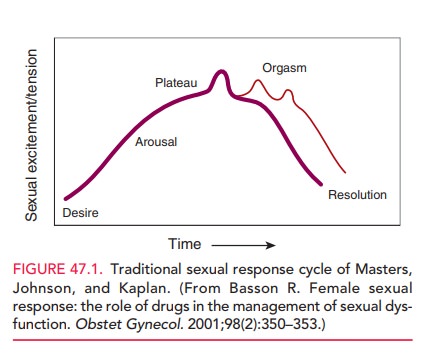
This Desire-Arousal-Orgasm sequence became the standard way of thinking about sexual response for decades. However, as your own social research experience likely suggests, linear models often oversimplify complex human experiences.
Critiques of the Linear Model
The Masters-Johnson-Kaplan model, while groundbreaking, has significant limitations, particularly when applied to the lived experiences of many people, especially women in long-term relationships. It presents a picture of sexual response that can feel prescriptive and inaccurate.
Let's explore these critiques by continuing with the same article.
Understanding the sexual response cycle
The next section of the article clearly articulates the main criticisms of the linear model, setting the stage for more nuanced alternatives.
Please read the section under the heading 'But there are still some very important limitations in this understanding of the sexual response cycle.' Pay attention to the three main critiques: its linearity, its assumption of spontaneous desire, and its de-emphasis on psychological context.
To summarize the key limitations:
- It's too rigid: It doesn't account for interruptions, non-linear progression, or the fact that sex often doesn't have a clear "start time."
- It assumes spontaneous desire: The model frames desire as a drive like hunger that appears automatically. This doesn't match the experience of many who find their desire is more responsive to context.
- It overlooks context: By focusing on physiology, it minimizes the profound impact of emotional, psychological, and relational factors on arousal. As the article notes, the physiological arousal of being chased by a bear is not conducive to sex.
A Circular, Context-Aware Model: Rosemary Basson
In response to these limitations, Dr. Rosemary Basson proposed a non-linear, circular model of sexual response. This model is particularly useful for understanding how intimacy and relationship context drive the cycle, especially for women.
The following video provides an excellent explanation of Basson's model.
What's the difference between sexual desire and arousal? | Peter Attia & Sharon Parish
In this clip from an interview on the Peter Attia MD channel, Dr. Sharon Parish explains how Rosemary Basson's circular model offers a powerful alternative to the linear approach.
Please watch from 07:06 to 09:49. Focus on the central idea that for many, the cycle starts with a motivation for intimacy, which then creates the conditions for arousal and desire to emerge.
Basson's model reframes the entire sequence. Instead of spontaneous desire being the engine, the cycle can be initiated by a motivation for emotional intimacy. This receptivity to sexual stimuli, born from a desire for closeness, leads to arousal. The brain then registers this arousal as pleasurable, which in turn sparks sexual desire. This creates a feedback loop where arousal and desire fuel each other, leading to satisfaction, which then reinforces the initial motivation for intimacy.
This cyclical process is captured well in the following diagram:

This model powerfully incorporates the "relationship factors" mentioned in our learning outcome. It normalizes responsive desire (desire that arises in response to stimuli) as opposed to only valuing spontaneous desire (desire that seems to arise from nowhere).
The Underlying Mechanism: The Dual Control Model
Basson's model tells us that context matters, but how does it work in the brain? The Dual Control Model, popularized by sex educator Emily Nagoski, provides a compelling answer. It posits that sexual response is governed by two independent systems in the brain: the Sexual Excitation System (the "gas pedal") and the Sexual Inhibition System (the "brake").
Confidence and joy are the keys to a great sex life | Emily Nagoski | TEDxUniversityofNevada
In this TEDx talk, Emily Nagoski introduces the Dual Control Model using the intuitive 'gas and brake' analogy.
Please watch the following three clips from the video: 2:34 - 3:49: Introduction to the 'gas' (accelerator) and 'brake' concept. 3:49 - 4:55: Examples of what can hit the 'brake,' such as stress or body image concerns. 8:52 - 9:34: The conclusion about how context shapes our brain's interpretation of stimuli, emphasizing low stress, high affection, and high trust.
The key insight of the Dual Control Model is that becoming aroused isn't just about pushing the gas pedal (providing sexual stimulation). It is equally, and often more importantly, about taking your foot off the brake (removing perceived threats or stressors).
As Nagoski explains, the "brake" can be activated by anything your brain codes as a potential threat:
- Stress about work or family
- Body image anxiety
- Worry about performance
- Lack of trust in a partner
- An unsafe or uncomfortable environment
This directly explains how context modulates arousal. When we are in a state of high trust, high affection, and low stress, our brain's "brake" is disengaged. It is prepared to interpret stimuli as safe and pleasurable. In a stressed or insecure state, the "brake" is on high alert, and the brain may interpret the very same stimuli as threatening or unwanted.
Conclusion
Today, we've traced the evolution of our understanding of the human sexual response cycle, moving from a simple linear model to more complex, context-aware frameworks.
Key Takeaways:
- The Masters & Johnson/Kaplan linear model (Desire → Excitement → Plateau → Orgasm → Resolution) provides a basic physiological map but is often too rigid and simplistic.
- Basson's Circular Model introduces the vital concepts of responsive desire and the role of emotional intimacy as a primary motivator for sex, placing relationship factors at the center of the cycle.
- The Dual Control Model offers a mechanism for how context works, explaining that sexual response depends on a balance between excitation ("gas") and inhibition ("brakes"). Creating a safe, low-stress, high-trust context is key to releasing the brakes and allowing arousal to build.
Preview of the Next Lesson
Having introduced these models, our next lesson will delve deeper into a core distinction we've touched upon today. We will distinguish between spontaneous and responsive desire and explain their implications for long-term sexual dynamics. This will give you more practical tools for understanding and navigating differences in desire within your relationships.