¡Hola! Welcome back to your Spanish course.
In our last lesson, we focused on offering comfort with essential phrases like No llores, Estoy aquí, and Todo está bien. Today, we'll shift from comforting your son during difficult moments to celebrating his successes and encouraging his efforts. Positive reinforcement is a wonderful way to build his confidence and make learning Spanish a joyful experience for both of you.
This lesson's goal is to equip you with the most common Spanish phrases for giving praise and encouragement, such as ¡muy bien! (very good!), ¡buen trabajo! (good job!), and ¡lo hiciste! (you did it!).
1. The Core Phrases for Praise
Let's start with the absolute essentials. These are the phrases you'll use most often to acknowledge a job well done. The following resource provides a perfect list of simple, direct phrases for encouraging a child.
100 Easy Spanish Phrases to Use with Your Baby
The article '100 Easy Spanish Phrases to Use with Your Baby' by The Restful Home has a fantastic, concise section on encouragement. We'll focus on the core praise words.
Please read the short list under the 'Encouragement' section. Pay close attention to 'Qué bien', 'Buen trabajo', and 'Bien hecho'.
From this list, let's break down the three most common ways to say "Good job" or "Well done":
-
¡Buen trabajo!- Good job! / Good work!
This is a direct equivalent of "Good job!" and is perfect for when your son completes a task, like putting away his toys (recoger sus juguetes, which we'll learn later) or helping you with something. -
¡Bien hecho!- Well done!
This phrase literally means "well made" or "well done." It focuses on the quality of the action. It's very similar to¡Buen trabajo!and they are often interchangeable. -
¡Muy bien!- Very good!
This is perhaps the most versatile phrase of all. You can use it for almost any situation where you want to give positive feedback, whether your son answers a question correctly, follows an instruction, or shows you a drawing.
You can think of them this way:
¡Buen trabajo!focuses on the effort/work.¡Bien hecho!focuses on the successful result.¡Muy bien!is a general, all-purpose cheer.
2. Celebrating Accomplishment: "You Did It!"
One of the most satisfying phrases for a child to hear after struggling with something is "You did it!" In Spanish, this is a simple and powerful phrase.
¡Lo hiciste!- You did it!
This is the perfect thing to say when your son finally manages to put on his own shoes, builds a tower of blocks without it falling, or finishes a puzzle. It specifically celebrates the completion of a challenge.
You can see this phrase, along with others, in this helpful visual guide for teachers, which is just as useful for parents.

3. Adding More Enthusiasm to Your Praise
Just like in English, sometimes "good" isn't enough—you want to say "excellent!" or "fantastic!" Spanish has many wonderful, enthusiastic words for this.
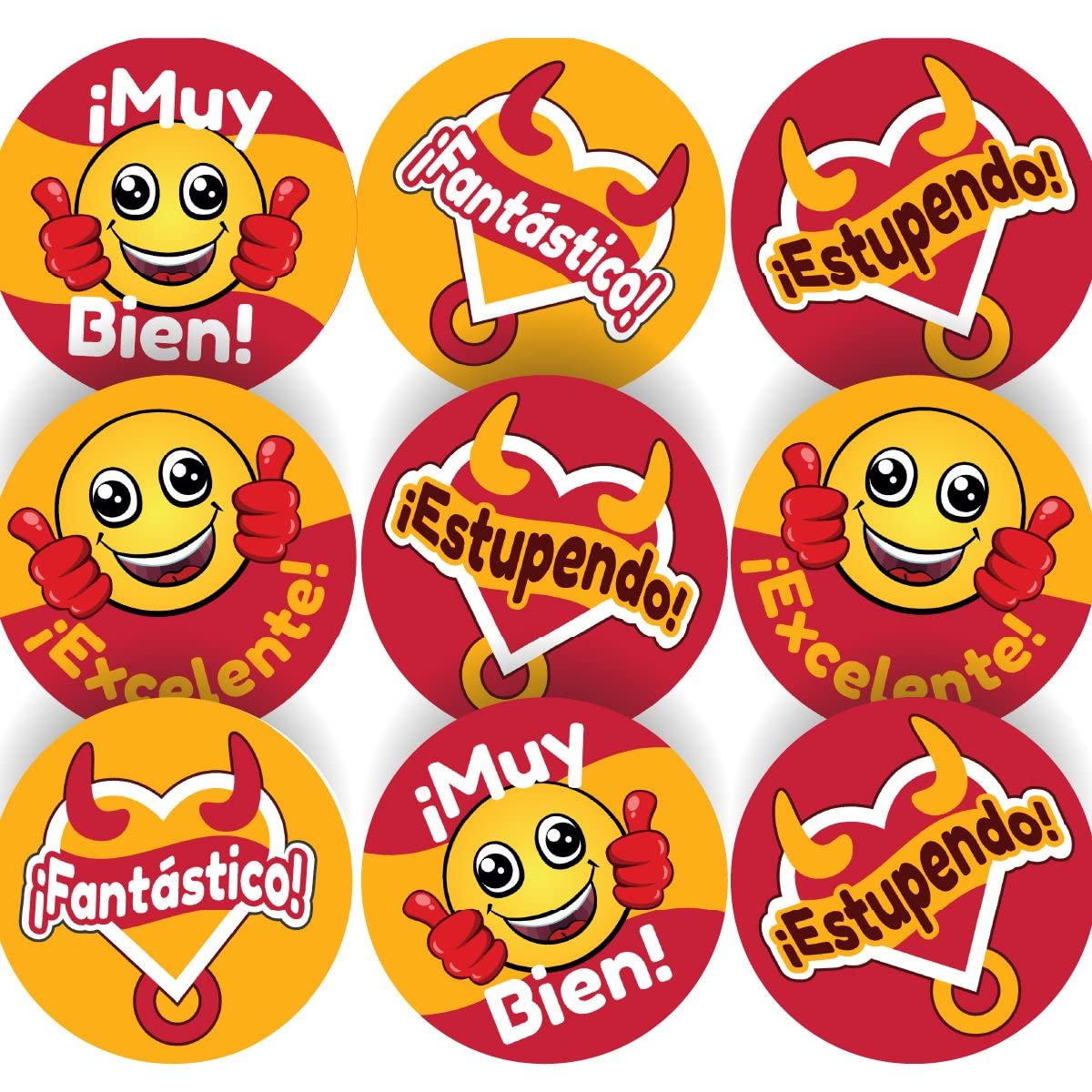
Here are some great alternatives to ¡Muy bien!:
¡Excelente!(ek-seh-LEN-teh) - Excellent!¡Fantástico!(fan-TAS-tee-ko) - Fantastic!¡Estupendo!(es-too-PEN-do) - Stupendous! / Great!
Imagine your son draws his first circle (círculo). You could say, "¡Wow, un círculo! ¡Fantástico!"
4. Encouraging the Process: "You Can Do It!"
Praise isn't just for when a task is finished. It's also crucial for encouraging your son when he's in the middle of trying. For this, we have phrases of pure encouragement.
Let's look at another excellent resource for phrases to use with kids.
A printable list of common Spanish phrases to use with kids.
The article 'A printable list of common Spanish phrases to use with kids' from Spanish Playground offers another great list. We'll find a key phrase for encouraging another attempt.
In the 'Encouragement and Game Playing' section, find the phrase for 'Try again.'
Two phrases are essential for this:
-
¡Tú puedes!- You can do it!
This is from the first resource we viewed (The Restful Home). It’s a wonderful cheer to use when your son is struggling but you know he's close to succeeding. -
Intenta otra vez.- Try again.
This phrase, found in both resources, is less of a cheer and more of a calm, supportive instruction. It tells him it's okay to fail and that he should give it another go.
Test your understanding!
Your 3-year-old is trying to put a star-shaped block (estrella) into the correct hole. What would be the best phrase to say in each situation?
- He is getting frustrated because it won't fit.
- He finally gets the block into the hole.
Choose from: ¡Lo hiciste!, ¡Tú puedes!, ¡Buen trabajo!
Show answer
- When he is frustrated, the best phrase is
¡Tú puedes!(You can do it!) to encourage him to keep trying. You could also follow up withIntenta otra vez(Try again). - When he succeeds, you have great options!
¡Lo hiciste!(You did it!) is perfect for celebrating the moment of success. You could also follow up with¡Buen trabajo!(Good job!) or¡Muy bien!(Very good!).
Conclusion
¡Excelente trabajo hoy! You have now learned a complete set of phrases to build your son's confidence in Spanish. By celebrating his achievements and encouraging his efforts, you are creating a positive and supportive language environment for him.
Key Takeaways:
- For general praise:
¡Muy bien!(Very good!) - For a completed task:
¡Buen trabajo!(Good job!) or¡Bien hecho!(Well done!) - To celebrate a specific achievement:
¡Lo hiciste!(You did it!) - For enthusiastic praise:
¡Excelente!,¡Fantástico!,¡Estupendo! - To encourage effort:
¡Tú puedes!(You can do it!) andIntenta otra vez(Try again).
Next Steps
We have now covered how to respond to both sad and happy moments. In our next module, we will move on to another critical skill for parenting a young child: giving simple, clear instructions for safety and attention. You will learn essential commands like ven aquí (come here), espera (wait), and mira (look).
¡Hasta la próxima