Introduction
In our previous lesson, we crafted your cohesive career narrative statement, the "elevator pitch" that bridges your administrative background with your aspirations in tech and AI. You now have a compelling story. However, a great story needs evidence to be truly convincing. This lesson is about providing that proof.
Today, we will focus on transforming your job duties into powerful achievement statements. You will learn to use the Situation-Action-Result (SAR) format to articulate your accomplishments in a way that demonstrates tangible impact. These statements are the building blocks that will make your resume and LinkedIn profile stand out to recruiters, substantiating the claims made in your new career narrative and proving your value as a candidate transitioning into the tech world.
From Duties to Accomplishments
The single most common mistake on resumes is simply listing job duties. A duty describes what you were expected to do; an accomplishment describes how well you did it and the value you created. For a career changer, this distinction is critical. You need to show that your skills are not just theoretical but have produced real-world results.
Let's begin by clarifying this difference.
Resume - Accomplishment Statements
This short video from the UC Davis Career Center, "Resume - Accomplishment Statements," offers a concise introduction to the concept and its core components.
Please watch the first two parts of the video: First, the introduction explains what accomplishment statements are and how they differ from job duties. Next, watch the segment that breaks down the three main components: a strong action verb, the context of your work, and the all-important result.
As the video highlights, the goal is to shift from "responsible for..." to "achieved X by doing Y." This moves you from a passive participant to an active agent of change in the eyes of a hiring manager.
The Situation-Action-Result (SAR) Framework
A highly effective method for structuring your accomplishment statements is the SAR framework. It provides a simple, logical story structure that is easy for recruiters to digest.
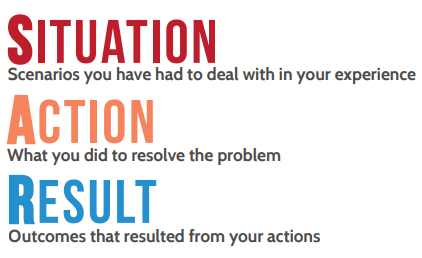
Here’s a breakdown of each component:
- Situation: Briefly describe the context. What was the problem, challenge, or scenario you faced? This sets the stage. (e.g., "The monthly payroll reconciliation process was entirely manual and prone to errors.")
- Action: Describe the specific action you took. Use a strong action verb to lead the sentence and detail the steps you implemented. (e.g., "I designed and built an automated script using Python to...")
- Result: Quantify the outcome of your action. What was the impact? How did it benefit the team or company? Use numbers, percentages, or concrete descriptions. (e.g., "...which reduced data entry errors by 30% and saved 10 hours of manual work per month.")
This structure is sometimes called the CAR (Challenge-Action-Result) method, but the principle is identical. Let's look at a textual resource that explains this structure.
75+ Resume Accomplishment Examples to Improve Your ... - Teal
This article from Teal provides a detailed guide on writing resume accomplishments, including a great section on the CAR/SAR method.
Please read the section titled "How to write resume accomplishments". It clearly defines the Challenge (Situation), Action, and Result components.
Quantifying Your Impact
The "Result" is the most powerful part of your statement, and its impact is maximized when you use numbers. Quantification provides concrete evidence of your abilities and makes your achievements more credible and impressive.
But what if your achievements don't seem to have obvious numbers attached? You can often find metrics by asking the right questions.
How to add numbers to your resume with SAR stories - LinkedIn
This LinkedIn post by Emily Worden offers excellent, practical tips for uncovering and quantifying your accomplishments.
Please read through the three steps in this post: In STEP 1, focus on the questions and examples provided to help you brainstorm potential metrics from your past roles. In STEP 2, see how asking "how many, how much?" can transform a simple duty into a quantified achievement. In STEP 3, review the prompts for brainstorming SAR stories. These can help you recall specific instances where you made a difference.
Even if you can't find a precise number, an estimate or range ("managed over 100 employee payroll accounts," "reduced processing time by approximately 20%") is far more effective than no number at all.
From Theory to Practice: Crafting Your Statements
Now let's see how these principles work in practice. The following video demonstrates how to transform weak, duty-based descriptions into strong, results-oriented achievement statements.
Resume Achievements - How To Write Achievements In Resume
In "Resume Achievements," Professor Heather Austin provides a clear formula and walks through excellent before-and-after examples.
Watch the following segments: First, get an overview of her achievement statement formula, which is another variation of SAR. Then, watch the detailed breakdown of the formula's components: Action Verb, Task, and Result. Finally, and most importantly, watch the practical example where she transforms vague duties like "sorted mail" and "filing" into powerful, quantified achievements.
Notice how the "after" examples are not just more detailed; they tell a miniature story of competence and impact. This is what you are aiming for. The resume example below shows how these statements look in a final document.

Exercise: Frame Your Payroll Experience for a Tech Career
Your main task is to translate your experience as a Payroll Administrator into achievements that will resonate with a tech or AI-focused employer. This means highlighting transferable skills like process optimization, data management, and problem-solving.
The Teal article you reviewed earlier has excellent examples for career pivoters.
75+ Resume Accomplishment Examples to Improve Your ... - Teal
Let's revisit the Teal article to see specific examples relevant to your background and goals.
Please review two sections for inspiration: Read the examples under "Resume accomplishments examples for changing careers". Pay close attention to how skills are reframed—for instance, how an educator's experience is translated for a tech role. Then, look at the "Accomplishments examples - administrative". These are directly related to your background and can be a great starting point for your own statements.
Your Turn (15-20 minutes):
- Identify three key responsibilities or projects from your time as a Payroll Administrator. Think about tasks related to data reconciliation, process improvements, reporting, or system updates.
- For each one, use the SAR framework to write a powerful achievement statement.
- Start with a strong action verb.
- Quantify the result. Use the questions from the LinkedIn article to help you find the numbers (time saved, errors reduced, number of employees supported, etc.).
- Frame it for tech. Where possible, highlight the data, process, or system-related aspects of your achievement. If you used any specific software or even dabbled with scripting (like Python), be sure to mention it in the "Action" part.
Example Transformation:
- Duty: "Checked employee timesheets for accuracy."
- SAR Statement for a Tech Role: "Designed and implemented a new digital validation system for timesheet data across a 150-employee company (Situation & Action), which reduced payroll discrepancies by 25% and cut month-end processing time by two days (Result)."
Work on your three statements now.
Conclusion
In this lesson, you have learned the crucial skill of crafting impactful achievement statements using the Situation-Action-Result framework. You now understand how to move beyond listing duties and instead showcase your value through quantified, results-driven evidence. This is the key to building a resume that proves the assertions of your career narrative.
Key Takeaways:
- Achievement statements demonstrate how well you performed your job, not just what you were assigned to do.
- The SAR framework (Situation, Action, Result) provides a clear and compelling structure for your accomplishments.
- Quantification is essential. Using numbers to show your impact makes your achievements credible and memorable.
- Your administrative experience is a rich source of transferable skills. By reframing your accomplishments, you can highlight your aptitude for data analysis, process optimization, and systems thinking—all highly valued in tech.
You've built your narrative and gathered your evidence. The next step is to present this package to the world. In our next lesson, we will focus on optimizing your LinkedIn profile to align with your tech/AI career narrative and goals, ensuring that your digital presence effectively communicates your new career direction.