Welcome to your first tarot lesson! I'm excited to guide you on this journey of learning tarot for personal insight and self-reflection.
This initial lesson lays the groundwork for everything to come. Our goal is to understand the fundamental architecture of a tarot deck. Just as a lawyer must first understand the structure of the legal system—the different courts and jurisdictions—before studying specific cases, a tarot reader must first understand the deck's structure. By the end of this session, you will be able to identify the structure of a tarot deck and distinguish between its two main parts: the Major and Minor Arcana. This foundational knowledge will act as a map for our entire course.
Let's begin by exploring the basic anatomy of the deck.
The Two Pillars of the Tarot: Major and Minor Arcana
A standard tarot deck contains 78 cards. These 78 cards are not just a random collection of images; they form a highly structured system that is divided into two distinct parts:
- The Major Arcana: 22 cards that represent major life events and significant spiritual lessons.
- The Minor Arcana: 56 cards that reflect the day-to-day situations, challenges, and experiences of life.
The word Arcana comes from the Latin arcanum, meaning "secret" or "mystery." So, you can think of the tarot deck as a collection of 78 secrets or mysteries waiting to be understood.
To get a quick overview of this structure, please watch the first short segment of the following video.
The Beginner's Guide to Tarot Card Reading
In this clip from 'The Beginner's Guide to Tarot Card Reading' by Biddy Tarot, you'll get a clear, concise introduction to the 78-card deck and its division into the Major and Minor Arcana.
Watch from 00:44 to 01:44. Focus on how the video introduces the two main parts of the deck and the number of cards in each.
Now that you have a basic framework, let's look at each part in more detail.
The Major Arcana: The Soul's Journey
The Major Arcana consists of 22 cards, numbered 0 through 21. These cards are the heart of the tarot deck. They represent universal archetypes and the major milestones and spiritual lessons we encounter on our life path. When a Major Arcana card appears in a reading, it signals that the situation involves a significant life theme or a powerful, transformative energy.
These cards tell a story, often called "The Fool's Journey," which narrates a soul's progression from innocence (The Fool, card 0) through a series of life lessons and experiences, to ultimate completion and integration (The World, card 21). We will explore this journey in depth in our next module.
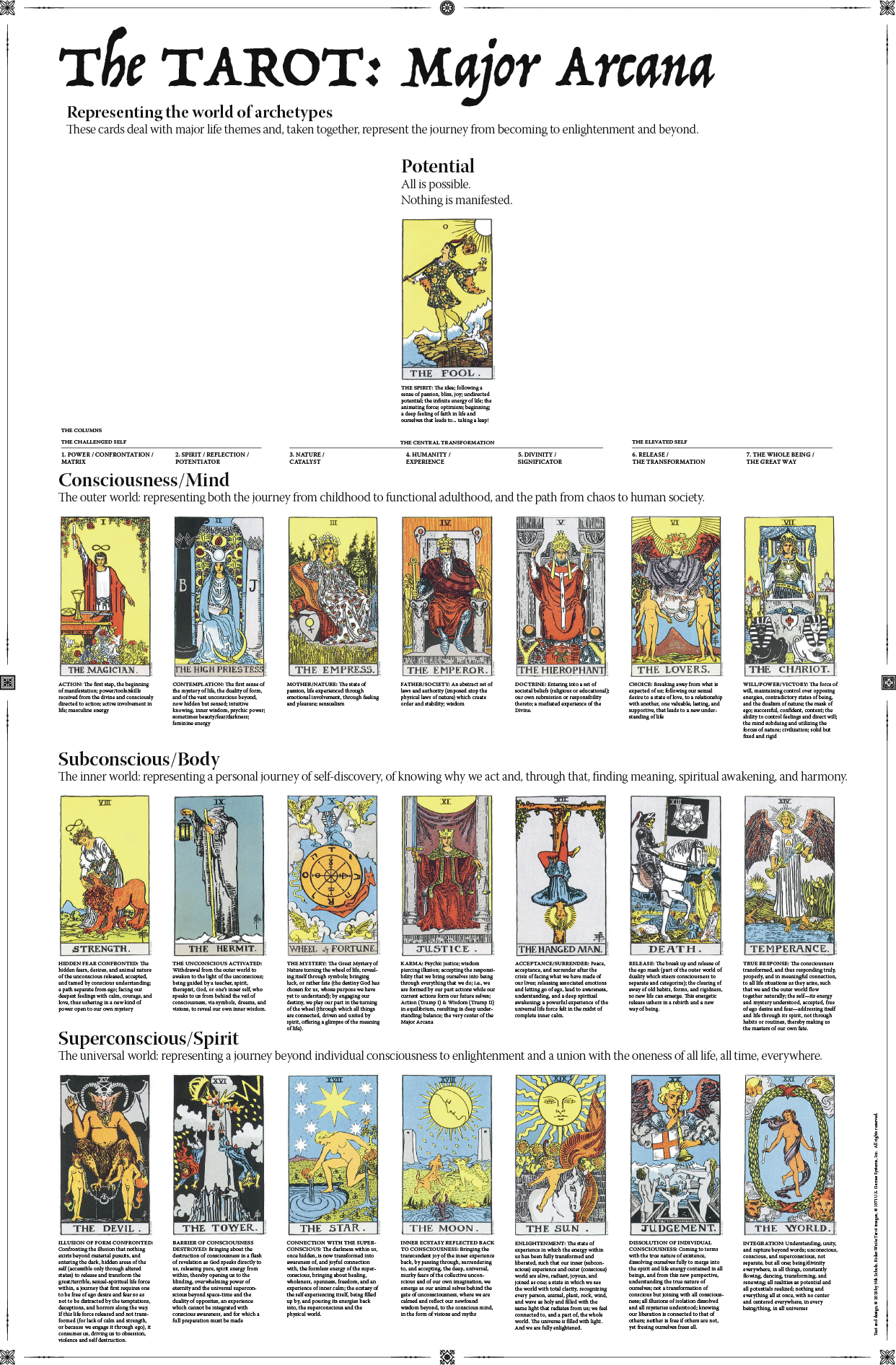
To deepen your understanding, let's explore this concept further.
TAROT 101: BASICS - The structure of the tarot ⚔️🏆🌿💰
The video 'TAROT 101: BASICS' from Scorched Earth Tarot offers a great explanation of the Major Arcana's role as a representation of life's major cycles and universal forces.
Watch from 03:14 to 07:10. Pay attention to the description of the Major Arcana as the 'Fool's Journey' and how these cards represent major life stages or events that are sometimes out of our control.
The Minor Arcana: The Scenery of Daily Life
If the Major Arcana cards are the pivotal chapters of our life story, the 56 cards of the Minor Arcana are the paragraphs and sentences that fill them. They represent the everyday events, concerns, feelings, and situations that make up the texture of our lives.
The Minor Arcana is further divided into four suits, much like a standard deck of playing cards. In the next lesson, we will explore these suits in detail, but for now, it's important to know their names:
- Wands
- Cups
- Swords
- Pentacles (sometimes called Coins or Disks)
Each of these four suits contains 14 cards: ten numbered cards (Ace through 10) and four Court Cards (Page, Knight, Queen, and King).

Test your understanding!
Imagine you are doing a reading for yourself about feeling stuck in your current job. Which of these two scenarios would likely indicate a more fundamental, life-altering issue versus a more temporary, situational one?
Scenario A: You draw The Tower, a Major Arcana card.
Scenario B: You draw the Eight of Swords, a Minor Arcana card.
(You don't need to know the specific meanings yet—just think about the roles of the Major vs. Minor Arcana.)
Show answer
Scenario A, drawing The Tower (Major Arcana), would likely point to a fundamental, life-altering event. It suggests the "stuck" feeling is part of a major shake-up in your career path, possibly indicating an abrupt change like a layoff or a sudden realization that you are on the wrong path entirely.
Scenario B, drawing the Eight of Swords (Minor Arcana), would more likely represent a temporary, situational problem. It points to the feeling of being trapped and limited in your current circumstances, perhaps by your own thoughts or perceived lack of options, rather than an irreversible external event. It addresses the day-to-day experience of being "stuck."
Bringing It All Together
To solidify your understanding of the deck's complete structure, the following reading provides a clear, well-organized summary. It includes helpful tables that lay out the cards and their general themes.
Overview of the Tarot Deck (78 Cards, Major vs. Minor Arcana)
The article 'Overview of the Tarot Deck' from Crystal Grids provides an excellent written summary of the deck's structure. It will reinforce what you've learned from the videos.
Please read the first part of the article, from the heading 'The Tarot Deck Structure' down to the end of the section on the 'Minor Arcana (56 Cards)'. Focus on the distinct roles assigned to each Arcana and how the Minor Arcana is broken down into suits.
A Practical Exercise
One of the best ways to learn is by doing. If you have a tarot deck, take it out now. If not, you can easily find images of a full deck online (searching for "Rider-Waite-Smith deck images" is a great start).
Follow these steps, which are adapted from the article you just read:
- Separate the Major and Minor Arcana. Go through your deck card by card. Find the 22 Major Arcana cards. They are typically numbered from 0 to 21 and have distinct names (The Fool, The Magician, The Empress, etc.). Set them in one pile.
- Examine the Major Arcana. Look through this pile of 22 cards. Notice the grand, universal themes in the imagery. You don't need to know their meanings yet, just observe their character.
- Group the Minor Arcana. Take the remaining 56 cards and sort them into their four suits: Wands, Cups, Swords, and Pentacles. You will see that each suit contains an Ace, numbers 2-10, and four court cards.
- Observe the Differences. Place a Major Arcana card next to a Minor Arcana card. What differences do you notice in the art, the scope of the scene, and the feeling they evoke?
This hands-on exercise is a crucial first step in building a personal connection with your cards.
Lesson Summary
Congratulations on completing your first lesson! You've taken the essential first step on your tarot journey.
Here are the key takeaways:
- A tarot deck consists of 78 cards, divided into two main sections.
- The Major Arcana has 22 cards representing significant life lessons, archetypes, and major spiritual themes.
- The Minor Arcana has 56 cards reflecting everyday situations, thoughts, and feelings. It is divided into four suits: Wands, Cups, Swords, and Pentacles.
- Understanding this fundamental structure is the key to interpreting the messages of the cards in a reading.
Coming Up Next
In our next lesson, we will zoom in on the Minor Arcana. You will learn to describe the four suits and their elemental associations (Wands/Fire, Cups/Water, Swords/Air, Pentacles/Earth). This will add another critical layer to your map of the tarot, preparing you to understand the specific context of the cards you draw.