Introduction
Welcome to the sixth module of our course, where we pivot from China's international relationships to the core instrument of its hard power: the People's Liberation Army (PLA). In the last few lessons, we analyzed China's complex partnerships with Russia and its competition with the United States. Now, we will explore the military capabilities and strategic thinking that underpin China's actions on the world stage.
Today's lesson addresses the learning outcome: Explain the shift in China's military doctrine towards 'informatized' and 'intelligentized' warfare. These are not just buzzwords; they represent a fundamental revolution in how the PLA plans to fight and win future conflicts. We will trace this evolution, starting from the wake-up call that shattered its old way of thinking, through the race to master information, to its current ambition to dominate the battlefield with artificial intelligence.
From 'People's War' to High-Tech Local Wars
For much of its history, the PLA's doctrine was rooted in Mao Zedong's concept of "People's War." This strategy, effective during the Chinese Civil War, was designed for a technologically inferior force. It emphasized luring an invader deep into China's vast territory and overwhelming them through mass mobilization, protracted warfare, and guerrilla tactics. The focus was on surviving, trading space for time, and wearing down the enemy's will.
This paradigm was shattered in 1991. While the world watched the U.S.-led coalition eject Iraqi forces from Kuwait during the First Gulf War, PLA planners saw something more profound: a new type of warfare. The US military showcased devastating precision, coordination, and speed, enabled by satellites, stealth technology, and networked computer systems. To the PLA, it was clear that massed armies were no match for a military that could see everything, communicate instantly, and strike with pinpoint accuracy from afar.
This shock prompted a fundamental rethink. To understand this pivot, we'll start with a video that provides an excellent historical overview of the evolution of China's military strategy.
Competition with China: China's Military Strategy
This lecture from the China Aerospace Studies Institute, 'Competition with China: China's Military Strategy,' explains the doctrinal shift that occurred in the 1990s. It details why the PLA moved away from preparing for total war towards a new focus.
Please watch the segment from 08:36 to 11:20. Focus on the explanation of the 1993 strategic guidelines, the new focus on 'local wars,' the identification of Taiwan as the primary scenario, and the emphasis on 'joint operations.'
As the video explains, the PLA's new guiding principle became preparing to fight and win "local wars under modern, high-tech conditions." The focus shifted from defending the entire mainland to projecting power in China's immediate periphery, with a potential conflict over Taiwan becoming the main planning driver. The key to winning such wars, the PLA realized, was mastering the flow of information.
The Doctrine of "Informatization" (信息化)
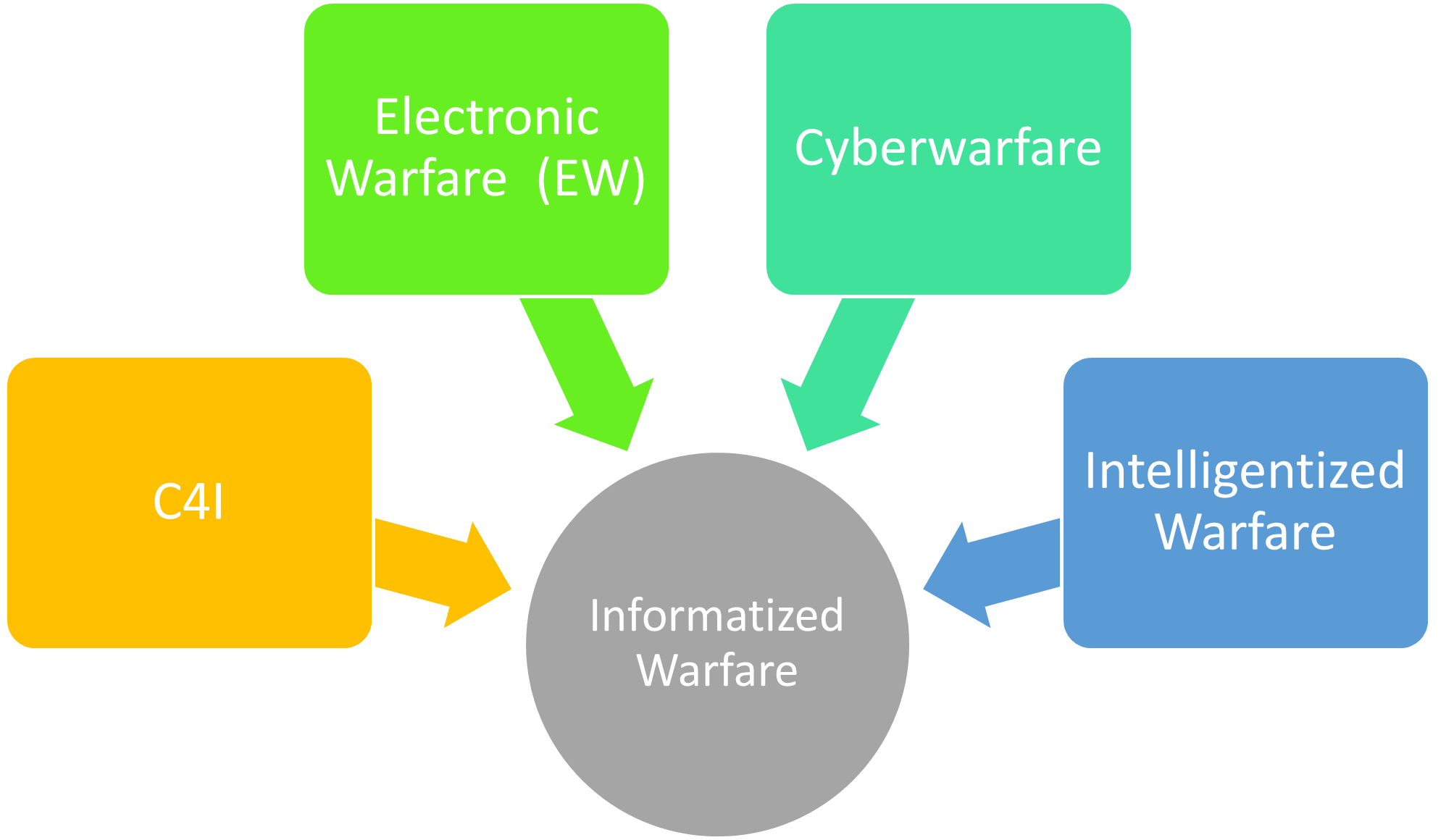
The lessons from the Gulf War and subsequent U.S. military operations in the Balkans led the PLA to embrace the concept of "Informatized Warfare" (信息化战争, xìnxīhuà zhànzhēng).
The core idea of informatization is to achieve information superiority. This means building a networked military where all assets—sensors (satellites, radar, drones), decision-makers (command centers), and shooters (missiles, aircraft, ships)—are linked together. The goal is to create a seamless "system of systems" that can collect, process, and share information faster and more effectively than an adversary, allowing you to make better decisions more quickly.
This is often associated with the American concept of "Network-Centric Warfare." The video you just watched continues to explain how China formally adopted this idea.
Competition with China: China's Military Strategy
Let's return to the same lecture, which now explains the formalization of 'informatization' as a core concept in the 2000s.
Please watch the next segment from 12:25 to 14:14. Pay attention to how PLA thinking evolved to focus on 'local wars under conditions of informationization' and the emphasis on space, cyber, and the electromagnetic spectrum.
An informatized military can conduct highly coordinated joint operations, where the air force, navy, army, and cyber forces act in concert rather than as separate entities.
This diagram gives a sense of what this looks like in practice. It's not just about individual platforms, but about how they connect and share data to create a synergistic effect.

The Next Frontier: "Intelligentization" (智能化)
By the late 2010s, PLA strategists concluded that simply networking their forces was no longer enough. The sheer volume of data produced by an informatized military was becoming overwhelming for human operators to process. The next revolution, they argued, would be driven by artificial intelligence. This led to the adoption of "Intelligentized Warfare" (智能化战争, zhìnénghuà zhànzhēng) as the new frontier.
Let's read a short article that explains how this concept was formally integrated into China's national and military strategy.
Once-in-a-generation change in PLA guidelines: intelligentization ...
This article from the 'Pekingnology' newsletter, titled 'Once-in-a-generation change in PLA guidelines,' clearly explains the official shift towards intelligentization.
Please read from the beginning of the article down to the end of the section citing the Azerbaijan-Armenia conflict (ending with '...the coming era of intelligent warfare.'). Focus on: The introduction of the three '-zations': mechanization, informatization, and intelligentization. The authoritative quote from Xu Qiliang describing the progression. The real-world conflicts (Syria, Azerbaijan-Armenia) that informed the PLA's thinking about this new era of warfare.
As the article makes clear, intelligentization is not replacing informatization; it is building on top of it.
- Mechanization provides the physical platforms (tanks, ships, planes).
- Informatization connects them into a network.
- Intelligentization uses AI to make that network "smart."
But what does this mean in practical terms? It means using AI, big data analytics, and autonomous systems to radically accelerate the entire process of warfare—from finding a target to destroying it. For a clear, non-technical explanation of how AI is changing the character of war, the following video is exceptionally useful. While not specific to China, it perfectly illustrates the concepts the PLA is pursuing.
This Is How AI Is Rewriting the Rules of War
This video, 'This Is How AI Is Rewriting the Rules of War' by Johnny Harris, breaks down the 'kill chain' and shows exactly where AI provides a decisive advantage. This will help you visualize what 'intelligentized warfare' looks like.
Please watch from 04:37 to 11:08. Notice how AI-powered tools accomplish the following: Find and Identify Targets: Processing immense amounts of sensor data (images, signals) almost instantly. Aid Decision-Making: Presenting commanders with optimized attack plans. Enable Autonomy: Allowing systems like drones to complete their mission even if communication is lost.
This is the essence of intelligentized warfare: using AI to achieve decision-making superiority. The side that can observe, orient, decide, and act (the "OODA loop" in Western military parlance) faster and more effectively will win. China believes that by mastering AI, it can "leapfrog" the United States and gain a decisive military edge.
Conclusion
China's military doctrine has undergone a profound transformation over the past three decades, driven by a clear-eyed assessment of modern warfare and rapid technological change.
Key Takeaways:
- The 1991 Gulf War was a catalyst, pushing the PLA to abandon its Mao-era "People's War" doctrine and focus on winning "local wars under high-tech conditions."
- Informatization was the first phase of this transformation. It focused on networking sensors, command systems, and weapons to achieve information superiority and enable complex joint operations.
- Intelligentization is the current and future direction. It seeks to leverage artificial intelligence, big data, and autonomous systems to automate analysis and accelerate decision-making to a speed beyond human capacity.
- The PLA's official goal is the integrated development of mechanization, informatization, and intelligentization, believing this is the path to creating a "world-class military" capable of defeating any adversary.
Preview of the Next Lesson:
Having explored the high-tech conventional doctrine of the PLA, we will next examine the ultimate backstop to its strategy. In our next lesson, we will address the learning outcome: Analyze China's nuclear doctrine and strategic deterrence posture. We will discuss its longstanding "No First Use" policy and how its nuclear force modernization might be challenging traditional interpretations of its strategy.