Day 5: Inflation and Unemployment: The Twin Challenges
Yesterday’s Bridge:
Yesterday, we established that Real GDP is the true measure of a nation's economic output, as it strips out the distorting effects of price changes. Today, we dive into those price changes themselves—inflation—and its equally important counterpart, unemployment, the two indicators that most directly affect people's daily lives and a government's stability.
The Core Concept: Gauging Economic Well-being and Stability
While GDP measures the size of the economic pie, inflation and unemployment tell us about the quality of the economic environment for the citizens living in it. Mastering these concepts is non-negotiable for any geopolitical analyst.
1. Inflation: The Erosion of Value
At its simplest, inflation is the rate at which the general level of prices for goods and services is rising, and subsequently, purchasing power is falling. Your dollar today will buy less than it did yesterday.
To grasp this intuitively, let's start with a simple analogy.
INFLATION, Explained in 6 Minutes
The video 'INFLATION, Explained in 6 Minutes' by Johnny Harris provides an excellent, easy-to-understand analogy of a village economy to explain what inflation is and how it starts.
Watch from the beginning to 01:57. Focus on the core idea: inflation happens when the amount of money chasing goods and services grows faster than the availability of those goods and services.
How is Inflation Measured?
Analysts don't just "feel" inflation; they measure it precisely. The most common measure is the Consumer Price Index (CPI).
- Government agencies track the price of a representative "basket" of goods and services that a typical household buys—from gasoline and groceries to rent and haircuts.
- Inflation is the percentage change in the price of this basket over a period, usually a year.
For a more formal definition from a key institutional source, please review the following text.
The International Monetary Fund's (IMF) 'Back to Basics' series is a go-to resource. This article, 'Inflation: Prices on the Rise', provides the official definitions and explains how key measures like the CPI are constructed.
Read the first two sections, 'What, then, is inflation, and why is it so important?' and 'Measuring inflation'. This will solidify your understanding of the formal definition and measurement of CPI.
Consequences of Inflation:
A small, predictable amount of inflation (around 2%) is generally considered healthy for an economy, as it encourages spending and investment. However, high and unpredictable inflation is disastrous.
- Erodes Savings: It silently eats away at the value of savings, hurting retirees and anyone on a fixed income.
- Creates Uncertainty: Businesses can't plan for the future, which chills investment and long-term projects.
- Causes Social Unrest: When people can no longer afford basic necessities, anger directed at the government grows.
In extreme cases, this leads to hyperinflation, where money becomes virtually worthless.
Recession, Hyperinflation, and Stagflation: Crash Course Economics #13
To see the devastating real-world impact of extreme inflation, this 'Crash Course Economics' video looks at historical examples.
Watch from the beginning to 02:56. Pay attention to the examples of Weimar Germany and Zimbabwe to understand how hyperinflation can completely dismantle a society's economic fabric.
2. Unemployment: The Waste of Human Capital
The unemployment rate measures the percentage of the labor force that is jobless but actively seeking employment.
- Labor Force: Includes all people who are either employed or unemployed. It excludes those not looking for work (e.g., students, retirees, discouraged workers who have given up their search).
Types of Unemployment:
Economists generally break unemployment into three categories. Understanding these helps distinguish between a healthy, dynamic economy and one in trouble.
- Frictional: Short-term unemployment as people move between jobs or enter the labor force. This is a normal and healthy sign of a dynamic economy.
- Structural: A mismatch between the skills workers have and the skills employers need, often due to technological change or globalization. This is a long-term challenge requiring policy solutions like retraining programs.
- Cyclical: Unemployment that rises during economic downturns (recessions) and falls during expansions. This is the type of unemployment that governments and central banks try to manage through policy.
This brief from the Congressional Research Service—the institution that provides non-partisan analysis to the U.S. Congress—offers a clear breakdown.
Introduction to U.S. Economy: Unemployment
The CRS report 'Introduction to U.S. Economy: Unemployment' is written for policymakers and is therefore clear and to the point. It provides the essential definitions you need.
Read the sections 'How Is the Unemployment Rate Calculated?' and 'Reasons for Unemployment'. This will teach you the official definition and the crucial differences between frictional, structural, and cyclical unemployment.
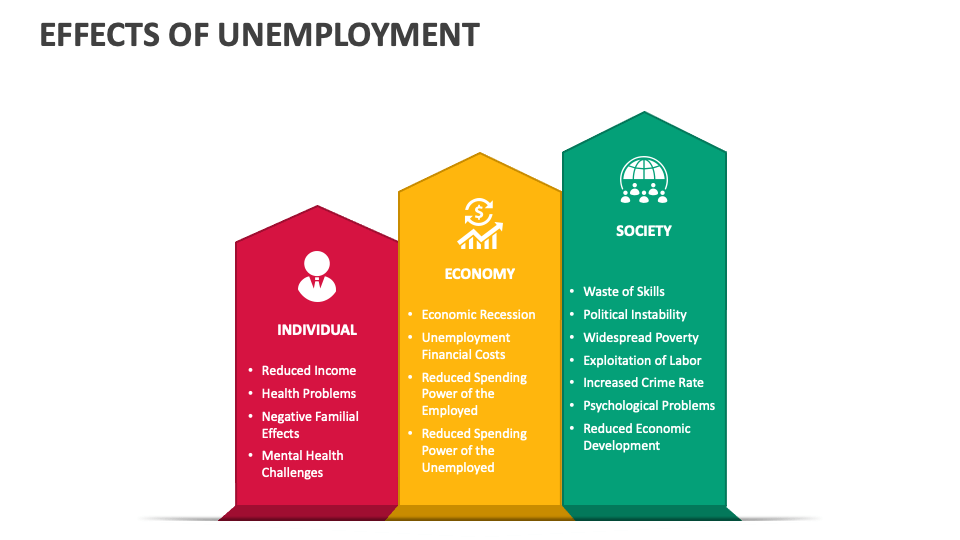
Consequences of Unemployment:
High unemployment is a sign of an underperforming economy and has severe consequences at all levels of society.
Illustrative Example: Stagflation and Geopolitical Crises
The worst-case scenario is stagflation: a toxic mix of a stagnant economy (high unemployment) and high inflation. This plagued many Western countries in the 1970s when OPEC oil embargoes caused a massive energy price shock (inflation) that also crippled economic production (leading to unemployment).
The ultimate "So What?" factor is that inflation and unemployment are not just economic statistics; they are direct drivers of political risk. Governments that cannot control them lose legitimacy. Look at this chart mapping U.S. inflation against major geopolitical events.
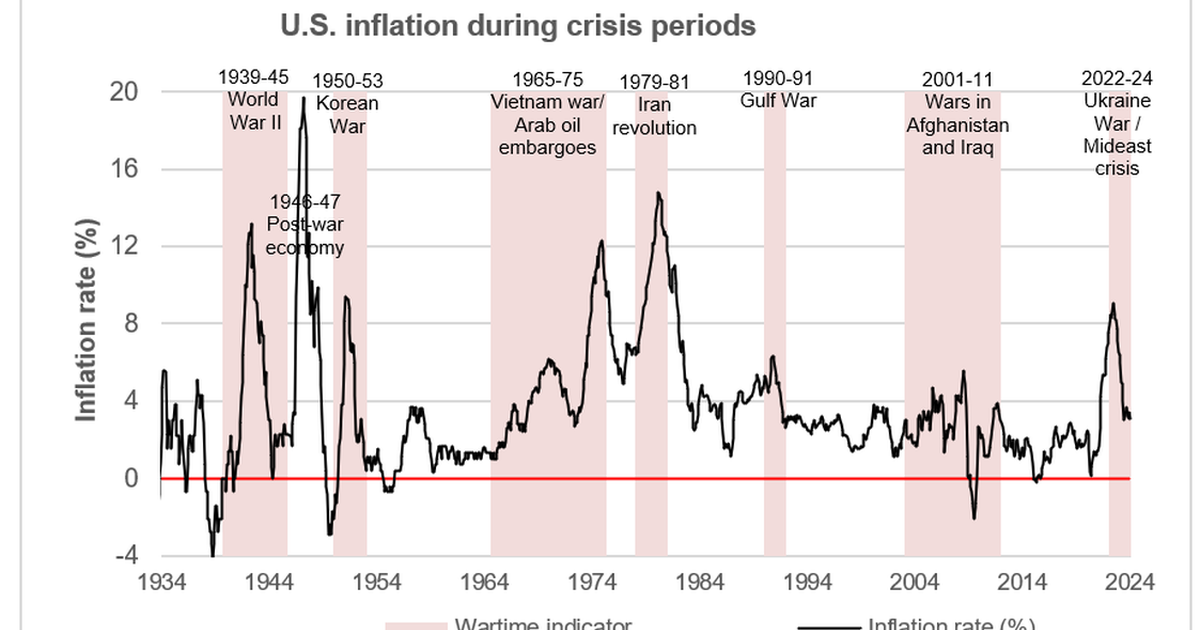
From the food price inflation that helped trigger the Arab Spring in 2011 to the widespread strikes in Europe today over cost-of-living crises, the connection is clear and constant. As an analyst, you will watch these two numbers more closely than almost any other.
Anchor Resource
Your anchor resources for today are the two official documents we've referenced:
- IMF "Back to Basics" on Inflation (LINK): The IMF is the world's lender of last resort and a primary arbiter of global economic data. Their definitions are the industry standard.
- CRS Report on Unemployment (LINK): The Congressional Research Service provides the objective analysis that informs U.S. legislators. Understanding how they frame issues is key to understanding the policy debate.
Daily Challenge
It's time to find the real-time data. For a major economic bloc like the United States or the Eurozone:
- Go to the official statistical agency's website (e.g., the U.S. Bureau of Labor Statistics (BLS) for CPI or the EU's Eurostat).
- Find the most recently reported monthly or annual CPI inflation rate and the unemployment rate.
Does this data suggest the economy is "running hot" (low unemployment, high inflation), "running cold" (high unemployment, low inflation/deflation), or experiencing something else?
Hint
On the BLS website, the main press releases for CPI (Consumer Price Index) and the "Employment Situation" are usually featured on the homepage. For Eurostat, search for "HICP" (the EU's version of CPI) and "unemployment." Compare the numbers you find to the typical central bank inflation target of 2% and historical averages for unemployment (often around 4-5% for a healthy economy).
Next Day Preview
We've now examined the key indicators of economic performance: output (GDP), price stability (inflation), and labor market health (unemployment). We've noted that these indicators tend to rise and fall in a pattern. Tomorrow, we will explore this pattern by defining the business cycle and its distinct phases of expansion and recession.