Hello! Welcome to the second lesson in our final module on mastering long-answer questions.
In our last lesson, we learned the crucial first step: how to deconstruct a long-answer question to identify its core demands (the command word, key concepts, and the core question you need to answer). This ensures your answer is always relevant and focused.
Today, we'll build the frame for that answer. We will focus on constructing a powerful, thesis-driven introduction and a clear, summarizing conclusion. These two elements act as the "bookends" of your response. A strong start grabs the examiner's attention and shows you understand the question, while a solid finish leaves a lasting impression of clarity and confidence.
1. The Anatomy of a High-Scoring Introduction
The introduction is arguably the most important part of your answer. It sets the tone and direction for everything that follows. A good introduction for a 120-150 word answer should be concise (around 15-25 words) and accomplish three things:
- Contextualize: Briefly mention the text and author.
- Argue: Present a clear argument, or thesis statement, that directly answers the question.
- Outline: Hint at the main points you will use to support your argument.
What is a Thesis Statement?
Think of the "core question" you formulated in our last lesson. Your thesis statement is the direct, one-sentence answer to that question. It is not just a statement of fact; it is your main argument.
Let's look at what makes a strong thesis.

A simple topic might be: "This answer will discuss the determination of Douglas and Mukesh."
A thesis statement would be: "While both William Douglas and Mukesh display immense determination, Douglas’s struggle is an internal battle against fear, whereas Mukesh’s is an external rebellion against a predetermined social destiny."
Notice how the thesis statement presents a specific, arguable point of comparison that can be explored in the body of the answer.
This next image provides a powerful formula for crafting an insightful thesis.
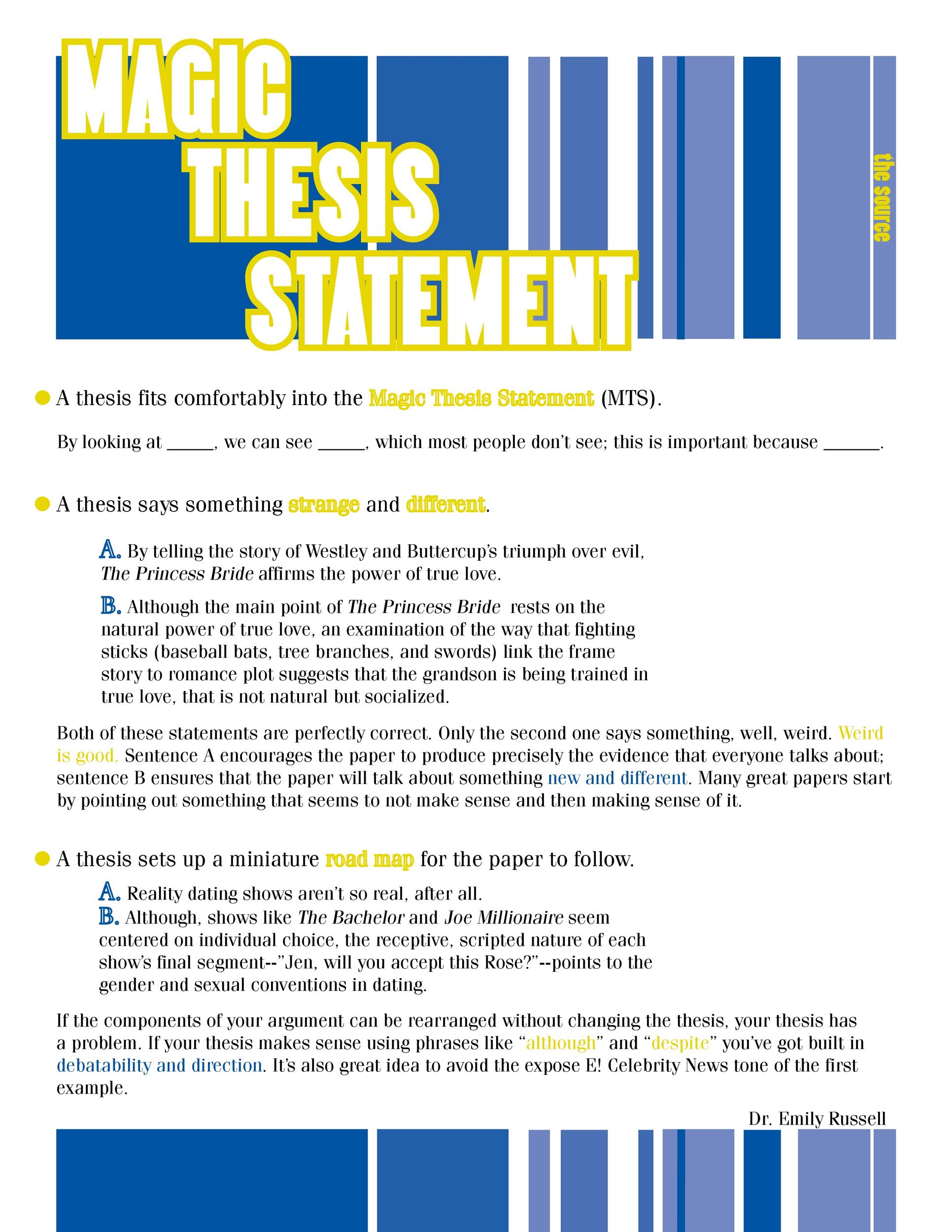
Templates for Success
Now, let's watch a short video that provides some excellent, ready-to-use templates for crafting introductions for your board exam.
Class 12 English Write Literature Answers Like a Topper I Know this Hack by Shipra Mishra
In this clip from her video 'Class 12 English Write Literature Answers Like a Topper', instructor Shipra Mishra provides several practical templates for starting your literature answers.
Watch the video from 00:25 to 01:56. Pay close attention to the different sentence structures she suggests for introducing the chapter, author, and theme right from the start.
Here are some of the key patterns from the video you can adapt:
- "This extract from [Chapter] by [Author] highlights the theme of..."
- "In [Chapter], [Author] illustrates the theme of [Theme] by showing how [Character/Situation]..."
- "Through the symbol/character of [Symbol/Character], the writer conveys a deeper understanding of [Theme]..."
Let's Apply This:
Remember the question from the last lesson?
Q: Analyse the characters of William Douglas from ‘Deep Water’ and Mukesh from ‘Lost Spring’ in terms of their determination and will power in pursing their goals.
Using one of the templates and the idea of a "magic thesis," we can construct a strong introduction:
In William Douglas’s ‘Deep Water’ and Anees Jung’s ‘Lost Spring’, both protagonists exemplify extraordinary determination. However, their struggles highlight different facets of willpower: while Douglas wages an internal war to conquer a personal phobia, Mukesh stages an external rebellion against the societal shackles of caste and poverty.
This introduction successfully sets the context, presents a clear thesis (the "however" part), and outlines the two points of comparison you will discuss.
2. Crafting an Effective Conclusion
The conclusion is your final opportunity to reinforce your argument. Its job is to summarize, not to introduce new ideas. Like the introduction, it should be concise (around 15-25 words).
A good conclusion should:
- Restate the Thesis: Rephrase your main argument in a new way.
- Summarize Key Points: Briefly remind the reader of the main evidence you discussed.
- Provide a Final Insight: Offer a concluding thought on the broader significance of the theme.
Let's see some expert advice on how to end your answers.
Class 12 English Write Literature Answers Like a Topper I Know this Hack by Shipra Mishra
We'll return to Shipra Mishra's video, this time to focus on conclusions.
Please watch from 07:26 to 08:32. Notice how the templates focus on summarizing the argument and connecting it to a larger, universal idea.
And another perspective on the function of a conclusion:
🔥 2026 ULTIMATE Answer Writing Guide for ENGLISH | ऐसे लिखो for 100 Marks | Board Exam #cbse
This clip from GrandAcad uses a great analogy for writing a conclusion.
Watch from 03:39 to 04:20. The speaker describes the conclusion as a 'fusion dance' that brings your introduction and body paragraphs together. Crucially, he warns against introducing new points.
Let's Apply This:
For our question on Douglas and Mukesh, a strong conclusion could be:
Thus, the narratives of Douglas and Mukesh, though born from vastly different circumstances, converge on the universal theme that self-actualization is forged through unwavering determination. Douglas's methodical conquest of fear and Mukesh's defiant dream prove that whether the obstacle is internal or external, the human will to overcome it remains a profound and inspiring force.
This conclusion restates the thesis (converging on a universal theme), summarizes the key points (methodical conquest vs. defiant dream), and offers a final insight on the power of the human will.
3. A Complete Example
Let's see how these parts fit together in a full-length answer.
Class 12 English Write Literature Answers Like a Topper I Know this Hack by Shipra Mishra
This final clip from Shipra Mishra's video presents a complete 150-word answer to a question about 'The Rattrap'.
Watch the segment from 11:12 to 12:34. As you watch, try to identify the thesis statement in the introduction and see how the conclusion summarizes the points made in the body of the answer.
The sample answer in the video effectively demonstrates the structure:
- Introduction: Starts with the author and text, then presents the thesis that compassion can awaken goodness.
- Body: Provides evidence of how Edla's kindness transforms the peddler.
- Conclusion: Summarizes by stating that Edla's kindness not only changes his life but also underscores the story's larger theme of redemption through love.
Conclusion
You now have the tools to build a strong frame for any long-answer question. By starting with a clear, thesis-driven introduction and ending with a concise, powerful conclusion, you signal to the examiner that you are in full control of your argument.
Key Takeaways:
- Thesis is Key: Your introduction must make a clear, arguable claim that directly answers the question prompt.
- Bookend Your Answer: Use the introduction to state your argument and the conclusion to summarize it. Follow the 10% - 80% - 10% structure for word distribution (Intro - Body - Conclusion).
- No New Information in the Conclusion: The conclusion's role is to synthesize and summarize, not to add new points.
Preview of the Next Lesson:
We have successfully framed our answer. In the next lesson, we will focus on the most substantial part: the body. We will learn how to integrate specific textual evidence and quotes to build convincing arguments that support the thesis you've just learned to create.