Hello! Welcome to your fifth lesson.
In our last session, we mapped out the key events of the Champaran episode and analyzed Gandhi's strategy of methodical investigation and civil disobedience. We saw how the 25% refund was a strategic moral victory rather than a financial compromise.
Today, we will focus on the central lesson that Gandhi believed was the most important outcome of the entire movement. As previewed, we'll be exploring the theme of self-reliance.
Our learning outcome is to explain the theme of self-reliance as the key lesson of the Champaran movement for short answer questions. Understanding this is crucial, as it unpacks the deeper purpose of Gandhi's actions and is a frequent topic in board exams.
1. The Foundation of Self-Reliance: Freedom from Fear
For Gandhi, self-reliance wasn't merely about political or economic independence. It was, first and foremost, a state of mind. He believed that the peasants of Champaran could never stand on their own feet as long as they were psychologically paralyzed by the fear of the British landlords and the colonial system.
His famous assertion, "Freedom from fear is more important than legal justice for the poor," is the bedrock of this theme. Legal victories would be temporary if the people remained too afraid to defend their rights. True strength, and thus true self-reliance, had to come from within.
Indigo Class 12 English | Most Important PYQs, Extract & Competency Questions | Boards 2026
To understand how Gandhi connected fear, justice, and self-reliance, watch this section from a video by 'Sunil Panda-The Educator'. It directly addresses why overcoming fear was Gandhi's primary objective.
Watch the segment from 18:44 to 20:45. Pay close attention to the explanation of why Gandhi believed fear made people weak and how removing it was more powerful than any court order.
By teaching the peasants courage through his own example—defying the order to leave, facing arrest calmly, and organizing peaceful protests—Gandhi laid the foundation for them to become self-reliant.
2. A Direct Lesson: The Charles Freer Andrews Incident
The most explicit and important example of Gandhi teaching self-reliance occurs when his lawyer friends suggest seeking help from an Englishman, Charles Freer Andrews. Andrews was a pacifist and a devoted follower of Gandhi, and the lawyers thought having him on their side would be a strategic advantage.
Gandhi's reaction was one of vehement opposition.
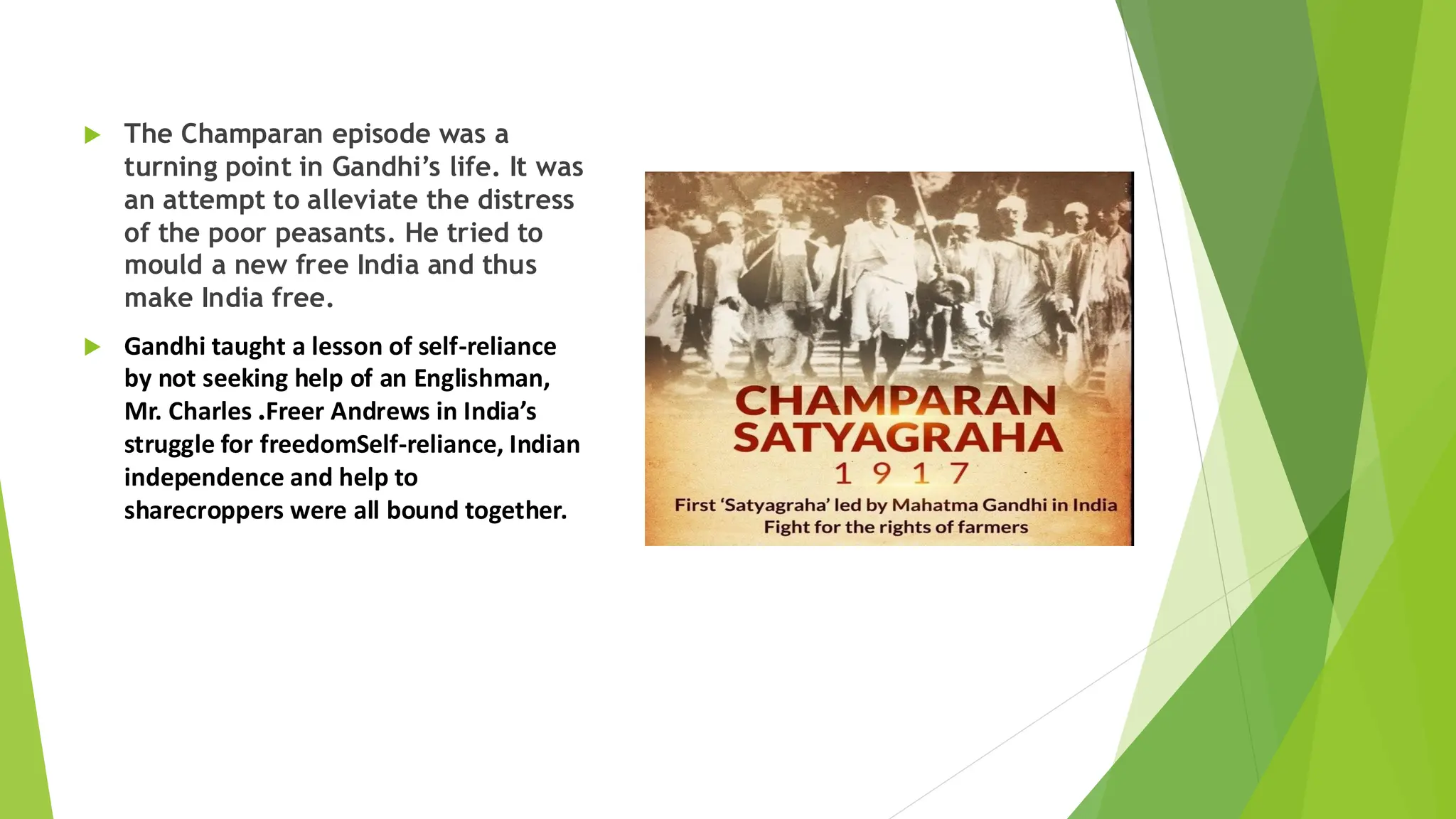
He argued that relying on an Englishman, however well-intentioned, would show the "weakness of their heart." He insisted that their cause was just and they must win the battle by themselves. This would be the only way to build true strength and independence.
Indigo Important Question Answers | CBSE Class 12 - SuccessCDs
The C.F. Andrews incident is a classic short-answer question. Let's examine a concise answer that explains Gandhi's reasoning.
Read Question 3, 'Why did Gandhiji object to CF Andrews’ stay in Champaran?'. Focus on how the answer explains Gandhi's view that relying on an Englishman showed weakness and that the cause had to be won by relying on themselves.
This incident is the cornerstone of the chapter's message. Rajendra Prasad, one of the lawyers present, later recalled, "Gandhi in this way taught us a lesson in self-reliance."
3. Weaving Self-Reliance into the Movement
The lesson of self-reliance wasn't confined to the C.F. Andrews incident. It was a thread woven through the entire Champaran episode.
- The Lawyers' Commitment: When the prominent lawyers, after consulting among themselves, told Gandhi they were ready to follow him to jail, it marked a crucial shift. They were no longer just legal advisors but were taking personal responsibility for the struggle. This was a significant step towards collective self-reliance.
- The Peasants' Courage: The spontaneous demonstration at the Motihari courthouse was the first time the peasants acted as a unified, fearless group. It was their first taste of collective strength, a "liberation from fear."
- The 25% Refund: As we discussed, accepting the 25% was a strategic move to empower the peasants. The moral victory of forcing the landlords to surrender their prestige was more valuable than money. It taught the peasants that they had rights and could stand up for them.
The following video brings these points together, providing a perfect summary for a short-answer question on this theme.
Indigo Class 12 English | Most Important PYQs, Extract & Competency Questions | Boards 2026
This clip directly answers the question 'How was self-reliance intertwined with the Champaran incident?' and serves as a model for your own exam answers.
Watch the section from 00:54 to 02:41. Notice how the speaker connects self-reliance to multiple aspects of the movement: teaching peasants to depend on themselves, encouraging them to speak the truth and unite, and building their inner strength and confidence.
4. Structuring Your Answer
Let's consolidate this into a structure for a 40-50 word short answer. A typical question might be:
Q. Why is the Champaran episode considered to be a lesson in self-reliance? (Based on CBSE past papers)
To answer this effectively, you should include these key points:
- Core Idea: Gandhi's primary goal was to free the peasants from fear, which was the first step to self-reliance.
- Key Example: He taught a direct lesson in self-reliance by refusing help from the Englishman C.F. Andrews, insisting Indians must win their own battles.
- Outcome: The movement gave the peasants courage and an awareness of their rights, empowering them to stand on their own feet and marking the beginning of their liberation.
Here's an example of a well-structured answer, drawing from our resources:
The Champaran episode is a lesson in self-reliance because Gandhi’s main aim was to free the peasants from their paralyzing fear of the British. He taught them courage and to fight for their own rights. He explicitly demonstrated this by refusing the help of C.F. Andrews, insisting that Indians must rely on themselves to win their battles.
Conclusion
Today, we've seen that the Champaran episode was much more than a political or economic victory. Its most enduring legacy was the lesson in self-reliance.
Key Takeaways:
- Self-reliance starts with overcoming fear. Gandhi believed a fearless mind is the foundation for an independent spirit.
- The battle must be won by oneself. The C.F. Andrews incident is the prime example of Gandhi's insistence that Indians should not seek external "props" but rely on their own strength.
- The entire movement, from the lawyers' pledge to the peasants' demonstrations, was a practical exercise in building this collective self-reliance, which became a cornerstone of India's freedom struggle.
Preview of the Next Lesson:
We have now concluded our high-yield study of 'Indigo'. In our next lesson, we will shift to another prose piece from Flamingo, Selma Lagerlöf's 'The Rattrap'. We will begin by exploring the central metaphor of the story—the world as a giant rattrap—and see how this unique worldview shapes the main character's actions and interactions. This will prepare you to tackle extract-based questions focusing on character, plot, and irony.