Introduction
Welcome back. In our last lesson, we established a key principle of performance costume design: the distinction between styles optimized for large-scale arenas and those suited for intimate venues. We saw how arena costumes, like those worn by Beyoncé and Lady Gaga, prioritize visibility through bold silhouettes, reflective materials, and dramatic theatrical effects.
A natural question arises from this: where do these spectacular, larger-than-life design concepts originate? While some are born purely from the minds of tour costumers, many have their roots in the conceptual world of high-fashion. The runway, where art and commerce intersect, often serves as a laboratory for the ideas that are later amplified for the world's biggest stages.
Today, we will explore this fascinating pipeline. Our goal is to identify examples of high-fashion runway bra concepts adapted for concert tour wardrobes. We will analyze how stylists and designers translate the artistic, and often impractical, vision of a runway show into durable, dynamic, and dazzling costumes fit for a global tour.
The Runway-to-Stage Pipeline
Think of a haute couture or ready-to-wear fashion show as a design incubator. On the runway, designers can push creative boundaries, exploring new shapes, materials, and ideas with a primary focus on presenting a powerful artistic concept. Practicality, comfort, and durability are often secondary.
A major concert tour, however, is a demanding athletic and theatrical event. A costume must not only look incredible from the back of an arena but also withstand hours of intense choreography, sweat, and rapid changes. This is where the process of adaptation becomes crucial.
The translation from runway to stage typically involves:
- Material Substitution: A delicate silk chiffon from the runway might be replaced with a durable, high-stretch jersey with a similar drape. Intricate but fragile beadwork might be replicated with more robust, securely attached crystals.
- Construction for Performance: A runway garment's delicate closures are often swapped for industrial-strength zippers or reinforced snaps for quick changes. Seams are double-stitched, and internal structures like corsetry and boning are built-in to provide support and maintain shape during vigorous movement.
- Amplification of Form: A subtle runway detail becomes a major design element for the stage. A small sculptural accent on a runway dress might be scaled up and transformed into a full, armor-like bustier. A standard bodysuit silhouette might be encrusted with thousands of crystals to catch stage lights, transforming it into a beacon of light.
Let's examine how this process plays out through some of the most memorable tour wardrobes of recent years.
Case Study 1: Beyoncé's 'Renaissance' Tour — A Curated Exhibition
Beyoncé's 'Renaissance' World Tour was not just a concert series; it was a traveling, high-fashion exhibition. Her team collaborated with a roster of elite fashion houses to create a wardrobe that was a direct dialogue with contemporary and archival runway fashion.
To begin, let's explore an overview of these collaborations. The following video and article break down how runway looks were meticulously re-interpreted for the 'Renaissance' stage.
The Beyoncé Renaissance Tour Fashion Review
The YouTube channel HauteLeMode provides an excellent deep dive into the fashion of the 'Renaissance' tour. We'll focus on a few key examples that show direct runway-to-stage adaptation.
Watch the segments on Loewe (04:37-08:38), Alexander McQueen (09:55-12:22), and Thierry Mugler (18:10-19:15). Pay close attention to how the host compares the final stage costumes to their original runway inspirations.
The video highlights several key adaptations of bra and bodice concepts:
-
Loewe: The surrealist catsuit with black gloved hands is a direct adaptation of a dress from the brand's Fall 2022 runway. The concept of the "trompe l'oeil" hands grabbing the bust is preserved, but the garment is transformed from a dress into a catsuit to allow for Beyoncé's dynamic choreography. Another look features a sculptural bra piece that resembles two red balloons, demonstrating how avant-garde, artistic concepts from a designer's collection are integrated into performance wear.
-
Alexander McQueen: A dress covered in bugle bead embroidery from the Fall 2023 collection was transformed into a full catsuit, and later a bodysuit. The core aesthetic and intricate texture of the runway piece were maintained, but the silhouette was radically altered for performance.
-
Thierry Mugler: This is a fantastic example of adapting archival couture. Beyoncé wore a recreation of an iconic robotic look from Mugler's Fall 1995 haute couture show. The original's metallic chest plate and armor-like components were custom-fitted to her, turning a piece of fashion history into a functional, show-stopping tour costume.
The CNN article below provides a gallery of even more examples. As you scroll through, notice how many of the descriptions explicitly reference bustiers, corsets, and sculpted bodices as central elements of the designs.
Beyoncé's Renaissance World Tour: Best looks | CNN
This CNN Style article, "Beyoncé's Renaissance World Tour: Best looks," acts as a visual catalog of the tour's high-fashion moments.
Skim the article, paying particular attention to the images and descriptions for Balenciaga, Gucci, Philosophy di Lorenzo Serafini, Acne Studios, and Off-White. Note how often the terms 'bustier' and 'corseted' appear.
This tour perfectly illustrates how high-fashion bra concepts—from sculptural metal plates to crystal-encrusted bustiers—are not just worn on stage but are fundamentally re-engineered for the demands of an arena performance.

Case Study 2: Dua Lipa and Mugler's 'Future Nostalgia'
The collaboration between Dua Lipa and Casey Cadwallader, the creative director of Mugler, for the 'Future Nostalgia' tour is another prime example. Cadwallader's signature illusion bodysuits, already a runway and red-carpet staple, were the perfect foundation for a tour wardrobe.
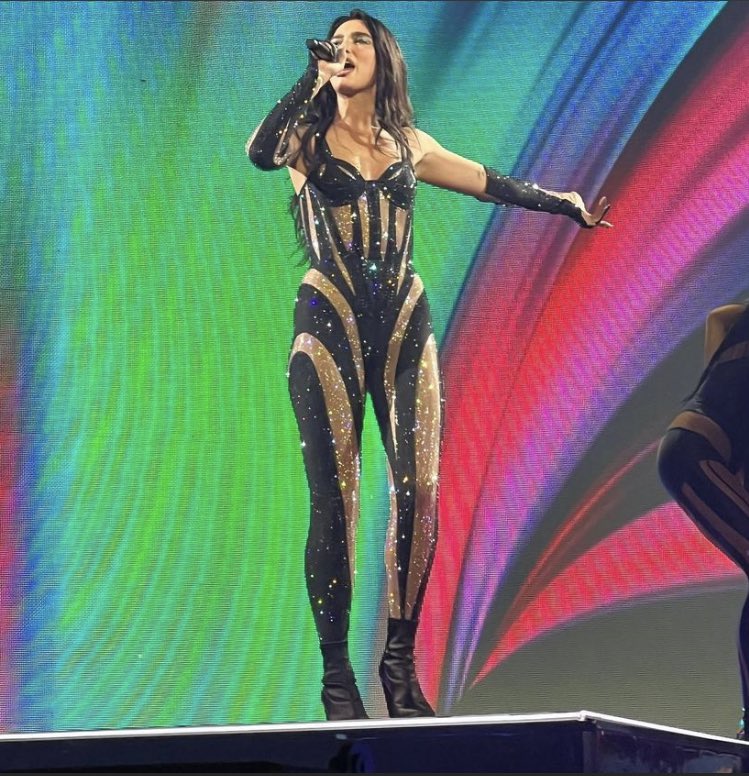
The following video from the Victoria and Albert Museum, where one of the catsuits is now housed, gives us an incredible look at the garment's construction.
Dua Lipa's glimmering Future Nostalgia Mugler catsuit | Costume design
Let's watch a detailed breakdown of Dua Lipa's Mugler catsuit from the Victoria and Albert Museum. This gives us a rare, up-close look at the internal structure of a high-fashion performance piece.
Watch the segment from 02:41 to 04:13, which describes the catsuit's lingerie-inspired construction, and the segment from 05:21 to 06:00, which shows the internal boning of the corset. Notice the mention of the designer's architectural background.
As the video explains, the top half of the catsuit is essentially a highly structured, boned corset with integrated bra cups. This is a direct runway concept—the lingerie-as-outerwear look that Mugler has perfected—made road-worthy. The architectural boning provides a rigid, defined shape visible from afar, while the use of stretch materials and mesh panels allows for the freedom of movement required for her energetic performances.
Case Study 3: Rosalía and Dion Lee's 'Motomami' Tour
The relationship between high fashion and tour costuming is not always a one-way street. Sometimes, the creative solutions developed for the stage find their way back to the runway. The collaboration between Spanish singer Rosalía and Australian designer Dion Lee for the 'Motomami' tour is a case in point.
The Secrets Behind Rosalía's 'Motomami World Tour' Costumes
This Vogue article details the collaboration between Rosalía and Dion Lee, showcasing how a specific aesthetic—the 'Motomami' concept—was translated into a cohesive tour wardrobe.
Please read the sections that discuss the practical considerations of the designs and the specific 'butterfly-like corsetry motifs.' Pay attention to how the designer mentions that these tour-specific ideas were then extended into his subsequent runway collections.
Dion Lee faced the classic challenge: translating the "hard and soft" aesthetic of motorcycle gear into breathable, flexible performance wear. His solution was to take elements like motocross padding and re-imagine them as "almost butterfly-like corsetry motifs." This is a brilliant adaptation, transforming a protective element into a decorative, structured bodice.
Most interestingly, Lee states that this idea, born from the functional needs of the tour, was then integrated back into his future resort and spring collections. This shows a fascinating creative feedback loop, where the demands of the stage directly inspire new high-fashion concepts.
Conclusion
Today, we've traced the path of high-fashion concepts from the aspirational space of the runway to the high-energy reality of the concert stage. Through the case studies of Beyoncé, Dua Lipa, and Rosalía, we've seen this adaptation process in action.
Key Takeaways:
- Concert tour wardrobes for major artists are often direct collaborations with high-fashion houses, adapting specific runway or archival looks.
- This adaptation involves re-engineering garments for performance, substituting materials and reinforcing construction while preserving or amplifying the core design concept.
- Runway bra concepts like bustiers, corsets, and sculptural chest pieces are frequently exaggerated for the stage with structure and embellishment to ensure arena-level visibility.
- The creative exchange can be a two-way street, with design solutions developed for the stage sometimes influencing a designer's future runway collections.
Next Lesson
In today's lesson, we saw several powerful examples of structured bodices and chest plates, particularly Beyoncé's recreation of the 1995 Thierry Mugler robot suit. This concept of the bra as a form of armor is a recurring theme in costume design. In our next lesson, we will move from the concert stage to the cinema screen to explore this idea further. We'll begin the "Superhero & Action Film Costuming" module by focusing on our next learning outcome: Identify armor-inspired bra and chest plate designs in recent superhero films.