Introduction
Welcome to our final lesson. In our previous session, we explored the trend of archival and vintage styling, examining how artists and designers are drawing on fashion history to create new meaning. Today, we turn our attention to a trend that is not about looking back, but about forging a new future: size-inclusive and diverse representation.
Our learning outcome is to analyze emerging bra styles linked to size-inclusive and diverse representation in recent media. We will explore the seismic cultural shift driving this change and dissect the specific design and styling choices that define this powerful movement. This topic is a fitting conclusion to our course, as it represents one of the most significant and visible evolutions in on-screen lingerie today.
The Cultural Shift: Fantasy vs. Authenticity
For decades, mainstream lingerie marketing, particularly in Western media, was dominated by a singular, narrow beauty ideal. This was epitomized by what one academic paper calls the "Bombshell" brand archetype, which prioritized a specific version of male-gaze fantasy, sex appeal, and an unattainable "perfect look."
In the 2010s, a counter-movement gained momentum. Driven by consumer frustration and the rise of social media activism, "Body Positive" brands emerged. These brands championed authenticity, comfort, and the "perfect fit" for "real women." This created a cultural contradiction in the market: Fantasy vs. Authenticity.
To understand this dynamic, let's turn to a research paper that analyzes this market shift in detail.
[PDF] an extension of cultural branding in the lingerie market by Savage X ...
The paper 'Cultural bridging: an extension of cultural branding in the lingerie market by Savage X Fenty' provides an excellent framework for our topic. It conceptualizes the two opposing brand ideologies that defined the market before the major shift we see today.
Please read the following sections of the PDF: Introduction (pages 1-4): Start from the beginning and read until the start of section 2. This section introduces the core idea of brands addressing cultural tensions and establishes the two opposing camps in the lingerie market: 'Bombshell' and 'Body Positive'. Section 4.1 'What created the conditions that led to the emergence of Savage X Fenty?' (pages 13-20): This section provides a detailed breakdown of the 'Bombshell look' and the 'Body Positive' counter-movement. Pay close attention to the characteristics described for each. You can skim the part on the 'male gaze' (pages 15-18) if you're short on time, but be sure to look at Table 1 on page 21, which provides a concise summary of the two archetypes.
As the paper lays out, the market was divided. On one side, you had brands selling a fantasy tied to a very specific body type. On the other, brands were selling comfort and inclusivity, often as a direct rejection of that fantasy. This set the stage for a new kind of brand to emerge—one that wouldn't just pick a side, but try to merge the two.
Case Study 1: Savage X Fenty and "Cultural Bridging"
No brand has been more central to the mainstreaming of diversity in lingerie than Rihanna's Savage X Fenty. Launched in 2018, it didn't just join the Body Positive movement; it redefined it by making inclusivity aspirational, high-fashion, and unapologetically sexy.
First, let's watch a short news clip that captures the immediate cultural impact of the brand's approach.
Rihanna’s fashion show praised for diversity, inclusivity l GMA
This 'Good Morning America' segment from the time of an early Savage X Fenty show highlights how revolutionary its diverse and inclusive casting was perceived to be.
Watch the first 1 minute and 39 seconds of the video. Notice the language used to describe the show: 'revolutionizing the runway,' 'diverse and inclusive,' and the direct contrast drawn with Victoria's Secret.
The key innovation of Savage X Fenty was not just showing diverse bodies, but showing them in lingerie that was just as daring, intricate, and desirable as anything offered by the "Bombshell" brands. The brand effectively practices what the research paper calls "cultural bridging." It bridges the gap between the "fantasy" of the Bombshell and the "authenticity" of the Body Positive brand.
Let's return to the same PDF to see how this is achieved through product design.
[PDF] an extension of cultural branding in the lingerie market by Savage X ...
The paper goes on to analyze Savage X Fenty's strategy in detail, focusing on how it blends the two opposing ideals in its branding and, most importantly for us, its products.
Please read the following sections: Section 4.2 'How does Savage X Fenty resolve the contradictions...?' (page 20): This section introduces the concept of 'cultural bridging.' Sections 4.4 and 4.5 (pages 23-32): These sections detail how the brand embodies both 'Bombshell' and 'Body Positive' attributes. Focus specifically on Section 4.5.2 'Product bridging' (pages 30-32). This is crucial as it analyzes the specific design strategies used. Note the description of how the same bralette is engineered differently for plus-sized and straight-sized models (Figure 3), with thicker straps for better support, without sacrificing the style.
This "product bridging" is the core of the emerging style. The innovation is designing a sexy, sheer, or strappy bra and then engineering it to provide the necessary support for a 44DD cup, rather than creating a separate, more conservative "plus-size" style. This ensures that the aesthetic is consistent and available to everyone.
Case Study 2: Lizzo, Yitty, and Unapologetic Embodiment
While Rihanna's brand bridged the gap, artists like Lizzo have shattered the old paradigms completely. Lizzo’s entire public persona is a radical act of self-love and celebration of her fat, Black body. In her music videos and performances, she doesn't just wear lingerie; she uses it as a core part of her artistic expression, resisting the historical desexualization of fat women in media.

The following research paper analyzes how Lizzo's on-screen presence rewrites cultural scripts.
[PDF] Thick girls get low - LSE
The dissertation '‘Thick girls get low’: Representations of gender, fatness, blackness and sexuality in music videos by Lizzo' examines how she uses visual language to challenge norms.
Please read these two key sections: 'Fat female sexuality' (pages 7-8): This section outlines the academic context, explaining how fat women have historically been 'desexualized' in media and discusses the specific 'Mammy' trope applied to Black women. 'Sexuality and desirability' (pages 20-25): This is the core analysis. Read how Lizzo actively resists the 'mammy' trope and asserts her desirability through her choice of dress (including lingerie), suggestive lyrics, and confident performance. Pay attention to the specific examples cited from her music videos, like 'Tempo' and 'Scuse Me'.
Lizzo's approach is not just about inclusivity; it's about centering a body type that has been actively marginalized and presenting it as powerful, beautiful, and desirable. Her brand, Yitty, extends this philosophy, blurring the lines between shapewear, activewear, and lingerie that is designed to be seen.
Analyzing the Bra Styles of Inclusivity
Drawing from these case studies, we can identify the key characteristics of emerging bra styles linked to diverse representation:
- Structural Adaptation for Style Consistency: Instead of "plus-size" and "straight-size" collections having different aesthetics, the goal is to offer the same style across all sizes. This is achieved through thoughtful engineering:
- Wider, more supportive bands, often with more rows of hooks and eyes.
- Thicker, yet still decorative, shoulder straps.
- Power mesh linings in cups for support without adding bulky padding.
- Strategic use of underwire and boning that is scaled appropriately for larger sizes.
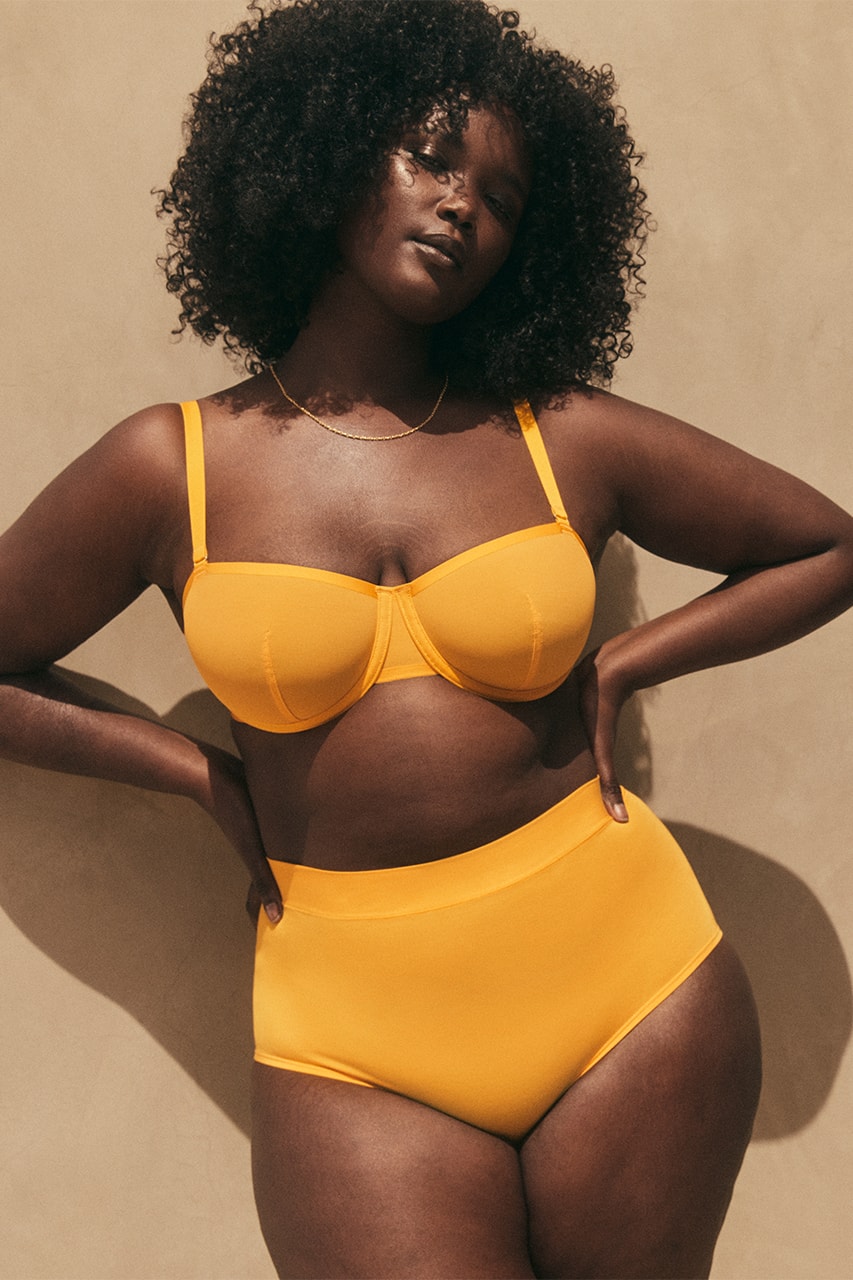
- Aesthetic Freedom: The rejection of the idea that larger bras must be purely functional and plain. This means seeing intricate lace, cut-outs, complex strap details, sheer fabrics, and vibrant colors in bras with G or H cups.
- An Expanded "Nude" Palette: A crucial element of inclusivity is offering a range of "nude" or "skin-tone" shades that go far beyond beige, acknowledging the diversity of the consumer base.
- Confidence as a Feature: The way these bras are styled in media—on confident, empowered models of all sizes—is part of the product's appeal. The styling says that desirability is not tied to one body type.
Conclusion
This lesson, and our course, concludes with a look at a trend that is fundamentally reshaping the landscape of on-screen lingerie. The move toward size-inclusive and diverse representation is more than a fleeting fashion moment; it's a reflection of a deep cultural demand for authenticity and recognition.
Key Takeaways:
- The lingerie market has seen a shift from a singular "Bombshell" ideal to a more diverse "Body Positive" ethos, with brands like Savage X Fenty "bridging" the gap by making inclusivity sexy and aspirational.
- Artists like Lizzo are central to this movement, using their platforms and bodies to challenge long-held stereotypes about fatness, race, and sexuality in media.
- Emerging bra styles linked to this trend are not just larger versions of existing bras. They are re-engineered to provide support while maintaining a consistent, fashionable aesthetic across a full range of sizes and skin tones.
- This trend redefines aspiration: it is no longer about aspiring to an unattainable body, but about aspiring to the confidence and self-expression exemplified by a diverse range of representatives.
Thank you for joining me on this journey through the world of on-screen lingerie. From the bullet bras of Hollywood's Golden Age to the culturally transformative designs of today, we have built a comprehensive visual vocabulary. I hope this course has equipped you with a new lens to critically and appreciatively analyze the powerful intersection of fashion, culture, and media.