Introduction
Welcome to a new module! In our previous lessons, we delved into the high-glamour world of hip-hop and R&B, culminating in an analysis of how artists like Beyoncé use metallic materials and chains to create powerful, armor-like bra alternatives. Those styles were defined by high production value, luxury, and status.
Today, we pivot to a dramatically different aesthetic as we begin our module on Rock, Indie & Alternative Music. Our focus will be on the raw, rebellious, and highly personal styles that have emerged from these subcultures. The learning outcome for this lesson is to identify deconstructed and DIY bra aesthetics in alternative music videos.
We will explore how the "Do-It-Yourself" (DIY) ethos and the principles of deconstruction are applied to bras and bra-like tops, creating looks that reject mass-market polish in favor of unique self-expression. This is about taking things apart, repurposing them, and creating something new and personal, an approach that stands in stark contrast to the aspirational luxury we've recently discussed.
The DIY and Deconstructed Ethos
Before we look at specific examples, let's define our key terms. In the context of alternative fashion, these concepts are more than just techniques; they are philosophies.
- DIY (Do-It-Yourself): This ethos, central to subcultures like punk and rave, is about creating, modifying, or acquiring clothing outside of mainstream commercial channels. It can involve sewing, painting, studding, or simply combining secondhand items in unique ways. The driving force is anti-consumerism and radical self-expression.
- Deconstruction: This involves taking a garment—in our case, a bra—and breaking it down to its essential components, then reassembling it in an unconventional way. Think visible seams, raw edges, mismatched parts, or incorporating elements from other garments. It challenges the very idea of a "finished" or "perfect" piece of clothing.
To see this ethos in action, let's look at how it manifests in the rave subculture, which has deep ties to alternative electronic music.
The article 'Underground Rave Fashion' by Brandon Tauszik for the San Francisco Chronicle offers a direct look into the mindset behind DIY styling. It features interviews with attendees of underground raves about their personal style.
Please read the short interviews with two individuals: Cy Borg: Find their interview near the top. Note the description of their top: 'a bikini top that I made into a cute little thing.' Mariana: Scroll down to find her profile. Pay close attention to her description of her style philosophy ('secondhand everything,' 'sew it or paint it myself,' 'not paying into consumer culture') and how she acquired her bra ('my friend gave me the bra').
The statements from Cy Borg and Mariana perfectly illustrate the core principles we're discussing:
- Repurposing: Cy Borg takes a bikini top, an item with a different original function, and modifies it into a unique top. This is a classic DIY technique that you've likely encountered in your own design explorations, but here it is used for a raw, club-kid aesthetic rather than for creating a commercially viable product.
- Anti-Consumerism: Mariana explicitly rejects consumer culture, building her look from secondhand items, handmade pieces, and gifts. Her bra isn't a branded product from a lingerie store; its value comes from its personal history and its integration into her self-made look.
Visual Markers of the Aesthetic in Music
This DIY and deconstructed approach creates a distinct visual language in music videos and performance. It's less about a single type of bra and more about a collection of styling techniques.
Common Deconstructed Elements:
- Layering and Transparency: A simple bra worn under a heavily torn, shredded, or sheer t-shirt or dress. The focus is on the interplay of textures and the act of revealing/concealing. The grunge movement of the 1990s, with artists like Courtney Love, heavily utilized this look with slip dresses and visible lingerie.
- Visible Construction: Garments where the straps, band, or cups appear to be pieced together from different sources, or where safety pins, rough stitching, or even duct tape are used as functional or decorative elements.
- Garment Splicing: A top that is literally a hybrid of a bra and another garment, like a t-shirt, often with raw, unfinished seams where they are joined.
Common DIY Elements:
- Hand-Painted/Drawn Designs: Applying custom graphics, logos, or text onto a simple bra.
- Found Object Embellishment: Attaching non-traditional items like bottle caps, hardware, or other found objects.
- Strategic Destruction: Deliberately cutting, tearing, or burning parts of the garment to give it a distressed, worn-in look that defies the perfection of new clothes.
Case Study: Die Antwoord and 'ZEF' Style
A powerful modern example of a fully-realized DIY aesthetic comes from the South African alternative group Die Antwoord. Their entire persona is built around the counter-cultural concept of "Zef," which celebrates a style that is simultaneously considered poor or common, yet also flashy and cool. It is the ultimate expression of creating a powerful identity from limited means.
Let's examine a typical performance look from group member Yolandi Visser.
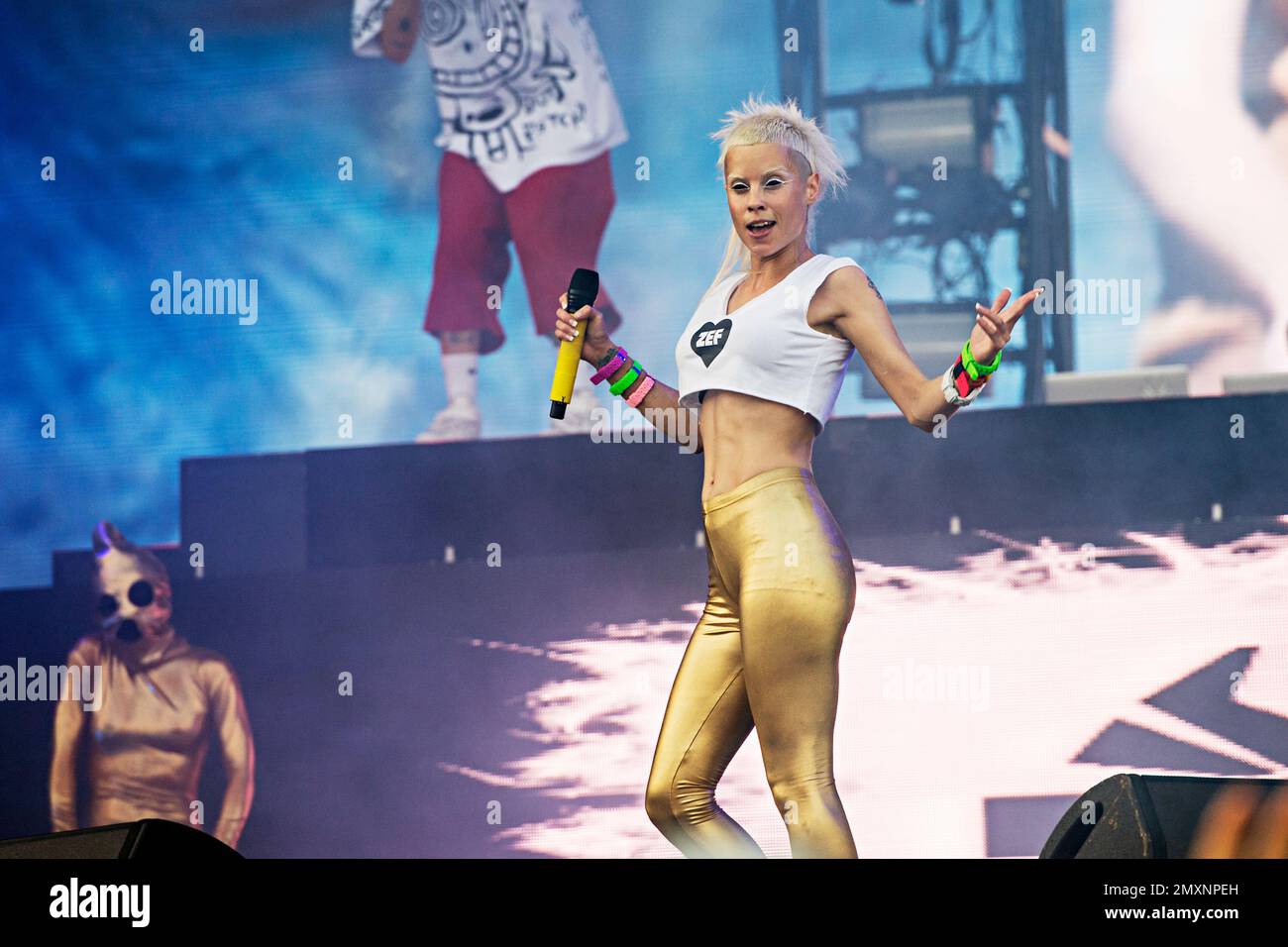
Analyzing this image, we can see several key aspects of the DIY aesthetic:
- The Bra as a Non-Lingerie Item: The top functions visually as a bralette, but it is fundamentally a customized cropped shirt. It rejects the conventions of traditional lingerie design (lace, underwire, specific cup shapes) in favor of something more direct and confrontational.
- The Logo as Identity: The "ZEF" logo is not a brand; it's a declaration of identity and allegiance to a subculture. It's the aesthetic equivalent of Mariana in the article stating her anti-consumerist principles.
- Total Aesthetic Cohesion: The top doesn't exist in isolation. It works with the severe haircut, the unconventional makeup, and the gold leggings to create a complete, jarring, and unforgettable character. The bra style is a component of a fully articulated, self-made persona.
This is what deconstructed and DIY aesthetics often aim for in alternative music: the bra isn't just a piece of clothing; it's a piece of a statement.
Conclusion
In this lesson, we have defined and identified the deconstructed and DIY bra aesthetics that are prevalent in alternative music genres. We've seen that this style is not just about a look, but about an entire ethos.
Key Takeaways:
- Deconstructed and DIY bra styles are rooted in the anti-consumerist and individualistic philosophies of subcultures like punk, grunge, and rave.
- The aesthetic is achieved through techniques like repurposing existing garments (e.g., bikini tops), modifying them (e.g., painting, cutting), and deconstructing them to reveal their components.
- Visually, this translates to raw edges, unconventional materials, visible layering, and a general rejection of the polished perfection of mainstream fashion.
- Artists and style tribes use this aesthetic to build a unique identity, where the bra is an integral part of a larger, self-created persona, as exemplified by Die Antwoord's "Zef" style.
Next Lesson
We have just explored the creative, often low-fi, and rebellious nature of the DIY aesthetic. In our next lesson, we will continue our journey into alternative styles by focusing on another iconic look: leather and studded bra styles in rock music videos. This will shift our focus from the "made-it-myself" approach to a more specific set of materials used to convey toughness, aggression, and overt sexuality within the rock and punk genres.