Introduction
Welcome to our new lesson. In our previous session, we examined tactical and utilitarian designs in action films, focusing on how practicality and function are integrated into costumes, from rugged layers to streamlined spy suits. We saw how support can be built directly into a garment's architecture, a principle we will see taken to speculative extremes today.
This lesson transitions from the grounded reality of action films to the imaginative frontiers of science fiction. Our goal is to identify futuristic bra designs in sci-fi films, including metallic, LED-lit, and transparent materials. Sci-fi costume design offers a unique space for creative exploration, unbound by the limitations of current technology or social norms. For a lingerie designer, this genre is a rich source of inspiration for re-thinking structure, materials, and the very definition of a supportive garment.
The Structural and Metallic Aesthetic
Science fiction frequently uses metallic and highly structured garments to signify technological advancement, protection, or a departure from organic forms. These designs often borrow from the language of armor but reinterpret it with sleek, futuristic lines.
A cornerstone of modern sci-fi fashion is Jean Paul Gaultier's work for the 1997 film The Fifth Element. His designs blended haute couture with speculative concepts, creating a vibrant and unforgettable visual universe.
An Appropriately Unhinged Recap of Jean Paul Gaultier's 5TH ELEMENT (Part 2)
Let's analyze some of Gaultier's iconic designs. This video from mayag offers a detailed look at the film's costuming.
Please watch the following segments: Leeloo's Bandages (04:49 - 05:54): Pay attention to the description of this look as a solution for a character needing both medical access and modesty. Note how it functions as a minimal, strappy, yet structural garment. Airline Stewardess Bustiers (15:04 - 16:01): Observe how a traditional bustier is transformed into futuristic workwear with specific cutouts and material choices. Diva Plavalaguna's Harness (22:17 - 22:45): Focus on the description of this garment as a metallic, baroque-inspired harness that constitutes the character's only attire.
These examples from The Fifth Element showcase several key approaches to futuristic design:
- Deconstruction: Leeloo's "thermal bandage" outfit reduces the concept of clothing to its most essential structural lines, creating a bra-like form through strategic strapping. This is a concept familiar in avant-garde lingerie design.
- Recontextualization: The stewardess uniforms take a known garment—the bustier—and render it futuristic through sharp, geometric cutouts and a sleek, uniform aesthetic.
- Sculptural Form: Diva Plavalaguna's harness is pure sculpture. It's not a piece of clothing in the traditional sense but a metallic exoskeleton that adorns the body, providing a visual structure without full coverage.
Beyond aesthetics, sci-fi also imagines garments with enhanced functionality. An excellent real-world concept that embodies this is the "SpaceBra."
The Intersection of Design, Fashion, Science, and Technology
The book 'Fashionable Technology' catalogues various intersections of design and science. One of the most relevant concepts for our topic is the SpaceBra.
Please find the chapter on 'Grado Zero Espace' and read the short entry for 'SpaceBra'. Notice how it uses Shape Memory Alloys not just for monitoring but also to actively change its shape and level of support.
The SpaceBra concept pushes the idea of a bra from a passive support structure to an active, responsive piece of technology. This integration of "smart materials" is a hallmark of speculative futuristic design.
The Illuminated Garment: LEDs and Fiber Optics
One of the most common visual tropes for a futuristic setting is integrated lighting. Costumes that glow, pulse, or display information immediately signal a technologically advanced world.
The quintessential example in modern cinema is Tron: Legacy (2010), where the characters' suits are defined by their glowing circuits.
Inside TRON: The Hidden Story of Costumes and Visual Effects
This behind-the-scenes feature on the costumes of Tron: Legacy reveals the technology used to create the iconic illuminated suits.
Please watch the segment from 15:07 to 17:51. Focus on the discussion of creating flexible lights that can be integrated into a form-fitting suit, and the layering process described by actress Olivia Wilde. This shows how support and technology are built into a single garment.
In the Tron: Legacy suits, the bra function is not a separate item but is fully integrated. The suit is a multi-layered system where the base layers provide compression and support, while the outer layers carry the electronics and create the final silhouette. The light-up lines themselves are used to define and sculpt the torso.
This technology isn't confined to film. The performance and fashion worlds have been experimenting with light-up garments for years, providing real-world case studies of these futuristic concepts.
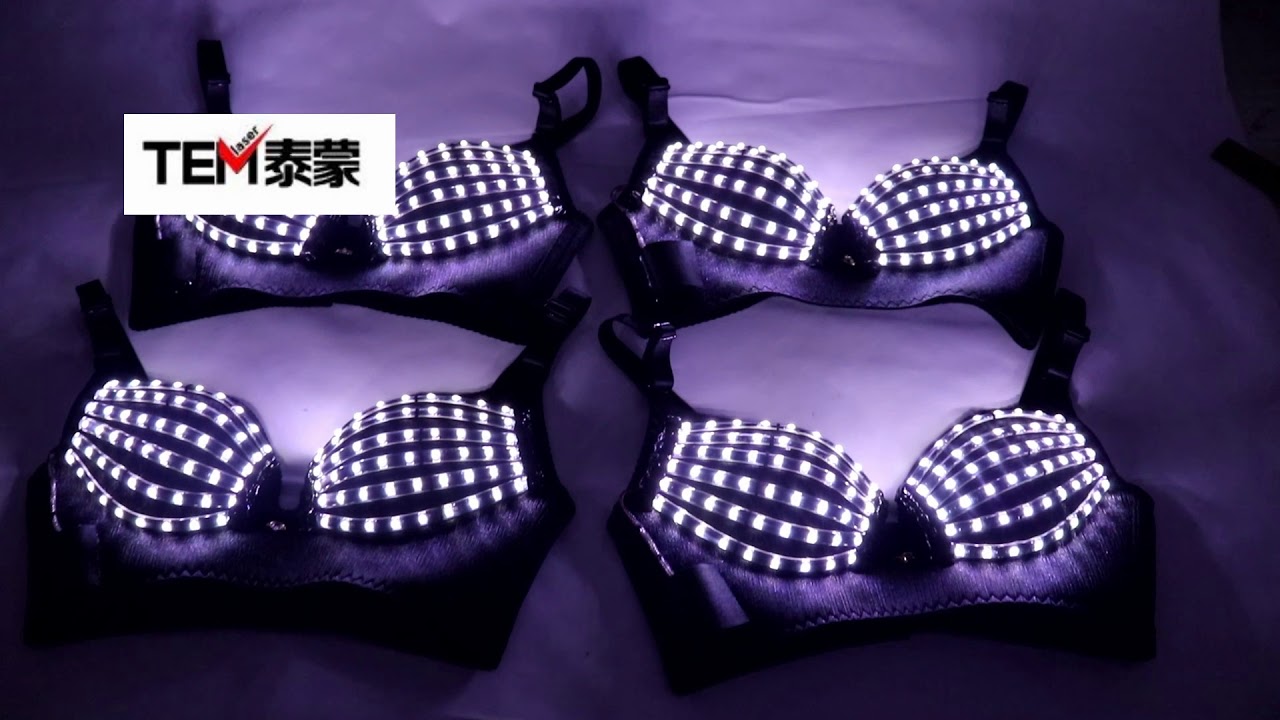
The research paper "Research on the Evolution and Innovation of Performance Costumes" provides several key examples. It mentions Katy Perry's customized LED bras that could display scrolling lyrics and Lady Gaga's famous "pyrotechnic bra" that emitted sparks, turning the garment into a piece of stage machinery. These examples show a direct and often playful integration of lighting technology into lingerie.
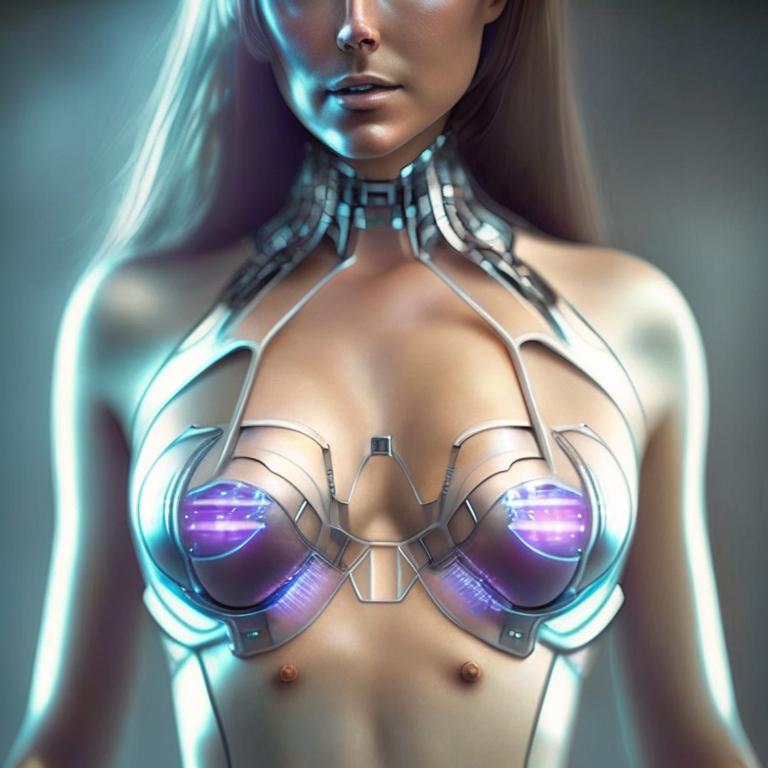
The Transparent Future
The use of transparent materials like plastic, vinyl, and acrylic is another way costume designers signal a futuristic setting. This can suggest a world with different social norms around modesty, or it can showcase materials with advanced properties.
The paper we just referenced also highlights the use of specific modern materials to achieve this look.
Research on the Evolution and Innovation of Performance ...
Let's consult the 'Research on the Evolution and Innovation of Performance Costumes' paper again for a specific material reference.
Please find the paragraph discussing the 2000s to 2010s. It is in the section titled 'Stylistic Evolution of the 10-year Cycle of Clothing'. Locate the mention of 'Thermoplastic polyurethane (TPU) materials' and how they drive the trend for transparent clothing. This gives you a specific technical name for these futuristic textiles.
This aesthetic is often combined with other futuristic elements. For example, in the "Fashionable Technology" catalog, designer Angel Chang's Spring 2007 collection featured a see-through raincoat with embedded LEDs. While not a bra, it perfectly illustrates the principle of combining transparency with light to create a multi-layered, high-tech look that could easily be adapted to lingerie design. This combination of sheer or transparent fabrics with structural or illuminated elements is a recurring theme in futuristic fashion.
Conclusion
In this lesson, we have surveyed the primary visual strategies for designing futuristic bras and bra-adjacent garments in science fiction. We've seen how these designs often push the boundaries of materials and construction to imagine what support and style might look like in the future.
Key Takeaways:
- Metallic & Structural: Futuristic designs often use metallic finishes, hard materials, and sculptural or architectural forms to create an aesthetic of advanced technology. These can range from minimal harnesses (The Fifth Element) to functional smart-material garments (the "SpaceBra" concept).
- LED-Lit: The integration of light—via LEDs, fiber optics, or electroluminescent wire—is a key signifier of sci-fi fashion. This technology can be used to create patterns, display information, or simply sculpt the body with light, as seen in Tron: Legacy and various high-tech fashion pieces.
- Transparent: The use of clear or translucent materials like TPU, vinyl, and acrylic creates a sleek, modern, and sometimes provocative futuristic look.
These three elements are often mixed and matched, creating a rich visual vocabulary for speculative costume design that reinterprets the function and form of a bra.
Next Lesson
Having explored human-centric futuristic designs, our next lesson will venture even further into the speculative. We will describe alien and otherworldly bra aesthetics in sci-fi films, looking at how designers create costumes for non-human bodies and cultures, often drawing inspiration from biological forms and imagined civilizations.