Welcome to your first lesson! I'm excited to guide you through this course exploring the visual language of bras in film and music. Your goal is to build an extensive "style repertoire" based on popular media, and this course is designed to do exactly that, starting with the foundational styles that set the stage for everything that followed.
This first module focuses on the historical evolution of on-screen lingerie. In this lesson, you will learn to identify key bra silhouettes from Hollywood's Golden Age, including the bullet bra and the 'sweater girl' look. We'll analyze the specific construction of these garments and see how Hollywood starlets turned a piece of underwear into an iconic fashion statement.
The Power of the Silhouette
Before we dive into specific styles, it's important to understand the concept of a silhouette in the context of Hollywood's Golden Age (roughly the 1930s to the early 1960s). During this period, the ideal female form was highly structured and curvaceous. Undergarments weren't just for support; they were architectural tools used to sculpt the body into the fashionable shape of the era. The bra, in particular, was a primary instrument for creating a dramatic and defined bustline that would look striking on camera.
This contrasts sharply with many contemporary ideals that favor a more natural shape. For the stars of the Golden Age, the bra's structure was paramount.
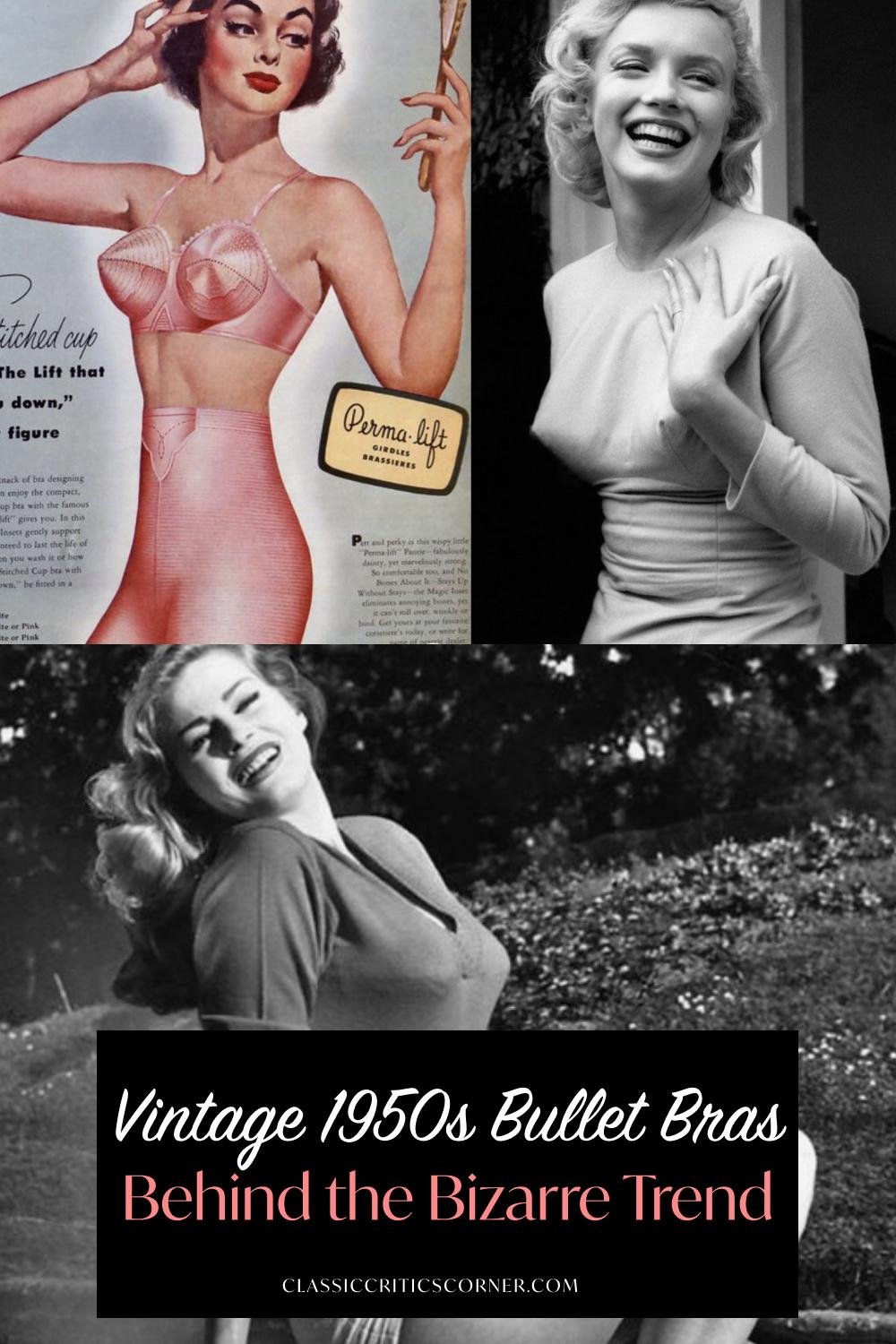
The Bullet Bra: An Icon of Construction
The defining undergarment of this era was the bullet bra, also known as the cone bra or conical bra. Its purpose was to create a lifted, separated, and pointed bust. This wasn't a subtle look; it was a deliberate and dramatic statement.
To understand its design and impact, please read the following article. Pay close attention to the description of its construction and the actresses who popularized it.
Vintage 1950s Bullet Bras - Behind the Bizarre Trend
This article from Classic Critics Corner provides an excellent overview of the bullet bra, its history, and its connection to the 'sweater girl' phenomenon.
Please read the section titled 'What were bullet bras?'. Focus on its alternative names, its invention in the 1940s, and the description of the circular or spiral stitching that created its unique shape.
As you've just read, the key to the bullet bra's distinctive shape was its construction. The cups were made with concentric circles of stitching (spiral stitching) that reinforced the fabric, allowing it to hold a stiff, conical shape. This technique provided both lift and projection, effectively making it an early forerunner of the push-up bra, but with a goal of creating a point rather than a rounded cleavage.
Another resource, "A Brief History of the Bra," notes that these military-inspired "torpedo" and "conical shapes" became fashionable during the 1940s, partly because they suited the durable workwear of the era before being glamorized by Hollywood.
The "Sweater Girl": Styling the Silhouette
The bullet bra might have remained a simple piece of engineering if not for its adoption and popularization by Hollywood. Actresses and their costumers realized that this pointed silhouette looked incredibly dramatic on screen, especially when emphasized by tight-fitting clothing. This gave rise to the "sweater girl" look.
To explore this trend, please read the following sections from the same article.
Vintage 1950s Bullet Bras - Behind the Bizarre Trend
Now let's connect the undergarment to the on-screen look. These sections detail the 'sweater girl' trend and profile the key actresses who defined it.
Read the sections 'Marilyn Monroe 1950s bullet bras' and 'Sweater girls, pin-up girls, and bullet bras'. Take note of who the term 'sweater girl' was first coined for and identify the other key actresses associated with this style.
The "sweater girl" was a term coined to describe Lana Turner after her appearance in the 1937 film They Won't Forget, but it became a widespread phenomenon in the 1940s and 50s. As you read, the look was simple but effective: a bullet bra worn under a tight-fitting knit sweater. The combination made the structured, conical shape of the bra highly visible, turning the bust into the focal point of the outfit.
Case Study: Diana Dors
Let's look at a specific example. The British actress Diana Dors, often compared to Marilyn Monroe, was a notable proponent of this style.
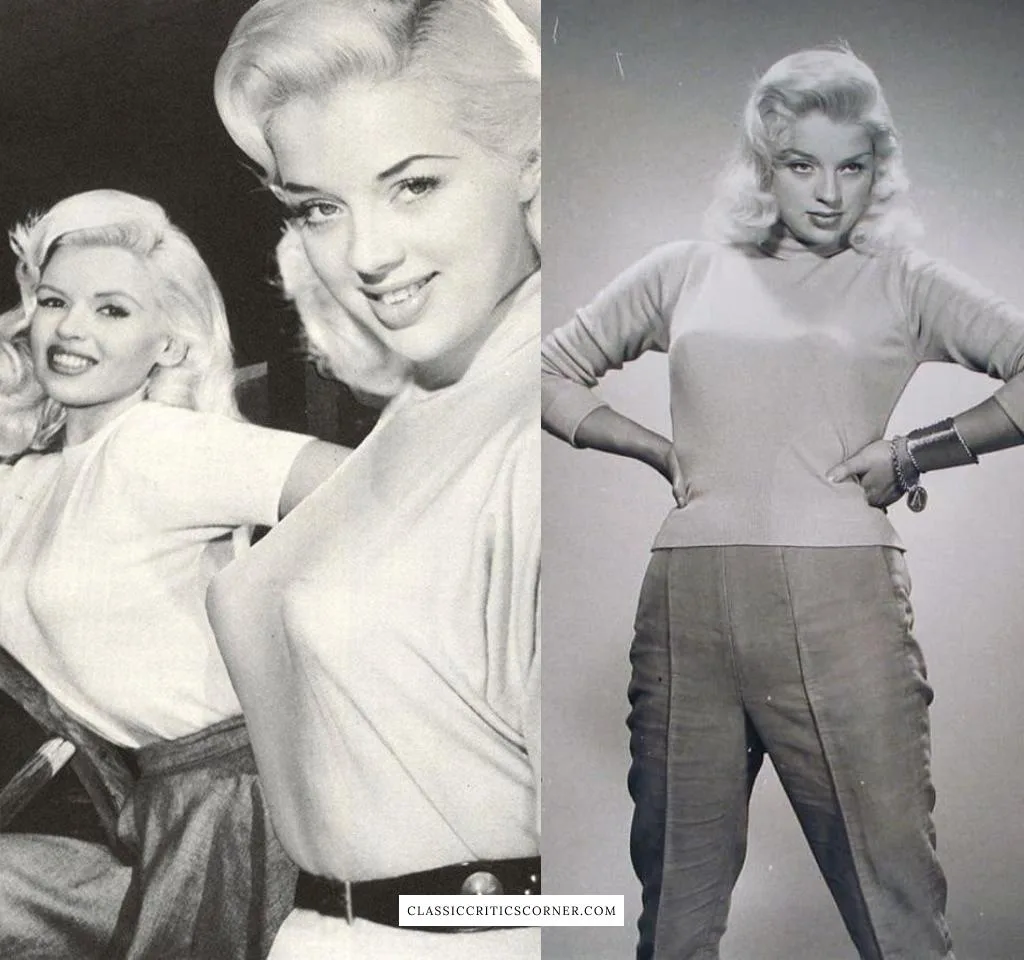
In these images, you can clearly see how the rigid structure of the bullet bra dictates the drape of the sweater. The fabric is pulled taut over the points of the bra, creating a sharp, stylized silhouette that is anything but natural. This is a perfect illustration of the undergarment as an architectural tool.
The key figures you should add to your visual library for this look include:
- Lana Turner (the original "sweater girl")
- Marilyn Monroe
- Jayne Mansfield
- Jane Russell
- Diana Dors
- Mamie Von Doren
While the name suggests sweaters, these actresses wore bullet bras under a variety of garments, including fitted dresses and blouses, to achieve the same distinctive bustline. Marilyn Monroe, as noted in the reading, was particularly adept at incorporating the look into her entire wardrobe.
Key Takeaways
This lesson covered the first foundational style in your on-screen repertoire. Let's summarize the key points:
- Hollywood's Golden Age favored a highly structured and sculpted silhouette, with undergarments playing a key architectural role.
- The bullet bra (or cone bra) was the defining undergarment of the 1940s and 50s. Its signature pointed shape was created by concentric spiral stitching.
- The "sweater girl" was the iconic on-screen look created by wearing a bullet bra under a tight-fitting sweater, making the pointed silhouette a deliberate and visible fashion statement.
- Key actresses who popularized this look include Lana Turner, Marilyn Monroe, and Jayne Mansfield.
Next Lesson
In our next lesson, we will jump forward to the 1960s and 70s. You will "Describe how the sexual revolution influenced braless styles and the visibility of the 'soft bra' on screen." This will provide a fascinating contrast, as we move from an era of extreme structure to one that celebrated naturalism and freedom from constraint.