Introduction
Welcome to the final module of our course. In the last lesson, you undertook the intensive work of revision, synthesizing feedback and your own critical eye to finalize the sequence, pacing, and internal design of your photo book. You now have a coherent, powerful visual narrative. This lesson transitions from the book's interior to its exterior articulation, beginning with one of its most crucial elements: the title.
A title is far more than a simple label; it is the first point of contact between your work and its audience. It's an invitation, a piece of the art itself that frames the viewer's entire experience. For a project you've spent so much time developing, choosing a title is an act of distillation—boiling down your complex theme into a few words that can guide, intrigue, and resonate. Today, we'll explore structured approaches to crafting a title that is as intentional and conceptually aligned as your final sequence.
The Title as an Entry Point
Before we delve into methods for generating titles, it's essential to understand their function. A title isn't just for identification in a catalog. It sets a tone, directs attention, and shapes interpretation before the first page is even turned. A weak or thoughtless title can undermine a strong body of work, while a powerful one can elevate it.
Let's begin by reading an article that frames this idea perfectly. It argues that a title forms the "entry into the work," guiding the viewer's first steps and preventing the project from dissolving into a set of random interpretations.
Should you Strengthen Your Photographs With a Thoughtful Title?
This article by Alvin Greis for Fstoppers provides a sophisticated argument for the importance of titling. It outlines the title's role in preserving authorial intent and details common mistakes.
Please read the introduction, the section on "Common Mistakes," and the section on "Mechanics and Application." Focus on the idea of the title as an entry point. Pay close attention to the list of common errors, such as literal descriptions and empty abstractions. Finally, reflect on the author's argument that a title narrows interpretation and verbalizes your core decision as an artist.
As the article points out, one of the most common mistakes is leaving a work "Untitled." While it may feel like this offers the viewer freedom, it often signals a lack of creative investment and distances you from your own artistic decisions. Another frequent pitfall is creating titles that are simply too obvious.
The following video provides a concise and practical overview of what to avoid.
This video from Cinder Block Studios, "Tips for Titling Your Art," starts by clearly outlining several common titling traps.
Watch the first segment, from 00:30 to 02:47. The creator gives clear examples of what not to do, such as stating the obvious ("Big Mountain"), being overly ambiguous, or using generic serial numbers.
A Typology of Titling Strategies
Now that we know what to avoid, how do we find what works? Rather than waiting for a moment of random inspiration, we can approach titling systematically. A highly effective method is to think in terms of different conceptual categories. The Fstoppers article you just read introduces an excellent framework for this.
Should you Strengthen Your Photographs With a Thoughtful Title?
Let's return to the same Fstoppers article to explore its "Typology of Approaches." This provides a powerful toolkit for generating title ideas.
Read the section titled Typology of Approaches. As you read about the seven types—Temporal, Sensory, Boundary, Symbolic, Structural, Observational, and Affective—try to imagine a potential title for your own project within each category.
This typology gives you a set of lenses through which to view your work. Does your book have a strong sense of time passing (Temporal)? Is it about a mood (Affective)? Or does it guide the viewer to notice formal patterns (Structural)?
To expand on this toolkit, let's explore a variety of other practical tips and creative tactics. The next video offers eleven distinct strategies, many of which complement the typology we've just discussed.
How to Title Your Artwork: 11 Expert Tips
In "How to Title Your Artwork: 11 Expert Tips," artist Jennifer Laurel Keller shares a wealth of actionable advice for brainstorming titles.
Watch the following segments, which present a range of creative strategies. You can jump between them as they cover distinct tips: The Problem with 'Untitled': Tip #1 Focus on Emotion: Tip #2 (Affective) Use Symbolism: Tip #3 (Symbolic) Create Intrigue: Tip #4 (Observational/Narrative Hook) Avoid the Obvious: Tip #7 Describe a Detail: Tip #8 (Observational) Use a Phrase or Idiom: Tip #9 Expand Your Vocabulary: Tip #10 Go Behind the Scenes: Tip #11
These strategies show that a title can come from many places: the feeling of the work, a detail within an image, an external reference, or even the story of its creation. For example, a title can make a direct cultural reference, like Gordon Parks titling a photograph of a cleaner "American Gothic," which instantly creates a dialogue with Grant Wood's famous painting and adds layers of social commentary. A title can also function through subversion, where the words create a stark contrast with the images, forcing the viewer to reconcile the two.
The Title as a Design Element
As a graphic designer, you are uniquely positioned to appreciate that a title is not just a concept but also a form. Its presentation on the cover—the choice of typeface, its size, color, and placement—is the first handshake with the viewer. The typographic treatment can either support or contradict the meaning of the words, adding yet another layer to the work.
Consider these two examples:
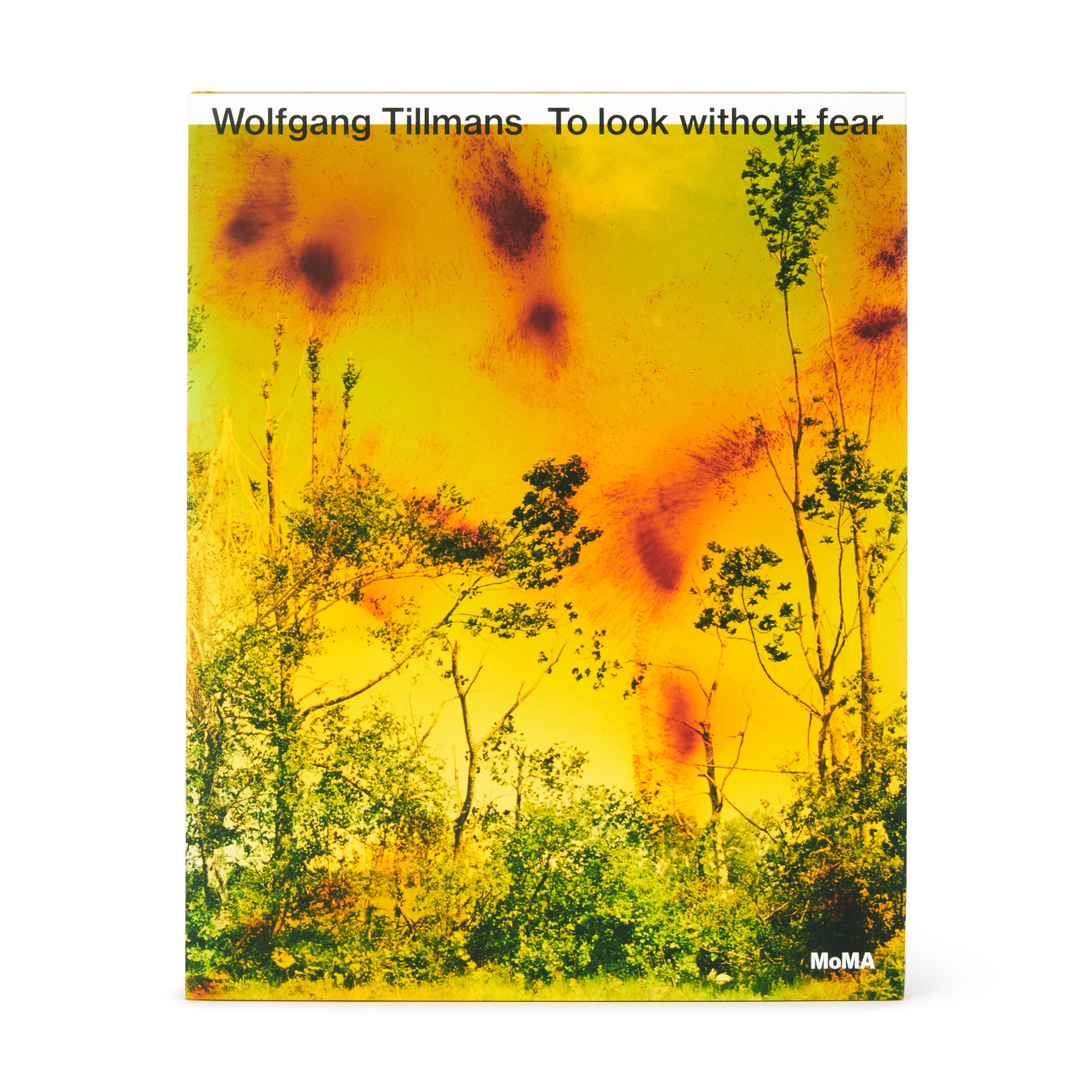

Your choice of title and its visual execution on the cover are deeply intertwined. A poetic, multi-word title might call for a more delicate, serif typeface, while a single, impactful word might demand a bold, assertive presentation.
Your Task: Brainstorming and Refining Your Title
Now it's time to apply these strategies to your own project. Your task is to generate a shortlist of potential titles and select the one that best serves your book.
-
Revisit Your Core Concept: Begin by reviewing your artist statement, mood board, and your finalized sequence. What are the 3-5 keywords that are most essential to your project's theme, mood, and narrative?
-
Generate a Longlist: Using your keywords as a starting point, begin brainstorming. Force yourself to generate at least one title for each of the seven categories in the "Typology of Approaches."
- What is a Temporal title for your book? (e.g., Before the Frost, The Hour After)
- A Sensory one? (e.g., Damp Earth, Cold Sun)
- An Affective one? (e.g., A Quiet Tension, Unsettled)
- ...and so on.
-
Experiment with Other Tactics:
- Look for a "hook" or a "behind-the-scenes" story. Is there a phrase that captures that?
- Could a line from a poem, a song, or a piece of literature that resonates with your theme work as a title?
- Use a thesaurus on your keywords to explore more evocative vocabulary.
-
Create a Shortlist: From your longlist, select the 3-5 strongest candidates.
-
Test Your Shortlist:
- Say each title out loud. How does it sound?
- Create a quick digital mockup of your cover with each title. How does it look?
- Place each title alongside your opening image. How does it change the way you see that first photograph?
- Which title feels most true to the work you've created? Which one opens up the most interesting questions without giving everything away?
Select the single title that you feel is the most evocative, conceptually aligned, and authentic to your project.
Conclusion
You have now moved from the complex language of images to the concise, potent language of words. By systematically exploring different strategies, you've engaged in a process of conceptual refinement, seeking the verbal key that will unlock your visual narrative for the viewer. A well-chosen title doesn't just describe the work; it becomes an inseparable part of it.
Key Takeaways:
- A title is a strategic tool that frames the viewer's perception and preserves your authorial intent.
- Avoid common pitfalls like being too obvious, too vague, or defaulting to "Untitled."
- Systematic approaches, like the Typology of Approaches, provide a structured way to brainstorm conceptually relevant titles.
- Creative tactics, such as using idioms, cultural references, or behind-the-scenes stories, can lead to unique and memorable titles.
- The final title choice should be tested against the work itself—its sound, its visual presence on the cover, and its relationship with the opening images.
The work you've done distilling your project's essence into a title provides the perfect foundation for our next lesson, where you will craft the final artist statement to accompany your book.