Hello! Following our last session on the Present Perfect, we'll now shift our focus to a related but distinct tense. This lesson is designed to help you master the Present Perfect Continuous, which is essential for describing ongoing work and activities in your professional life.
In our previous lesson, we established that the Present Perfect Simple (I have fixed the bug) is used for completed actions that have a result in the present. Today, we'll explore its counterpart, the Present Perfect Continuous (I have been fixing the bug), which emphasizes the duration of an action that started in the past and is still in progress. By the end of this lesson, you will be able to construct these sentences to accurately report on your ongoing tasks.
1. The Core Idea: Emphasizing Duration and Continuity
The main purpose of the Present Perfect Continuous is to talk about an action or task that is not finished. It highlights the process and the time spent on it, rather than the final result. This is extremely common in daily stand-ups, status updates, and progress reports.
The basic structure is: Subject + have/has + been + Verb-ing
To begin, let's look at a brief resource that defines this tense and its structure within a professional context.
This reading introduces the core concept and formation of the Present Perfect Continuous.
Read the Contextualization section to understand the primary use case. Then, review the clear, step-by-step rules under Formation to solidify your understanding of the structure.
As you can see, this tense is perfect for describing the continuity of your work. For example, the sentence from the initial prompt, "I have been analyzing the application logs for two hours," fits this pattern perfectly. It tells us when the action started (two hours ago) and that it is still happening now.
2. Simple vs. Continuous: Result vs. Activity
The most critical part of mastering this tense is knowing when to use it instead of the Present Perfect Simple. The choice depends entirely on what you want to emphasize.
- Present Perfect Simple (Result): "I have configured the new server."
- Focus: The task is complete. The server is now ready.
- Present Perfect Continuous (Activity/Duration): "I have been configuring the new server."
- Focus: The task is still in progress. This is what I am currently spending my time on.
The following video provides an excellent and clear comparison between these two tenses. It also explains some important exceptions for when you cannot use the continuous form, which will help you avoid common mistakes.
PRESENT PERFECT or PRESENT PERFECT CONTINUOUS? | the difference
This video clearly explains the difference between the Present Perfect Simple and Continuous.
Please watch the following segments: The introduction explains the basic structural difference and the core concept of an ongoing action. This part covers a subtle but useful point: using the tense to explain the present evidence of a recently finished action (e.g., "I'm late because I've been dealing with a critical alert"). Finally, watch the crucial section on when not to use the continuous form. Pay close attention to the explanation of "stative verbs" (like know, believe, own) and actions that cannot be ongoing (like graduate or break).
3. Application in IT: Describing Ongoing Work
Let's apply this to some typical software development scenarios. Imagine a team working on a project. The continuous nature of their work is central to their daily communication.
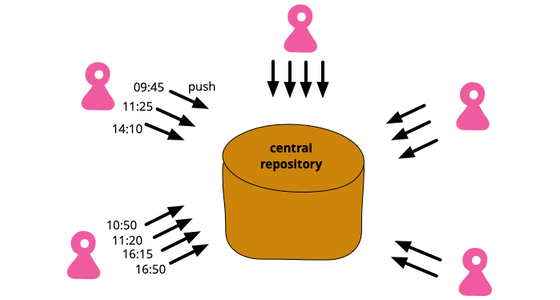
Using the process shown in the image above, a team lead might report:
- "The front-end developers have been implementing the new UI components all week."
- "We have been pushing updates to the staging environment for testing."
Now, consider a QA dashboard.
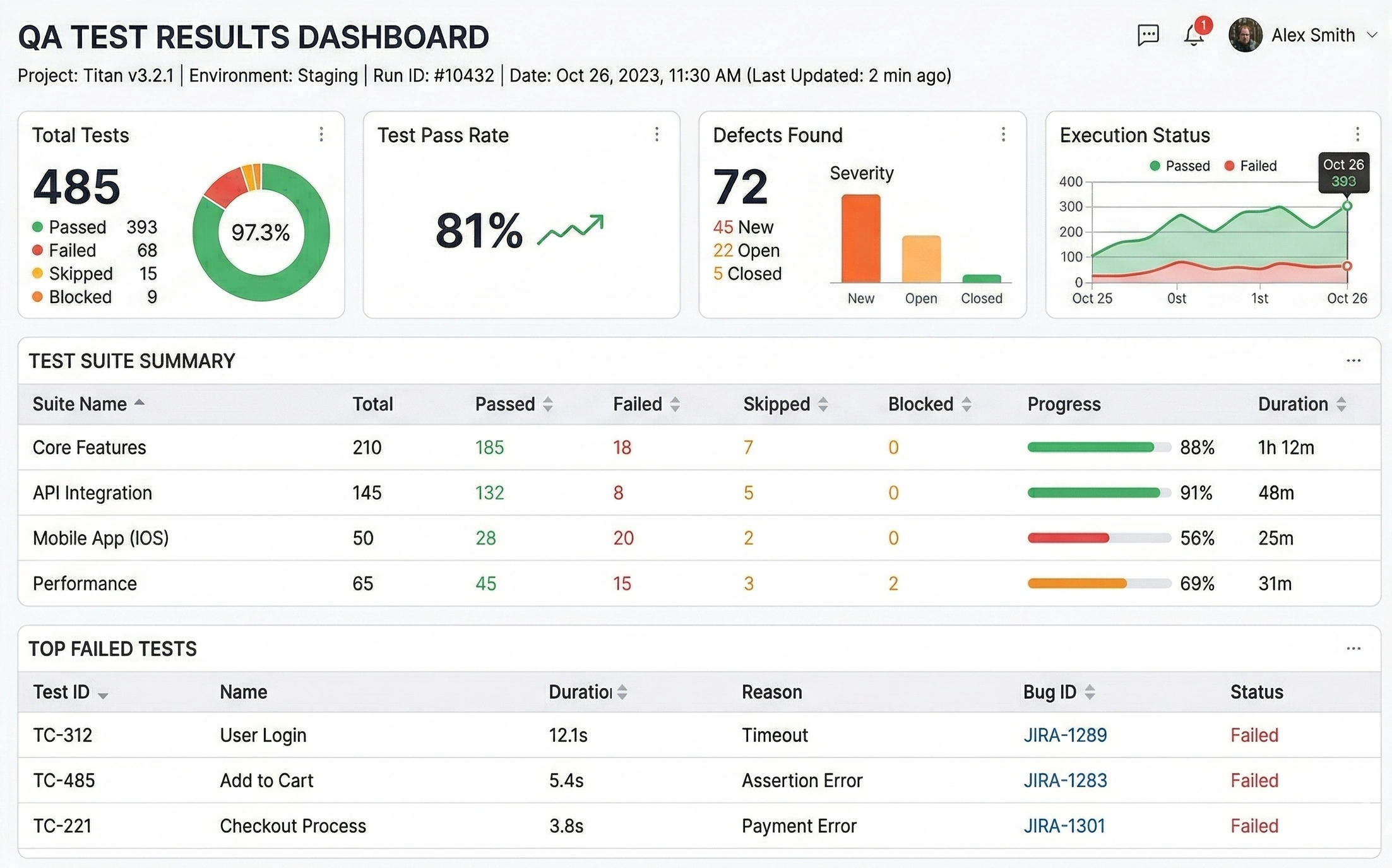
Looking at this dashboard, a QA engineer might say:
- "I have been investigating the cause of the 'User Login' test failure." (Referring to Test ID TC-312)
- "The team has been working on reducing the number of open defects."
4. Forming Questions and Negatives
To use this tense effectively in conversation, you also need to be comfortable with its negative and question forms. The structure is straightforward.
English Grammar Rules - The Present Perfect Progressive Tense
This guide provides very clear, table-based explanations for all forms of the tense.
Focus on these sections: Skim the first table to review the basic structure. Read the section on Negative Sentences to learn how to use haven't and hasn't. Review the tables for forming Yes/No Questions (e.g., "Have you been monitoring the CPU?") and Wh-Questions (e.g., "How long have you been running that script?").
Conclusion
In this lesson, we have focused on the Present Perfect Continuous, a tense used to describe the duration of actions that started in the past and are still in progress.
Key Takeaways:
- Structure: Subject +
have/has+ been + Verb-ing. - Core Use: To emphasize the duration and continuity of an action, not its completion.
- Key Contrast: Use Present Perfect Simple for a finished action with a present result ("I have deployed the feature"). Use Present Perfect Continuous for an ongoing action ("I have been deploying features all day").
- Exceptions: Avoid using the continuous form with stative verbs (e.g., know, own, believe).
You now have the tools to talk about both completed actions (Present Perfect Simple) and ongoing work (Present Perfect Continuous). In our next lesson, we will combine your knowledge of the Present Perfect and the passive voice to learn the Present Perfect Passive (e.g., "The database connection pool has been optimized"). This will allow you to describe actions where the focus is on the object that receives the action, not the person performing it.