Hello! Welcome to our lesson on a powerful styling technique: layering.
So far in this module on casual wear, we've focused on the components of a single top—its neckline, the support underneath, and the fabric it's made from. We've learned how to select a top that hugs the bust to create a flattering silhouette. Now, we'll add the final touch by learning how to use an outer layer to masterfully frame and control the presentation of cleavage.
This lesson directly addresses our learning outcome: Apply layering techniques (e.g., unbuttoned overshirt, open cardigan) to frame and accentuate the cleavage area in a casual context. By the end of our session, you'll understand the principles of visual framing and be able to use common wardrobe staples like shirts, cardigans, and jackets to draw focus and create a polished, intentional look.
1. The Principle of Visual Framing
Before we dive into specific garments, let's establish the core concept: framing. In styling, an open outer layer creates two strong vertical lines on either side of your torso. This has a powerful effect:
- It directs the eye: These vertical lines guide the viewer's gaze inward, towards the space between them. When you have a V-neck or scoop-neck top underneath, this space is your décolletage.
- It controls exposure: A layer allows you to modulate how much you reveal. It can soften a very deep neckline for certain settings or add a sense of dimension to a simpler top.
- It creates depth: Layering adds physical and visual depth to an outfit, making it appear more considered and dynamic than a single garment alone.
With this principle in mind, let's explore the most effective techniques.
2. Technique 1: The Unbuttoned Shirt
The button-down shirt is one of the most versatile layering pieces. By strategically unbuttoning it, you can create a custom V-neckline of any depth, offering complete control over cleavage emphasis.
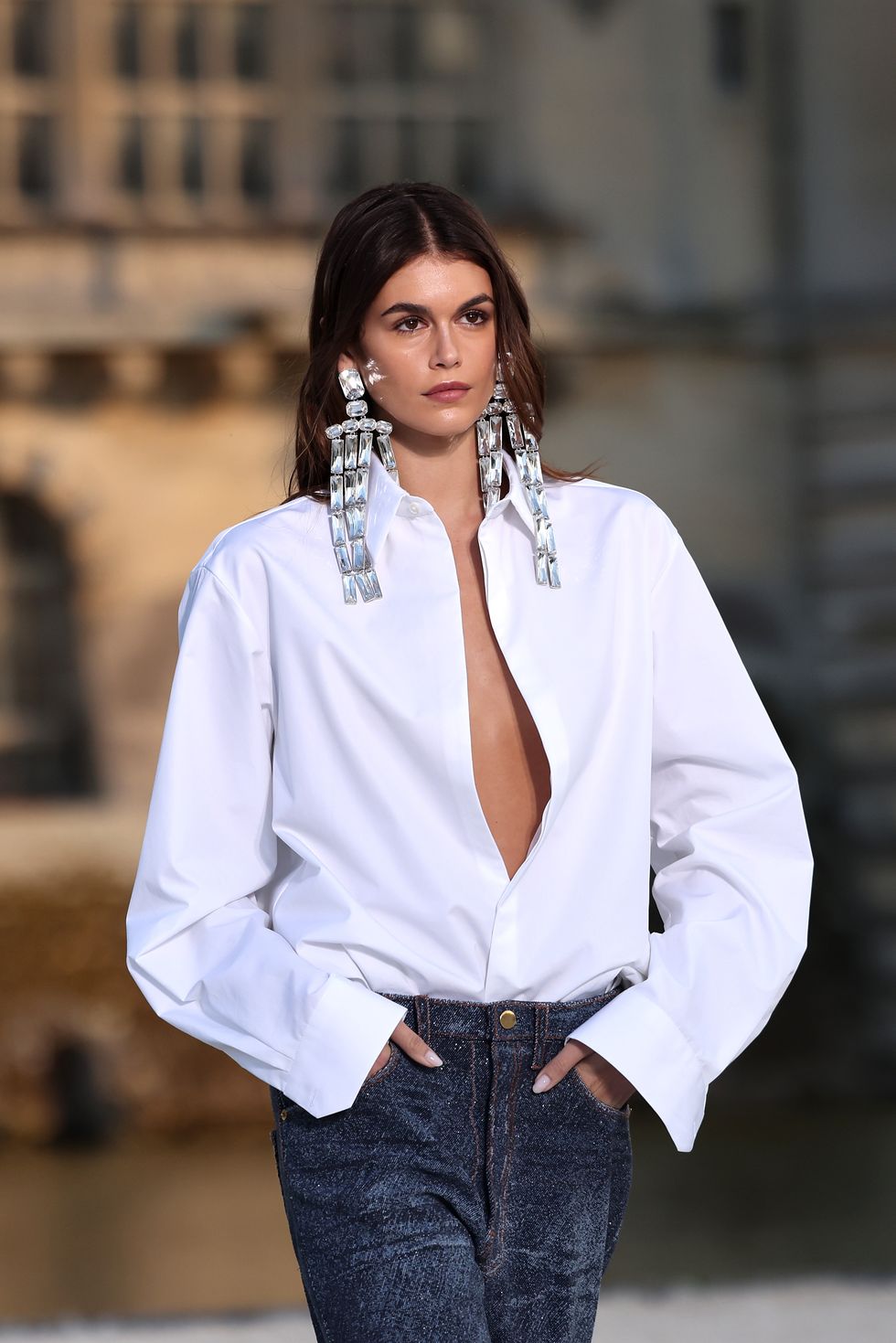
As you can see, this technique is simple yet highly effective. Here's how to master it:
- Decide the Depth: The number of buttons you leave undone directly controls the depth of the "V." You can wear it over a camisole or tank top, allowing the base layer's neckline to show, or wear it on its own for a more daring look, as pictured.
- Consider the Fabric: A crisp cotton poplin shirt (as in the image) creates sharp, clean lines for a more structured frame. A softer fabric like silk, Tencel, or rayon will have more drape, creating softer, more fluid lines that follow the body's curves more closely.
- Style the Sleeves and Hem: Rolling the sleeves and adding a "French tuck" (tucking just the front of the shirt into your waistband) can prevent the look from appearing sloppy and keeps the focus on the neckline you've created.
3. Technique 2: The Open Cardigan, Jacket, or Blazer
This technique applies the framing principle in a more traditional layering context, where the outer garment is worn over a base top (like a t-shirt, camisole, or even a bralette).
The goal is the same: use the vertical lines of the opening to frame the neckline of the top underneath.
- Soft Framing (Cardigans): A soft, open-front cardigan, especially one with a "waterfall" or draped lapel, adds a gentle frame. The draped fabric can add volume around the bust, which can further enhance the appearance of cleavage by contrast.
- Structured Framing (Jackets & Blazers): A more structured piece like a denim jacket, leather jacket, or blazer creates a much sharper, more defined frame. The firm lines of the lapels create a very intentional and powerful visual guide towards the décolletage.
4. Advanced Technique: The Layer as the Top
This brings us to a more fashion-forward application of layering, where a garment typically used as an outer layer is worn as the top itself. You have a design background, so you'll appreciate the structural thinking behind this. It's a technique that relies on the inherent structure of the garment to provide shape.
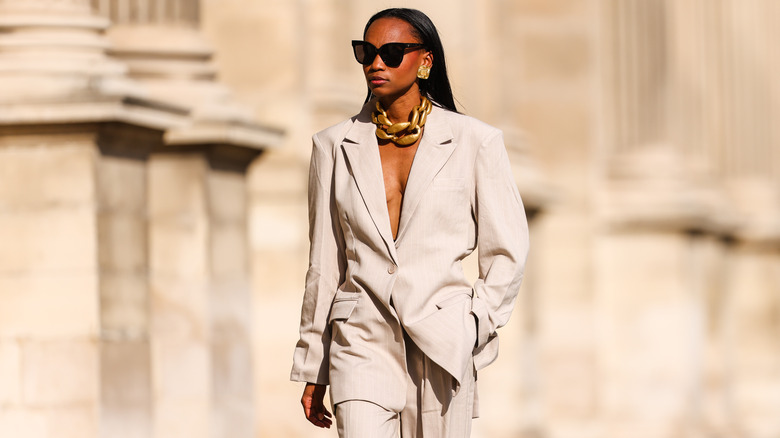
This approach, often seen with blazers and tailored vests, is powerful.
- How it Works: The garment is worn directly against the skin and buttoned low (or not at all), using its own lapels to form a plunging neckline.
- The Importance of Structure: This works best with well-tailored pieces. The structure of the blazer's shoulders and the stiffness of its lapels are what create the clean, sharp V-shape.
- Ensuring Security: Since this style is often braless, security is paramount. This is a perfect opportunity to apply the techniques we discussed in our first module. A few strategically placed pieces of fashion tape along the inside of the lapels can hold the fabric securely in place, preventing any unwanted shifting and ensuring the frame stays exactly where you want it.
Conclusion
Today, we've added the concept of framing to our styling toolkit. We've seen that layering isn't just for warmth; it's a deliberate technique to guide the eye, control exposure, and add dimension.
Key Takeaways:
- Open layers create strong vertical lines that frame the décolletage and draw attention inward.
- An unbuttoned shirt offers a versatile way to create a V-neck of adjustable depth for a casual context.
- Cardigans and jackets can be used to create either soft or structured frames around a base top's neckline.
- For an advanced look, a structured garment like a blazer can be worn as the top itself, using its lapels to create a secure, built-in frame.
This lesson completes our module on casual wear. You now have a comprehensive framework for styling everyday tops to emphasize cleavage, from the garment's cut and fabric to the support underneath and the layers on top.
Next, we will transition into a completely different aesthetic: Formalwear & Evening Gowns. In our first lesson of the new module, we'll explore the dramatic neckline styles common in gowns—like plunging V's, sweetheart cuts, and illusion mesh—and analyze how their effects are achieved through a combination of cut, fabric, and often, significant internal structure.