Welcome back. In the previous lesson, you built a record of pain, bleeding, associated symptoms, and what relief measures actually changed. This final lesson follows that record into a medical appointment. You will see what a clinician can learn from your history, why an examination or test might be offered, and—just as importantly—what a normal result cannot settle. Allow about 35–40 minutes.
The history gives each finding its meaning
There is no single test that sorts all period pain into primary dysmenorrhea or pain caused by another condition. Assessment begins with the pattern you describe. Pain that started recently after years of easier periods, has begun occurring between periods, or comes with heavy bleeding, fever, or pain during sex or bowel movements may lead a clinician to consider different possibilities. None of those clues establishes a diagnosis on its own.
A clinician may ask when the pain began, whether it has changed, how it relates to bleeding, where it occurs, and how it affects daily life. Your record can make those details easier to convey. Expect questions about bleeding, bowel or urinary symptoms, treatments tried, relevant medical history, and whether pregnancy is possible. Some questions may feel personal; their purpose is to decide which causes and tests are relevant, not to make assumptions about you.
Read the Royal College of Obstetricians and Gynaecologists’ patient information to see how a symptom discussion leads to possible examination and imaging, rather than to an automatic diagnosis.
In “What will happen if I choose to see a healthcare professional?”, start with the sentence about asking about symptoms. Read the assessment overview, ending with the paragraph about normal scans just before “What are my options for treatment?”. Notice that each investigation has a different purpose.
History also has limits. Endometriosis can resemble bowel or bladder conditions, and heavy, painful periods can occur with more than one pelvic condition. A convincing symptom pattern may justify further assessment even when an initial test is normal; a symptom diary helps the discussion but is not proof of a particular cause.
Examination is an option to discuss, not a condition of being heard
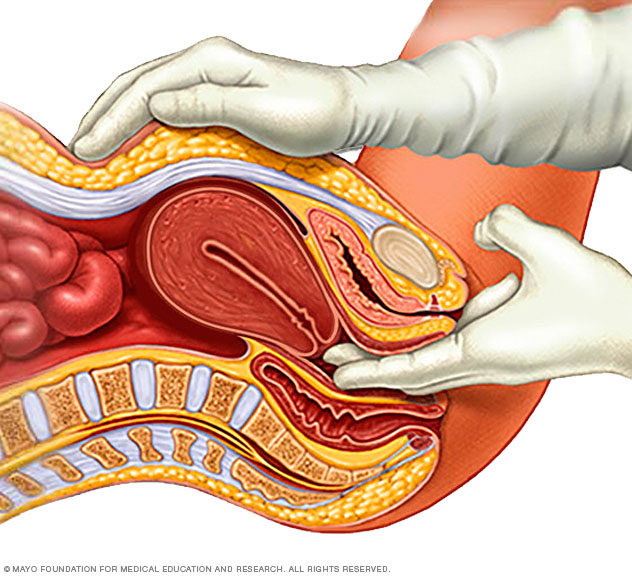
A clinician may offer an abdominal examination to check for tenderness or a palpable mass. Depending on your symptoms, they may also offer an internal pelvic examination to locate tenderness or feel for an enlarged uterus or other changes. Such findings can guide the choice of imaging or referral. An examination can also be normal when a condition such as endometriosis is present.
An internal examination requires an explanation and your consent. You can discuss concerns beforehand, ask for a chaperone, decline the examination, or ask for it to stop. Declining does not make your symptoms less important: the clinician can discuss other ways to proceed, although some findings may be harder to assess without it.
Return to the RCOG information for its explanation of consent and choices during a physical examination.
Under “Physical examinations,” read the examination guidance. Stop before “Further information.” Focus on what you can discuss or request before and during an examination.
The NHS video shows how an appointment may progress from discussing symptoms to an abdominal or internal examination and, when useful, ultrasound. Watch only the indicated portion; the decision to examine or scan is individual.
How is endometriosis diagnosed? Scans, laparoscopy and support | NHS
Watch “How is endometriosis diagnosed? Scans, laparoscopy and support” from the NHS for a brief visual account of the first stages of assessment.
Watch examination and ultrasound. It begins with the abdominal check, then describes an internal examination and the two ways a pelvic ultrasound may be performed. Keep in mind the consent choices described in the RCOG reading.
Laboratory tests answer specific questions
There is no routine blood test that confirms or rules out endometriosis. Instead, laboratory tests are selected to investigate particular concerns raised by the history and examination:
- If pregnancy is possible, a pregnancy test is important because pelvic pain or bleeding in pregnancy needs a different assessment, including consideration of ectopic pregnancy.
- With heavy or prolonged bleeding, a blood count can check for anemia. It measures an effect of blood loss, not the cause of the period pain.
- If symptoms suggest infection, a clinician may consider tests for sexually transmitted infections and other relevant tests. Results are interpreted alongside symptoms and examination rather than as a stand-alone answer.
- Urinary symptoms may prompt a urine test to look for another possible source of pain.
A test is useful when its result could change what happens next. Conversely, a normal blood count does not mean disruptive pain is harmless. NICE specifically advises not using a blood marker called CA125 to diagnose endometriosis.
Ultrasound can find some causes—and miss others
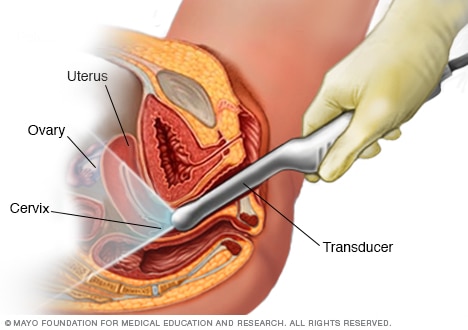
Pelvic ultrasound uses sound waves to make images of structures such as the uterus and ovaries. It can help identify fibroids, ovarian cysts, or other visible abnormalities. In suspected endometriosis, it may show an ovarian endometrioma or some forms of deep disease, and its findings can help guide treatment or referral.
An ultrasound may be performed over the lower abdomen or with a small transvaginal probe placed in the vagina. A transvaginal scan can give a closer view of pelvic structures, but it is not suitable or acceptable for everyone. It should be explained and performed with consent; an abdominal scan may be considered instead, with the understanding that the views and what can be detected may differ.
Endometriosis: diagnosis and management
Read the selected NICE guideline recommendations to understand both the value and the boundary of imaging in suspected endometriosis.
On page 11, in “Diagnosis and referral for women or people with suspected or confirmed endometriosis,” read the “Ultrasound” recommendations from ultrasound's uses and limits. On page 12, read from CA125 and MRI, under the “Serum CA125” and “MRI” labels. Focus on what a scan can identify and why normal imaging does not close the investigation.
The distinction to retain is “not seen” versus “not present.” Ultrasound does not reliably show every form of endometriosis, particularly small or superficial areas. A normal abdominal or pelvic examination and a normal scan therefore do not exclude endometriosis. Results are interpreted alongside symptoms and their effect on daily life. Persistent or disruptive symptoms may still warrant follow-up or referral.
For selected situations, a specialist may consider MRI to assess possible deep endometriosis, or discuss laparoscopy, an operation that allows direct inspection and sometimes treatment. Neither is an automatic next step for everyone with period pain. The choice depends on the whole clinical picture, your preferences, and the likely benefits and burdens of further investigation.
What to take from an assessment
Medical history identifies the questions worth investigating. A consent-based examination may add clues. Laboratory tests address concerns such as pregnancy, anemia, or infection; they do not serve as a general test for secondary dysmenorrhea. Ultrasound can reveal important structural findings, but a normal ultrasound cannot rule out endometriosis.
This completes the course. Your symptom record is useful even if it is incomplete, and an inconclusive first assessment does not require you to dismiss ongoing pain. Follow-up matters when pain persists, worsens, or disrupts daily activities. As covered earlier, do not wait for a routine appointment if symptoms call for same-day or emergency assessment, particularly possible pregnancy with pelvic pain, sudden severe pain, fainting, fever, or heavy bleeding with symptoms of blood loss.