Welcome back. The previous lesson explained why NSAIDs such as ibuprofen can ease cramps, especially when an appropriate medicine is started early. That benefit does not mean ibuprofen is suitable in every situation. This lesson is about the safety decision before taking an NSAID: how to use a medicine label, which health conditions and other medicines call for advice, and why possible pregnancy changes the decision.
Why a cramps medicine can affect other organs
Ibuprofen reduces prostaglandin production. As well as contributing to uterine cramps, prostaglandins have roles elsewhere in the body, including helping protect the stomach lining and support blood flow through the kidneys. NSAIDs can therefore cause harm outside the uterus. Their risks also depend on a person’s health, other medicines, the dose, and how long they are taken.
Watch these short portions of Nurse Ryan’s Ibuprofen (Advil/Motrin) Nursing Drug Card (Simplified) for the connection between the drug’s action and its cautions. The video explains risks; a product label and individual professional advice, rather than the video, should guide a decision to take it.
Ibuprofen (Advil/Motrin) Nursing Drug Card (Simplified) - Pharmacology
Nurse Ryan connects ibuprofen’s action to stomach and kidney risks, then describes situations in which interactions or health conditions matter.
In the side-effects portion, watch stomach and kidneys for why reducing prostaglandins can have unwanted effects. Then watch interactions and cautions, focusing on other NSAIDs, medicines that affect bleeding, ulcers, and pregnancy.
Over-the-counter does not mean risk-free. The useful question is not simply whether ibuprofen usually works for cramps, but whether it is appropriate in the circumstances in which it would be taken.
Reading the label as a decision tool
Here is the packaging for one 200 mg ibuprofen product. Its Drug Facts panels separate the active ingredient and uses from Warnings and Directions. Some panels are rotated on the unfolded box; the point of the image is to locate the categories, not to rely on small print in a photograph for a dose.
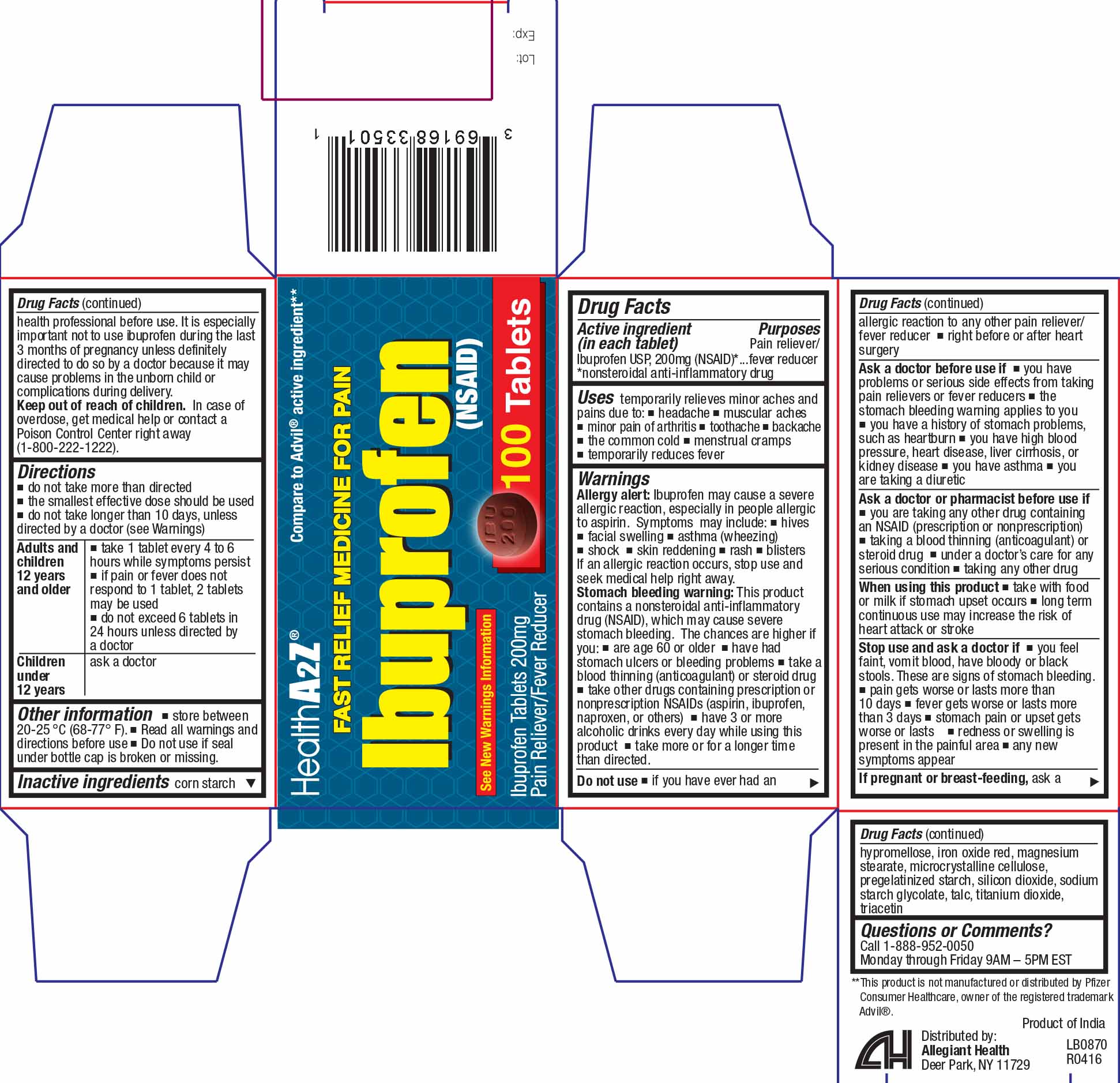
A label check has three distinct parts. First, find the active ingredient: a brand name or a product marketed for a different symptom may still contain ibuprofen or another NSAID. Second, read Warnings, especially “Do not use,” “Ask a doctor before use,” and “Ask a doctor or pharmacist before use.” Third, follow the Directions on the product actually in hand. Strengths, formulations, age instructions, and directions can differ.
The following readable Drug Facts listing is for a different 200 mg ibuprofen product. Use it to learn how the warnings are organized, not as a substitute for the label on another package.
Kroger Ibuprofen Tablets 200 mg (Brown Round)
Read this DailyMed listing as an example of how an over-the-counter ibuprofen label communicates risk and dosing limits.
Under “Warnings,” read the three alerts through the heart attack and stroke warning, then note the nearby “Do not use” instruction. Under “Ask a doctor before use if,” read from the health-condition list. Continue through “Ask a doctor or pharmacist before use if you are,” from the medicine list. Under “When using this product,” find “Stop use and ask a doctor if” and read the stop signs. Finally, read the pregnancy warning beginning at 20 weeks, and, under “Directions,” read from the dose limits. Notice that the label distinguishes a reason to seek advice before use from symptoms that require stopping the medicine and seeking help.
For that particular label, the directions specify the smallest effective dose and a maximum of six 200 mg tablets in 24 hours unless a doctor directs otherwise. That is an example of a product-specific limit, not permission to take that amount or to use a different product the same way. Taking more, combining NSAIDs, or extending use beyond directions can raise the risk of serious side effects. If cramps remain disruptive or worsen, arranging a medical assessment is more useful than repeatedly increasing over-the-counter treatment.
Health conditions that change the decision
Some label warnings describe higher risks, while others tell a person not to use the product at all. A previous allergic reaction to ibuprofen or another NSAID is a reason not to take ibuprofen without medical advice. A severe reaction can include wheezing or facial swelling; those symptoms need immediate medical help if they occur.
A history of stomach ulcers or bleeding matters because NSAIDs can cause serious gastrointestinal bleeding. Asthma also deserves attention: some people with asthma react to aspirin or other NSAIDs. Kidney disease, heart disease, high blood pressure, liver disease, a previous stroke, or problems with blood clotting can change the balance of benefit and harm. The label also flags older age and substantial alcohol use as factors that increase stomach-bleeding risk. These are reasons to check before use, not to assume that a short course is automatically safe.
The NHS guide gives a complementary, plain-language overview. Its advice is to check the packet or leaflet and speak to a pharmacist or doctor when unsure.
Ibuprofen for adults: painkiller that also treats inflammation - NHS
Read the NHS guide to connect the label’s warnings with practical advice about health conditions, pregnancy, and other medicines.
In “Who can and cannot use ibuprofen,” read the suitability list. In “Pregnancy and ibuprofen,” read the pregnancy advice. Then, in “Taking ibuprofen with other medicines, food and drink,” read the interaction examples. In “Taking ibuprofen with other painkillers,” read the NSAID warning.
Neither the list on one label nor a short guide can account for every medical history. If a warning seems applicable—or a condition or medicine is not clearly covered—a pharmacist or clinician can assess the specific situation.
Other medicines and possible pregnancy
Do not stack different NSAIDs to treat cramps. Ibuprofen and naproxen are both NSAIDs; taking them together increases risk without being a sensible way to get around a product’s dose limit. Aspirin is also an NSAID. It may appear in a pain product, but it can also be prescribed at a low dose for heart attack or stroke prevention. If taking prescribed aspirin, do not stop it on your own to take ibuprofen: ask a pharmacist or clinician first, since ibuprofen may interfere with aspirin’s protective effect as well as add risks.
Other interactions also warrant a check before use. Examples include anticoagulants (often called blood thinners), steroid medicines, some antidepressants, diuretics, and medicines for blood pressure. The issue is not that every combination is always forbidden; it is that the risks and appropriate plan depend on the actual medicines and person. Bring the names or packages of all medicines being taken—including over-the-counter pain, cold, or combination products—to the pharmacist or clinician.
Pregnancy requires a separate pause. If pregnant or possibly pregnant, seek professional advice before using an NSAID for presumed period pain. The DailyMed label particularly warns against ibuprofen at 20 weeks or later unless specifically directed by a doctor; the NHS advises avoiding it during pregnancy unless advised by a doctor or pharmacist. Pain with possible pregnancy also must not simply be treated as an ordinary period: as covered earlier in the course, pelvic pain in that situation may need prompt assessment. If breastfeeding, check the relevant label and seek advice when it directs you to do so.
When a side effect needs prompt help
Checking suitability before use prevents some problems, but it does not replace noticing new symptoms. Stop the NSAID and seek urgent medical help for signs of a serious allergic reaction, such as facial swelling or breathing difficulty; possible stomach bleeding, such as vomiting blood or having black or bloody stools; or possible heart or stroke symptoms, such as chest pain, trouble breathing, or sudden weakness on one side. Fainting or feeling faint alongside possible bleeding is especially concerning. These are not reasons to wait until the next dose is due.
The practical rule is to use the exact product label as the starting point, and obtain pharmacist or clinician advice before use if its warnings apply, pregnancy is possible, or another medicine may interact. Avoid combining NSAIDs, and never exceed the product’s directions to compensate for inadequate relief. This safety check helps make early treatment of cramps more appropriate; it does not replace assessment of pain that is severe, worsening, or disrupting daily life.
Key takeaways
Ibuprofen can ease prostaglandin-driven cramps, but its effects on the stomach, kidneys, and other body systems make personal circumstances important. Read the active ingredient, warnings, and directions on the product being used. Previous NSAID reactions, ulcers or bleeding, certain heart, kidney, liver or other conditions, possible pregnancy, and interacting medicines all call for particular caution or professional advice. Ibuprofen and another NSAID should not be combined for cramps.
The next lesson compares paracetamol (acetaminophen) with NSAIDs, including its different limitations and the risk of taking the same ingredient twice through combination products.