Welcome to the first lesson of your journey into creating educational short-form video content. Your goal is to produce engaging "how the world works" videos for YouTube Shorts, and this course is designed to get you from zero to a published video, efficiently and effectively.
Given your background in applied science and system design, you're accustomed to building robust frameworks based on data. We will apply that same rigor to the creative process. This first lesson focuses on the most critical step: systematically brainstorming and validating video topics. Instead of guessing what might work, you'll learn to identify what people are already searching for and where you can provide unique value.
1. The Principle: Data Over Intuition
The most common mistake creators make is relying on "creative intuition"—making a video about a topic that seems interesting to them personally. This is a high-risk gamble. A more reliable approach, which will feel familiar to you, is to operate on "data intelligence." This means finding existing audience demand first, and then creating content to supply it.
We'll start by exploring this foundational concept, which distinguishes between broad, saturated topics and specific, high-intent queries.
YouTube Shorts Keyword Research: Find High Volume Topics in 2026 | Joyspace
This article from Joyspace AI introduces the core philosophy of data-driven topic selection. It will frame your entire content strategy.
Please read the introduction, starting from the opening paragraphs, and continue through the section on <span data-type="resource_reading_textrange" data-resource-subitem-id="c077e954" data-range-start="The "Long Tail" Opportunity" data-range-end="signals quality to the algorithm">the “Long Tail”. Focus on the distinction between "Head Terms" and "Long Tail" keywords.
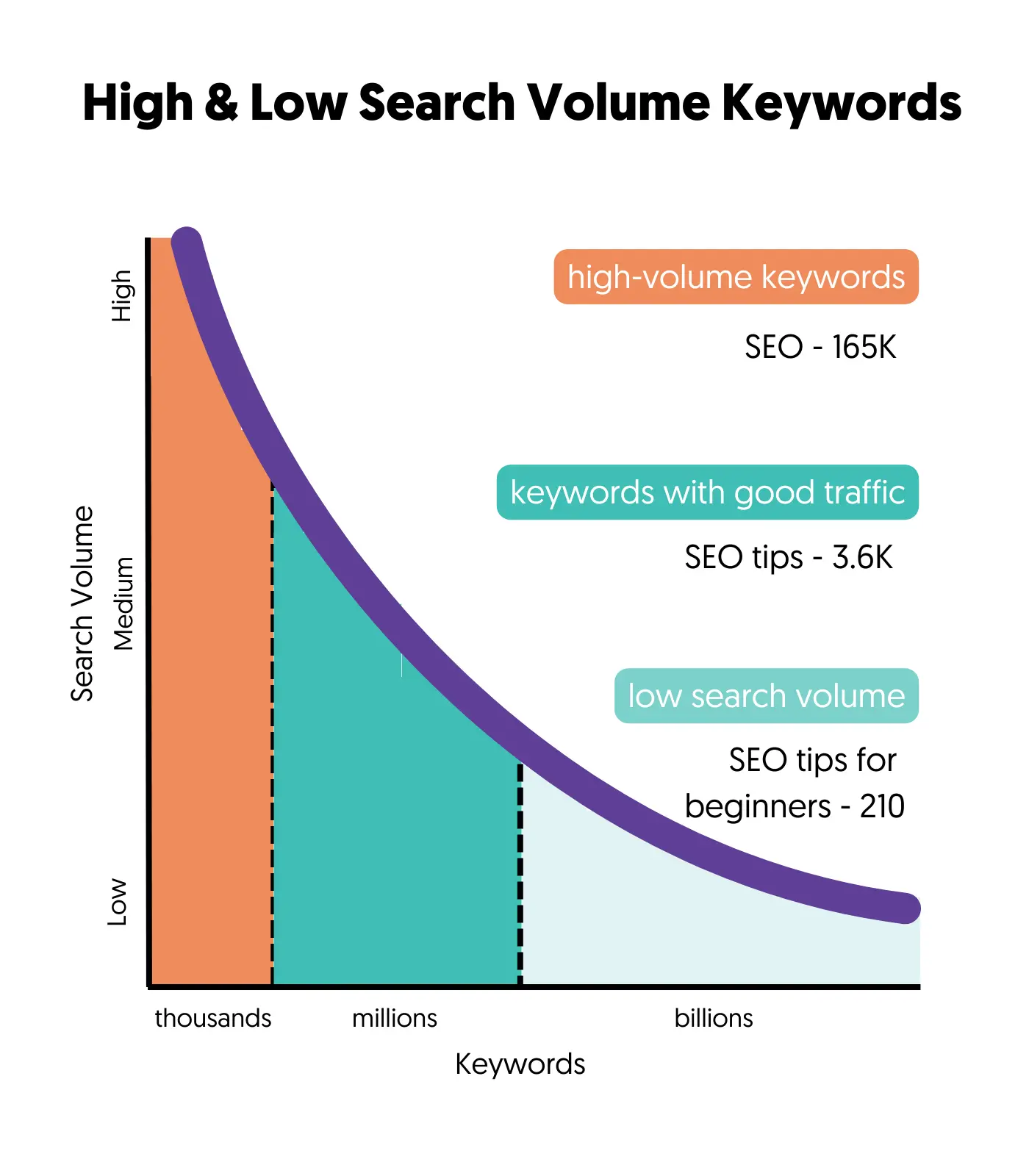
The concept of the "long tail" is a statistical distribution you've likely encountered before. In this context, it means that while a few "head" keywords get enormous search volume, the vast majority of search traffic comes from billions of more specific, multi-word queries. Targeting these "long-tail" keywords is far more strategic.
2. Generating Potential Topics: The Data Collection Phase
Now, let's move from theory to practice. The first phase of our system is to generate a broad set of potential video topics based on real user search behavior. Think of this as collecting raw data. Here are three effective, free methods to build your initial list of ideas.
Method 1: Mining Search Autocomplete
YouTube and Google's search bars are powerful research tools. The autocomplete suggestions they provide are not random; they are based on the most frequent queries from real users related to your initial term.
YouTube Shorts Keyword Research: Find High Volume Topics in 2026 | Joyspace
The same article outlines a simple but powerful technique called the "Alphabet Soup" method.
Read the section titled Method 1: The YouTube Autocomplete “Alphabet Soup”. The key is to use an Incognito window to prevent your personal search history from biasing the results.
Method 2: Uncovering Audience Questions
Another rich source of ideas comes from Google's "People Also Ask" (PAA) feature. This directly reveals the underlying questions and problems users are trying to solve, making each question a potential script for a 60-second explainer.
YouTube Shorts Keyword Research: Find High Volume Topics in 2026 | Joyspace
This section explains how to use the PAA feature to map out the psychology of a user's search journey.
Read the section on <span data-type="resource_reading_textrange" data-resource-subitem-id="e302721e" data-range-start="Method 3: The "People Also Ask" Tree" data-range-end="Each one of these questions is a script for a Short">Method 3. Notice how clicking one question reveals a tree of related queries, allowing you to go deeper into a topic.
Method 3: Deconstructing Audience Interest
Beyond direct search queries, you can identify promising topic areas by analyzing the content that a target audience is already consuming. This involves looking for patterns in popular videos to understand the underlying formats, concepts, and pain points that resonate most.
How to get the video ideas the algorithm is looking for
The video "How to get the video ideas the algorithm is looking for" by Learn By Leo provides a systematic process for this analysis.
Watch the introduction from the beginning to understand the concept of a "popular area of interest." Then, watch the section from Part one, which details the manual process of researching what your audience watches and identifying patterns in topics, formats, and emotional triggers.
3. Validating Topics: The Hypothesis Testing Phase
Once you have a list of potential ideas, the next step is to validate them. Which topics have the most potential for growth and audience engagement? This is analogous to testing a hypothesis before committing resources.
Method 1: Trend Comparison with Google Trends
Google Trends is an indispensable free tool for this phase. It allows you to visualize and compare the public's interest in various topics over time. For a "how the world works" channel, this helps you distinguish between fleeting fads and topics with sustained or rising interest.
How To Use Google Trends To Find Products, Keywords, Content Ideas & More
Miles Beckler's tutorial, "How To Use Google Trends," provides a clear, practical walkthrough of the tool's core functionalities.
Focus on these key segments: Watch from the beginning to learn the basic interface and how to find related queries. Pay close attention to the segment from the power of comparing different terms (e.g., "vegan diet" vs. "carnivore diet"). This is a critical validation technique. Finally, see how it can be used for broader topics like "Bitcoin" from this example to gauge market sentiment, which is directly applicable to many "how the world works" ideas.
Method 2: Content Gap Analysis
A "content gap" exists when there is high search demand for a topic but the existing videos are low-quality, outdated, or not optimized for the short-form format. Identifying these gaps is a primary strategy for new creators to gain traction quickly. You aren't competing with the best; you're competing with what currently exists.
YouTube Shorts Keyword Research: Find High Volume Topics in 2026 | Joyspace
The "Keyword Research" article details how to spot these opportunities.
Read the section <span data-type="resource_reading_textrange" data-resource-subitem-id="4b38e2b8" data-range-start="Method 2: The "Content Gap" Analysis" data-range-end="you will displace the old videos">Method 2: The “Content Gap” Analysis. This gives you a clear set of criteria (age, quality, relevance) for evaluating the search results page for a given keyword.
Your Action Item for This Lesson
To translate these concepts into action, your task is to generate and validate your first set of video ideas.
- Select a Broad Theme: Choose one general "how the world works" category that interests you (e.g., behavioral economics, historical misconceptions, everyday physics, surprising biological facts).
- Brainstorm (Data Collection): Using the "Alphabet Soup" and "People Also Ask" methods, generate a list of 10-15 potential long-tail video ideas related to your theme. Document these in a spreadsheet or notebook.
- Validate (Hypothesis Testing):
- Pick 2-3 ideas from your list and compare their search interest over the past 12 months using Google Trends. Note which has more stable or rising interest.
- Take your most promising idea and perform a "Content Gap" analysis. Search for it on YouTube. Are the top results old, poorly produced, or long-form videos that don't directly answer the question?
- Finalize: Based on your validation, select your top 3 topic ideas. These will be the candidates for your first video.
Completing this exercise will give you a validated backlog of ideas, forming the foundation of your content strategy.
Conclusion
In this lesson, you've established a systematic, data-driven pipeline for topic selection. You've learned to move beyond guesswork and instead focus on identifying and validating existing audience demand. The core process is to first generate a wide pool of ideas by analyzing user search behavior, and then to rigorously test those ideas using trend analysis and competitive assessment.
You now have a framework for answering the question, "What should I make a video about?" In our next lesson, we will address the next logical question: "How should I structure that video?" We will deconstruct the anatomy of successful educational Shorts to understand their core components: the hook, the core content, and the payoff.