Welcome to your first lesson in Mandarin Chinese. Your goal is to pass the HSK 1 exam within a month, and this course is structured to get you there efficiently. Before we dive into vocabulary and grammar, it's essential to build a solid mental model of the Chinese language system itself. This lesson will provide that foundation.
We will deconstruct the language into its three core components:
- Spoken Mandarin (Putonghua): The standard spoken language.
- Chinese Characters (Hànzì): The logographic writing system.
- Pinyin: The romanization system that acts as a phonetic bridge.
Understanding how these three parts relate to one another is the single most important concept for a beginner. It will clarify how you'll approach learning pronunciation, reading, and vocabulary simultaneously.
1. Spoken Chinese: Putonghua (普通话)
First, let's clarify what we mean by "Chinese." The term can refer to a large family of languages and dialects. The one you will be learning is Mandarin Chinese, which is the most widely spoken. The official standard form of Mandarin is called Putonghua (普通话), which translates to "common speech."
To get a clear overview, please watch this first segment from the video "Watch This Before Learning Mandarin Chinese."
Watch This Before Learning Mandarin Chinese - Ultimate Tutorial for Beginners
The video provides a concise explanation of what Mandarin is in relation to other Chinese dialects and its official status.
Watch the section from this timestamp. The speaker explains that Mandarin (Putonghua) is the official spoken language of mainland China.
Putonghua is the language used in government, media, and education in China. It's the standard you'll hear in HSK listening exams and the language you'll learn to speak.
2. The Writing System: Chinese Characters (汉字)
Now for the writing. A common point of confusion for beginners is the search for a "Chinese alphabet." Simply put, one does not exist. English uses an alphabetic system where letters represent sounds (phonemes), and you combine them to form words. Chinese uses a fundamentally different approach.
Does Mandarin Have an Alphabet? the Truth About Chinese Writing
This article directly addresses the non-alphabetic nature of Chinese writing and introduces the concept of characters as units of meaning.
Please read the introduction, starting from the beginning, and continue into the section "Understanding the Chinese Writing System," ending just before the subheading "How Many Characters Exist?". Focus on the explanation of a logographic system and the example of the character 人 (rén).
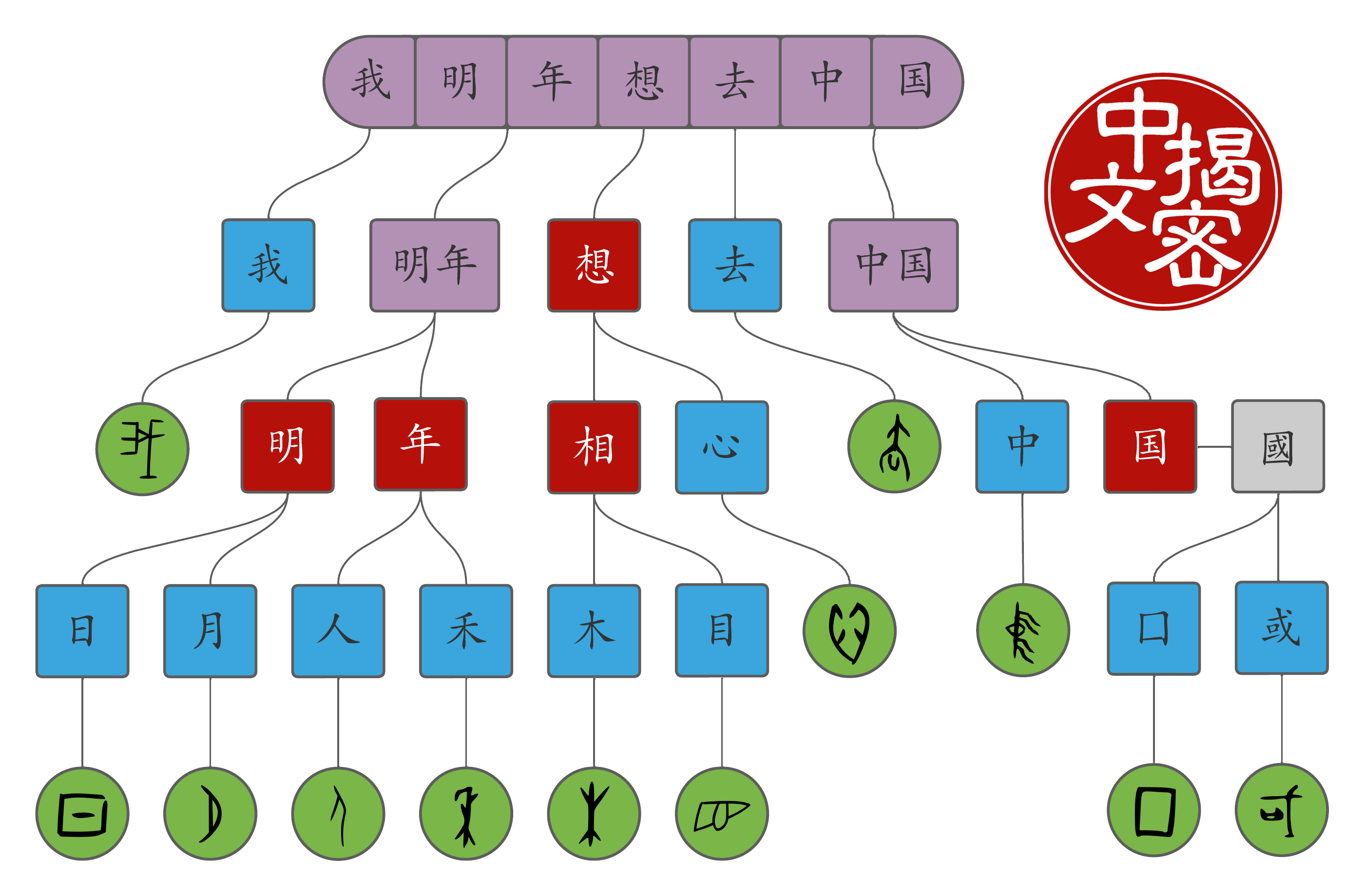
As the article explains, Chinese characters (汉字, hànzì) are logographs, where each symbol represents a morpheme—the smallest unit of meaning. A character like 人 (rén) represents both the sound "ren" and the concept of "person" in a single, indivisible unit.
This is a key insight: you are not learning letters to spell words, but characters that already contain both sound and meaning.
Simplified vs. Traditional Characters
To complicate things slightly, there are two main standards for written Chinese characters: Simplified and Traditional. In the mid-20th century, the Chinese government simplified many complex characters to promote literacy.
Watch this short clip to understand the difference.
Watch This Before Learning Mandarin Chinese - Ultimate Tutorial for Beginners
This segment visually compares simplified and traditional characters and explains where each system is used.
Watch the clip from this timestamp. Note the comparison of the character for "correct" (对/對) and the list of regions where each script is used.
For the HSK exam and for general use in mainland China, you will only need to learn Simplified characters. This course will focus exclusively on them.
3. The Phonetic Bridge: Pinyin (拼音)
So, if characters don't spell out sounds, how do you learn to pronounce them? And how do you type them on a computer? The answer is Pinyin (拼音), which literally means "spelled sounds."
Pinyin is the official romanization system for Mandarin. It uses the familiar Latin alphabet to represent the sounds of the characters. It was developed in the 1950s primarily as a tool for teaching pronunciation in Chinese schools and to help learners like yourself.
Does Mandarin Have an Alphabet? the Truth About Chinese Writing
This section from the same article explains the function and structure of Pinyin.
Please read the section titled "Enter Pinyin" and the following section, "How Pinyin Works". Pay close attention to the crucial point that Pinyin is a learning tool, not the actual writing system.
Every character has a corresponding Pinyin transcription. For example:
- The character for "I" or "me" is 我.
- Its pronunciation is represented in Pinyin as wǒ.
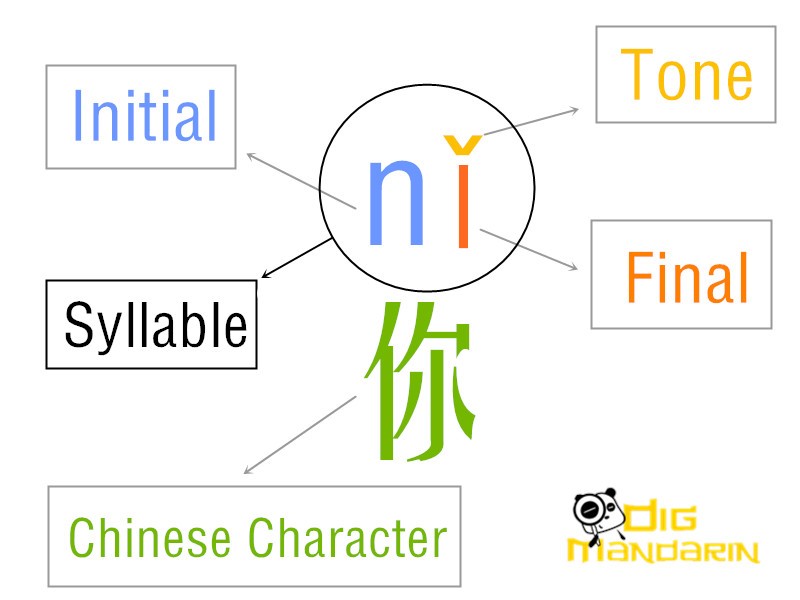
The mark above the "o" is a tone mark. As you'll learn in the next lessons, Mandarin is a tonal language, and the tone is a critical part of a word's pronunciation and meaning.
The Complete Picture: Tying It All Together
Let's synthesize these three components into a single system:
- Spoken Language (Putonghua): The target sound you want to produce or understand (e.g., the sound for "hello").
- Writing System (Hànzì): The logographic representation of that sound and its meaning (e.g., the characters 你好).
- Phonetic System (Pinyin): A tool that transcribes the sound using the Latin alphabet (e.g., nǐ hǎo).
The relationship isn't always one-to-one. Many different characters can share the exact same Pinyin pronunciation (including the tone). For example, the sound yì can be represented by characters like 意 (meaning), 艺 (art), or 亿 (one hundred million). In written text, the specific character removes all ambiguity. This is one reason the character-based system is so robust. From a systems perspective, you can think of the mapping from sound (Pinyin) to meaning (Character) as one-to-many.
Conclusion
In this introductory lesson, we've established the foundational framework for learning Chinese.
Key Takeaways:
- You are learning Putonghua, the standard spoken form of Mandarin Chinese.
- The writing system consists of Simplified Chinese characters (Hànzì), which are logographs representing meaning and sound, not an alphabet.
- Pinyin is a phonetic tool that uses the Latin alphabet to show you how to pronounce the characters. It is essential for learning and typing but is not used for writing.
Your learning process will involve constantly connecting these three elements: seeing a character, knowing its Pinyin pronunciation, and understanding its meaning.
In our next lesson, we will begin to deconstruct Pinyin. You will learn about the structure of a Mandarin syllable: the Initial, the Final, and the Tone. This will be your first practical step towards correct pronunciation.