Welcome to your second lesson. In our first session, we established the universal foundation of all stories by identifying the five core elements of fiction: character, plot, setting, conflict, and theme. Now, we'll sharpen our focus from the general to the specific, exploring how these elements take on a unique life within the fantasy genre.
You've expressed a passion for creating immersive, engaging fantasy worlds like those in Harry Potter or Game of Thrones. A key step towards that goal is understanding the "language" of the genre—its established patterns, motifs, and, most importantly, the expectations of its readers. This lesson is all about learning that language. By the end of our time, you will be able to identify the key conventions of fantasy, giving you the tools to both satisfy your future readers and creatively build upon the genre's rich traditions.
The Appeal of the Fantastical
Before we dissect the genre, let's consider why millions of readers are drawn to it. What is the promise a fantasy novel makes to its reader?
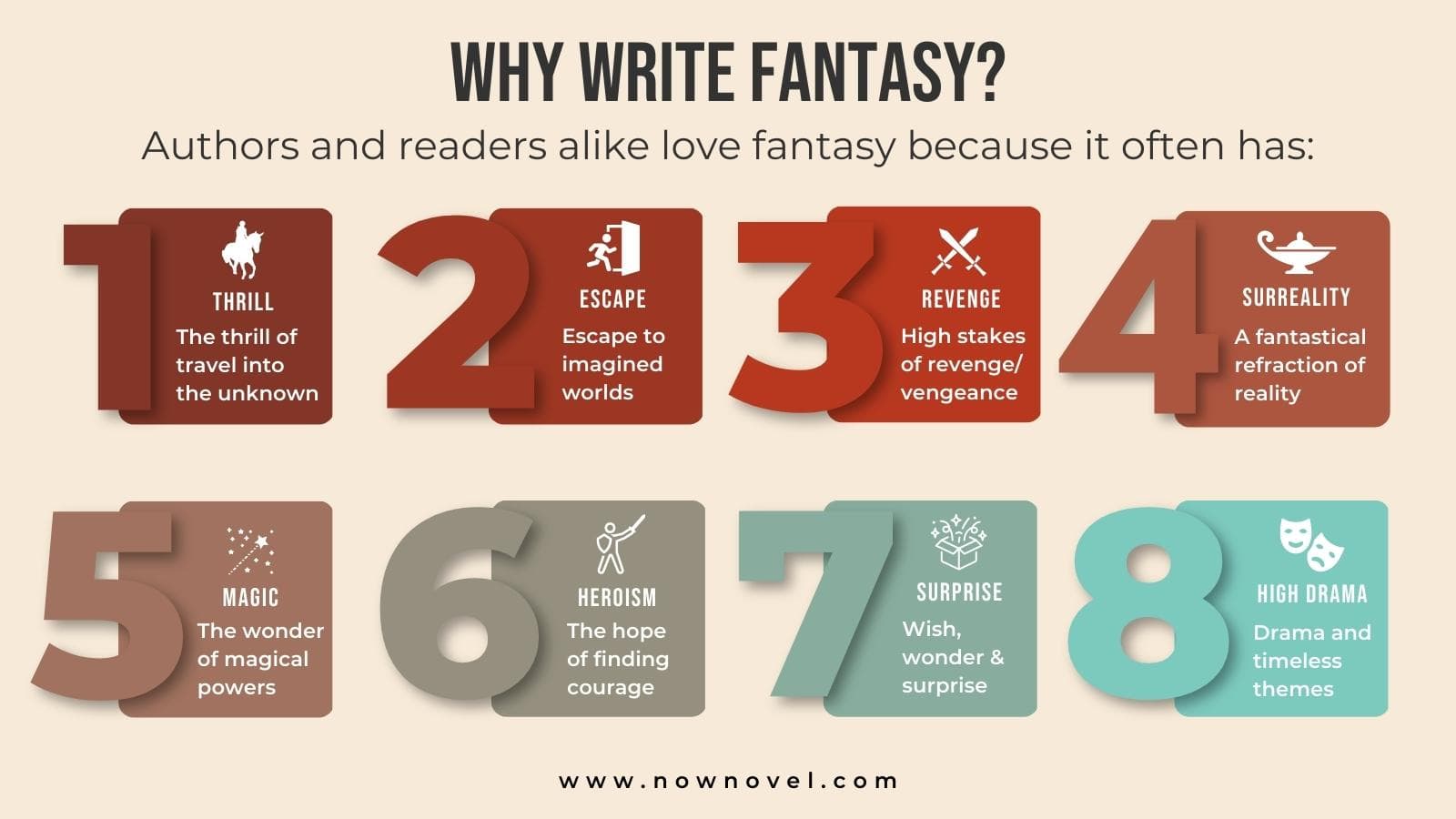
As you can see, readers come to fantasy for powerful emotional experiences: escape, wonder, heroism, and high drama. The conventions we're about to discuss are the very tools writers use to deliver these experiences. They are the building blocks of wonder.
Tropes: The DNA of a Genre
When we talk about genre conventions, we often use the word "trope." For a writer, it's vital to understand this term correctly. A trope is simply a recurring theme, character type, or plot device within a genre.
Think of tropes as the established ingredients in a specific type of cuisine. A chef knows that certain flavors and ingredients are expected in Italian food. Readers of fantasy similarly expect certain elements. The video below offers a great introduction to this idea.
Ultimate Guide to Fantasy Tropes
Watch this brief introduction from the video "Ultimate Guide to Fantasy Tropes" by Captured in Words.
Pay close attention to the explanation of tropes as the "DNA" of fantasy, from the start until the end of the intro.
It's crucial to distinguish a trope from a cliché. A trope becomes a cliché only when it is used in a lazy, uninspired, or predictable way. Your goal as a writer isn't to avoid tropes, but to understand them so you can use them effectively or subvert them in fresh, interesting ways.
Let's explore this distinction further in the following reading.
14 Popular Fantasy Tropes (and How to Revitalize Them) - Reedsy
This article from Reedsy provides an excellent overview of fantasy tropes and how to approach them as a writer.
Please read the introductory section, starting from the definition and continuing to the point where the author explains how to make these ideas feel fresh. Focus on the distinction between a useful trope and a tired cliché.
Now, let's examine some of the most important fantasy conventions, organizing them around the core elements of fiction we covered in the last lesson.
Setting: The Expectation of a World Apart
While setting is important in all fiction, in fantasy it often comes to the forefront. Readers expect more than just a backdrop; they expect an immersive world that is, in some fundamental way, different from our own. This is the heart of world-building.
Key world-building conventions in fantasy include:
-
A System of Magic: Magic is perhaps the most defining convention. Readers don't just want to see magic happen; they often expect it to have rules, costs, and limitations. This gives it weight and creates logical tension. The distinction between "hard" and "soft" magic systems is a central concept here.
-
Fantastical Creatures and Races: From dragons and elves to orcs and goblins, non-human intelligent races and unique creatures are a staple. They populate the world and often embody specific cultural traits or thematic ideas.
-
Distinctive Geography and History: Fantasy worlds often have their own maps, ancient ruins, and epic histories. This "deep lore" gives the world a sense of reality and weight, suggesting it existed long before the story began. A common convention, heavily influenced by J.R.R. Tolkien, is a setting reminiscent of medieval Europe.
To delve deeper into these ideas, the following video offers a fantastic overview of what readers love about fantasy world-building.
10 Things Fantasy Readers Love (Writing Advice)
In his video "10 Things Fantasy Readers Love," writer Jed Herne analyzes survey data from fantasy readers. The sections below focus on what they love about worlds, magic, and creatures.
Watch the following three segments: First, on the appeal of immersive world-building. Second, on the desire for innovative magic systems. Third, on the love for diverse and creative creatures. Notice how readers appreciate not just the presence of these elements, but their uniqueness and how well they are integrated into the story.
Characters: Archetypes on a Journey
Fantasy is home to iconic character archetypes that readers instantly recognize. These archetypes provide a useful shorthand, establishing a character's role in the story quickly.
Common character conventions include:
- The Hero/The Chosen One: Often an ordinary person (or a "farm boy") who is destined to achieve greatness and save the world. Think of Harry Potter or Luke Skywalker.
- The Mentor: A wise, older figure who guides and trains the hero (e.g., Gandalf, Dumbledore).
- The Dark Lord: The ultimate embodiment of evil, often seeking to dominate or destroy the world (e.g., Sauron, Voldemort).
- The Reluctant Hero: A character who doesn't want the responsibility of being a hero but is forced into the role.
- The Found Family: A group of unrelated individuals who form a powerful bond of loyalty and friendship through shared adventure.
These archetypes are not rigid boxes. The most memorable characters often start with an archetype and add unique twists, flaws, and complexities. Modern fantasy readers in particular appreciate characters who are not simply "good" or "evil," but exist in shades of gray.
The Fundamental Elements of Fantasy Writing
This article provides a comprehensive list of fantasy archetypes, many of which will feel familiar from the stories you love.
In the section titled "Crafting your fantasy characters," please read the descriptions under "Archetypal roles in fantasy." You don't need to memorize every single one, but aim to get a feel for the common roles characters play in these stories. As you read, think about how characters from your favorite novels fit into these roles.
Plot and Conflict: The Epic Quest
While fantasy plots can be incredibly diverse, many revolve around a few core conventions that create the "high stakes" and "high drama" readers crave.
Key plot conventions include:
- The Quest: A central journey to achieve a vital goal, such as destroying a powerful artifact, defeating a villain, or finding a lost city. This structure allows the author to showcase the world and develop the characters along the way.
- Good vs. Evil: The classic conflict. This provides clear moral stakes and a powerful driving force for the narrative. However, many modern fantasy novels complicate this, exploring moral ambiguity and questioning what "good" and "evil" truly mean.
- Prophecy and Destiny: Many fantasy plots are set in motion by a prophecy that foretells the hero's journey. This creates a powerful sense of fate and raises questions about free will.
- The Stakes: In fantasy, the stakes are often enormous—the fate of the world, the survival of a people, the balance of magic itself. Readers expect the conflict to have meaningful, often world-altering, consequences.
Ultimate Guide to Fantasy Tropes
Let's return to the "Ultimate Guide to Fantasy Tropes" to see how these plot conventions work in practice.
Please watch the segment on plot tropes, from the start of the section. The presenter discusses Good vs. Evil, the Epic Quest, the Coming of Age story, Prophecy, and Heroic Sacrifice.
A Note on Subgenres
It is important to remember that "fantasy" is a huge category. The conventions of a gritty, political fantasy like Game of Thrones (often called "Grimdark") are very different from a whimsical children's fantasy like The Chronicles of Narnia.
Understanding subgenres helps you fine-tune your story and manage reader expectations. You don't need to be an expert on all of them, but knowing they exist is the first step.
The Fundamental Elements of Fantasy Writing
This article has an excellent section breaking down the most common fantasy subgenres.
In the section titled "Genres and subgenres," read the descriptions for a few that catch your interest, such as High Fantasy, Low Fantasy, Dark Fantasy, and Urban Fantasy. Notice how the relationship with magic and the real world changes between them.
Conclusion
In this lesson, we've moved from the general elements of fiction to the specific conventions of fantasy. You've learned that fantasy readers come to the genre with a set of expectations rooted in years of tradition.
Here are the key takeaways:
- Conventions are the language of a genre. They include common character archetypes, plot structures, and world-building elements like magic systems.
- Tropes are tools, not rules. They are not inherently bad. The writer's challenge is to use them in a way that feels fresh and exciting, rather than clichéd.
- Reader expectations are centered on core experiences: a sense of wonder, high stakes, immersive worlds, and characters who undergo profound journeys.
- Key fantasy conventions include intricate world-building with magic and history; character archetypes like the Hero and Mentor; and plot structures like the Quest driven by epic conflicts.
By understanding these conventions, you now have a map of the territory you wish to write in. You know what the signposts are, and you can now start thinking about which paths you want to follow and where you might want to venture off the beaten track.
In our next lesson, we will put this knowledge into practice. We'll move from identifying conventions to analyzing them, examining passages from published fantasy novels to see how master storytellers use these very tools to create engaging and unforgettable narratives.