Welcome back to our exploration of the pre-Islamic Arabian worldview. In our last lesson, we painted a broad picture of a land filled with polytheistic and animistic beliefs, where the divine was found not only in a pantheon of gods but also in the very fabric of the natural world—in stones, trees, and springs.
This lesson builds directly on that foundation. We will now populate that spiritually charged landscape with its specific inhabitants. You will learn to identify the various supernatural beings that the pre-Islamic Arabs believed shared their world and the distinct roles these entities played in daily life. We'll move beyond the general idea of "spirits" to meet the jinn, the ghul, the shaytan, and others as they were understood before the rise of Islam. Understanding these beings is fundamental, as they are the very entities with whom the later traditions of Arabic magic seek to interact.
From Animism to Personified Spirits
In the previous lesson, we saw that the pre-Islamic Arabs perceived a spiritual force in the world around them. The howling desert wind, a strangely shaped rock, or a solitary tree were not merely objects, but vessels of unseen power. The next logical step in this belief system was to give these forces a name, a form, and a will. This is where the diverse world of supernatural beings begins to take shape.
The jinn, in many ways, represent the personification of this animistic worldview—the "soul of the landscape" itself.
Revealing the Djinn - The Complete History of Arabia's Oldest Secret
To begin, watch this brief introduction from the video 'Revealing the Djinn' by Forgotten Lore. It masterfully connects the animistic beliefs we've discussed to the specific concept of the jinn.
Watch the first 3 minutes of the video. Pay close attention to how it describes the jinn as a 'parallel race' and an 'explanation for the inexplicable' in the harsh Arabian environment.
As the video explains, a sudden sandstorm was not just weather; it was a jinn passing by. A sudden illness was not just a biological event; it could be the touch of an unseen being. This belief in a parallel, invisible society living alongside humanity is the cornerstone of pre-Islamic spirit lore.
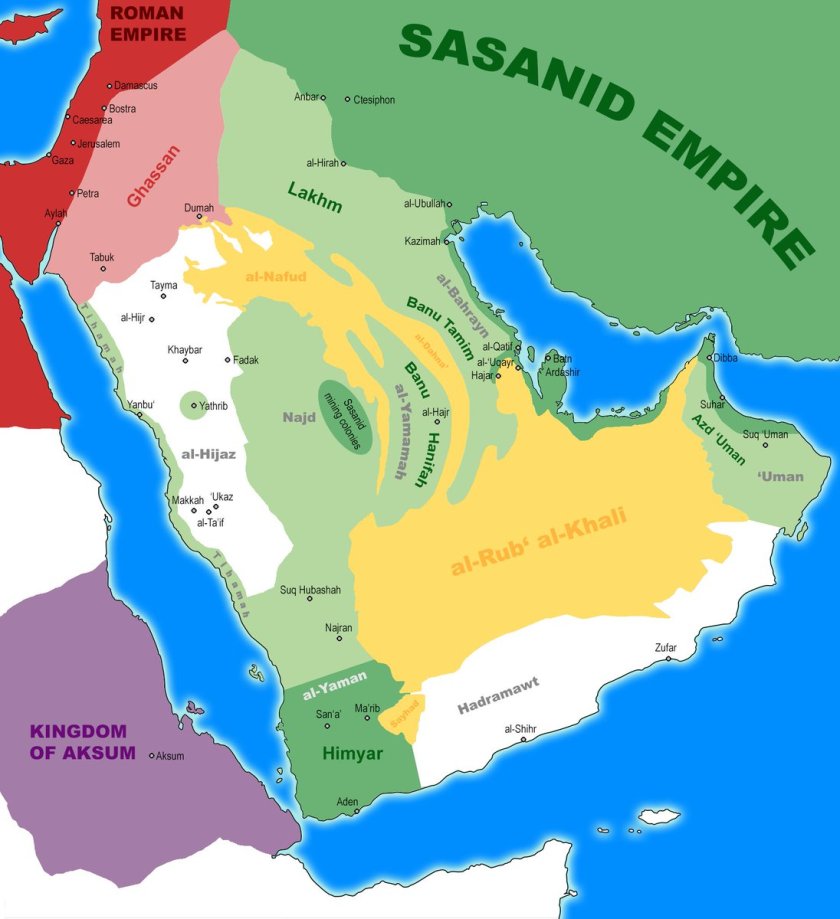
The Jinn: The Unseen Neighbors
The most prominent and complex of these supernatural beings were the jinn. The very name gives away their primary characteristic. It comes from the Arabic root janna, meaning "to hide" or "to conceal." They are, by definition, the hidden ones.
To understand their fundamental nature, let's turn to a concise overview.
The video 'What are the Jinn?' by Let's Talk Religion provides an excellent summary of the pre-Islamic understanding of these beings. This section covers their origin, nature, and abilities.
Watch from 0:15 to 5:38. Focus on the description of jinn as beings of 'smokeless fire', their connection to the desert, their ability to shapeshift and possess humans, and their moral ambiguity.
From this, we can summarize the core attributes of the pre-Islamic jinn:
- Nature: They were not simply ghosts. They were a distinct class of being, believed to possess physical (though normally invisible) bodies and to live in societies that mirrored human ones, with tribes, clans, families, and rulers.
- Moral Ambiguity: It's crucial to distinguish them from the later, purely evil "demons" of some Western traditions. Like the daimons of ancient Greece, jinn were seen as morally ambivalent. They could be good, evil, helpful, or dangerous—much like humans.
- Abilities: Their primary powers included invisibility and shapeshifting. They could appear as animals (especially snakes, dogs, and scorpions) or as humans, though their disguise was often flawed, revealed by an animalistic feature like a cloven hoof or inhuman eyes.
- Habitation: They were associated with wild, desolate, and liminal spaces: deserts, ruins, caves, and cemeteries. To enter such a place was to enter their territory.
The Dual Role of Spirits in Human Affairs
The relationship between humans and spirits was not one-sided. These beings were not just a remote threat; they were active participants in the human world, for better and for worse.
1. A Source of Danger and Affliction
The most common role of spirits was as a source of danger. They were blamed for sudden illnesses, madness, and misfortune. The Arabic word for a madman, majnun, literally means "jinn-possessed," a linguistic fossil preserving this ancient belief.
This perceived danger led to a rich set of folk practices designed for protection:
- Charms and Talismans: Travelers would carry protective objects to ward off malevolent spirits.
- Ritual Warnings: It was common practice to say destur ("permission") before throwing water on the ground or entering a dark place, to avoid accidentally harming or offending a jinn.
- Sanctuary Circles: A lone traveler might draw a circle in the sand at night, creating a magical barrier that spirits were believed unable to cross.
2. A Source of Inspiration and Hidden Knowledge
Not all interactions were negative. Spirits, and particularly the jinn, were seen as the gatekeepers of esoteric knowledge and creative genius. This role is most evident in two key figures of pre-Islamic society: the poet and the soothsayer.
- The Poet's Muse: It was universally believed that a great poet's skill came from a personal jinn companion who served as their muse, whispering verses to them from the unseen world. Poets often took pride in this connection, seeing it as the source of their extraordinary eloquence.
- The Soothsayer's Power: The soothsayer, or kahin, was a diviner and oracle for the tribe. Their ability to see the future or uncover secrets was thought to come directly from a jinn who would communicate with or possess them, delivering cryptic, rhyming prophecies.
The following video elaborates on this fascinating dual relationship, covering both the dangers and the more intimate connections between humans and jinn.
Revealing the Djinn - The Complete History of Arabia's Oldest Secret
This extensive segment from 'Revealing the Djinn' details the complex relationship with these beings, from folk practices of protection to their role as a source of poetic inspiration and hidden knowledge for soothsayers.
Watch from 12:23 to 20:54. This is a longer segment, but it's rich with detail that directly addresses the 'role' of these beings. Focus on the contrast between the fear that led to protective rituals and the reverence for the knowledge that jinn could provide.
Test your understanding!
Imagine two pre-Islamic Arabs: one is a lone traveler crossing the desert at night, and the other is a celebrated poet. How would their perception and expected role of the jinn differ in that moment?
Show answer
The lone traveler would perceive the jinn primarily as a source of danger. They would be wary of shapeshifting predators (ghul), malevolent spirits causing them to lose their way, or tricksters. Their interaction would be one of avoidance and protection, perhaps by reciting a charm or drawing a circle for safety.
The poet, on the other hand, would perceive their personal jinn as a source of inspiration. They would be seeking contact, hoping for their jinn muse to whisper powerful verses to them. For the poet, the jinn's role is that of a creative partner and a conduit for a special form of knowledge (poetry), a role that brings honor rather than fear.
A Menagerie of Spirits: Jinn and Their Kin
While "jinn" can be used as a general term, pre-Islamic belief recognized a whole spectrum of supernatural beings, each with its own characteristics. Think of it less as a single species and more as a kingdom of diverse creatures.

This textual resource gives us a clear idea of how pre-Islamic Arabs distinguished between higher gods and this lower tier of spirits.
Arab Religions and Idolatry in Pre-Islamic Era
The paper 'Arab Religions and Idolatry in Pre-Islamic Era' explicitly discusses the hierarchy of beings and the human relationship with them.
First, read the introductory paragraph under 'I. INTRODUCTION' that ends with '...Thus the image of divinity in the mentality of the pre-Islamic man was completed.' This establishes the hierarchy. Then, read the section 'E. Cult of the trees', starting from 'Likewise, they believed...' to the end of the section. This part directly states that they feared and even worshipped jinn, and that priests and fortune-tellers claimed knowledge from them.
The texts and folklore allow us to identify several key types:
- Shaytan (pl. Shayatin): This term referred to specifically malevolent and rebellious spirits, often seen as tempters. While the concept would be greatly developed in Islam, the pre-Islamic shaytan was a known demonic force.
- Ifrit: A class of powerful, often large and winged jinn. They were generally seen as malicious and fearsome, associated with ruins and causing phenomena like sandstorms.
- Ghul (Ghoul): Perhaps the most terrifying figure in desert lore. The ghul was a monstrous, flesh-eating desert spirit. It was a shapeshifter that would often appear as a traveler or a beautiful woman to lure victims away from their path, only to drag them to its lair and devour them. It personified the ultimate peril of the lonely places.
- Si'lah: A specific type of female ghul, often said to inhabit forests or jungles. She was known for being particularly sadistic, toying with her victims before killing them.
These beings were not just abstract concepts; they were believed to be a very real part of the world, beings one might actually encounter.
Conclusion
In this lesson, we have moved from the general spiritual landscape of pre-Islamic Arabia to identify the specific supernatural beings that inhabited it.
Key takeaways from this lesson are:
- The animistic belief in spiritual forces became personified into a diverse population of supernatural beings.
- The jinn were the most prominent: invisible, fiery beings living in parallel societies, capable of shapeshifting, and morally ambiguous.
- These spirits played a dual role in human life. They were a source of fear, causing illness and misfortune (majnun), but also a source of inspiration for poets and hidden knowledge for soothsayers (kahin).
- The spirit world was a menagerie that included specifically malevolent shayatin, powerful ifrit, and monstrous predators like the ghul.
You now have a foundational "bestiary" of the pre-Islamic Arabian spirit world. These are the beings whose lore, characteristics, and powers were carried forward, transformed, and systematized in the Islamic era and in the magical traditions that we will study.
In our next lesson, we will zoom in further on the jinn themselves. We will explore pre-Islamic concepts of their specific roles as desert spirits tied to particular locales and as protectors or adversaries of specific tribes, deepening our understanding of their place in the social and spiritual fabric of the time.