Welcome back! In our last few lessons, we've built a solid foundation for starting a simple conversation, covering everything from greetings and introductions to the essential courtesy phrases bitte, danke, and Entschuldigung. Now, we'll address a very practical and common situation that arises in those conversations: what happens when someone doesn't catch a name or a key piece of information?
Today's lesson focuses on spelling names and other words in German. This is a crucial skill, not just for the Goethe A1 exam, but for countless real-world scenarios you'll encounter in Germany or Austria. Imagine registering for an account online, making a reservation over the phone, or clarifying your address with a government official—clear spelling is essential. As a project manager, you know the importance of precision to avoid errors, and the same principle applies here. By the end of this lesson, you will be able to confidently ask for and provide spellings using both the standard alphabet and the German phonetic alphabet.
1. Reciting the Alphabet and Asking for Spelling
Let's begin with a quick review of the German alphabet, or das Alphabet. It contains the same 26 letters as English, plus four special characters: Ä, Ö, Ü, and ß.
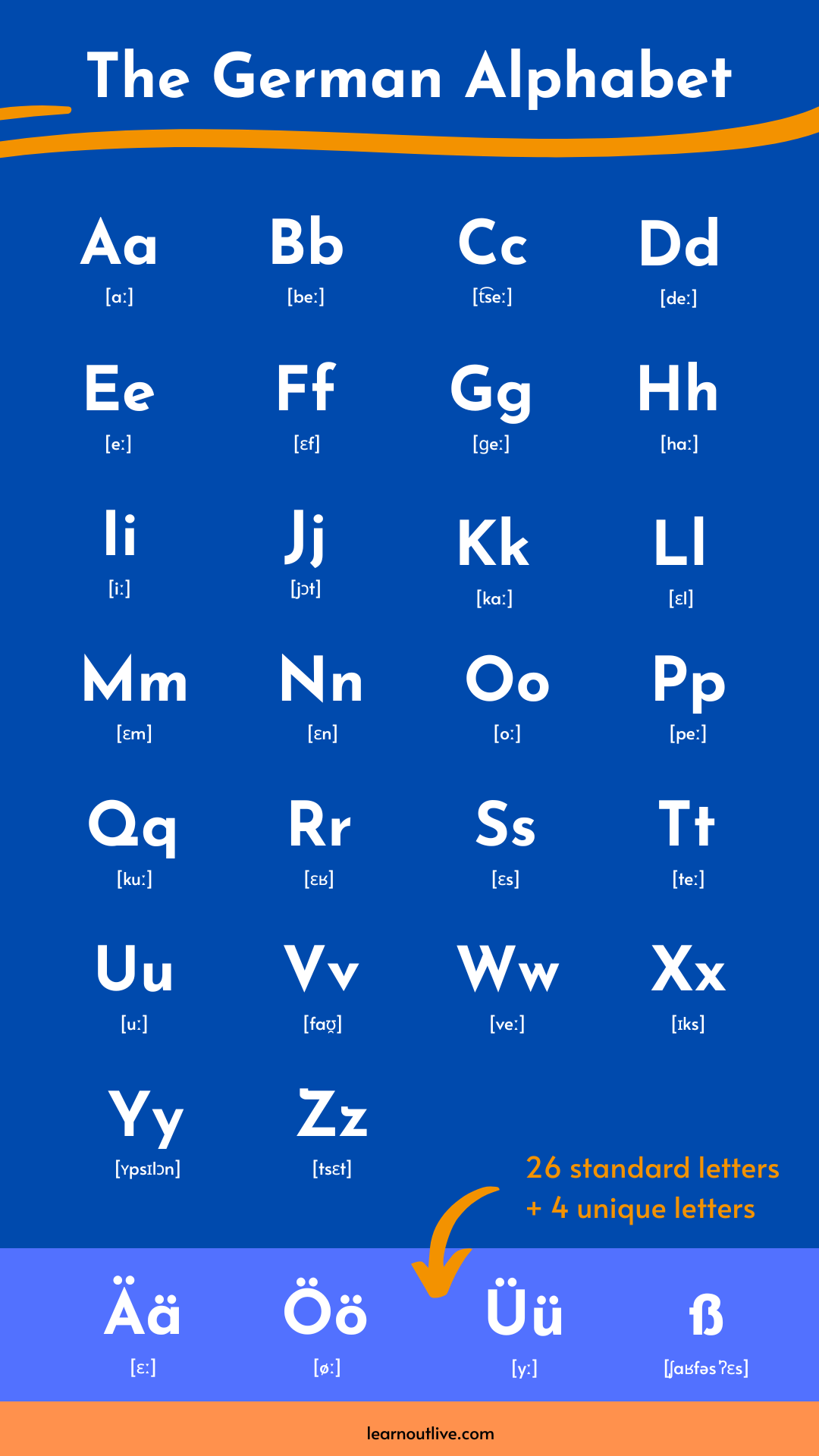
The most important part of today's lesson is not just reciting the letters, but using them to spell. The key question you'll need is:
Wie schreibt man das?(How do you write that?)
A more polite version, which directly uses what we learned in our last lesson, is:
Können Sie das bitte buchstabieren?(Could you please spell that?)
The verb for "to spell" is buchstabieren.
To practice hearing and using the alphabet, the following video from the "Learn German with Herr Antrim" channel is excellent. It starts with the alphabet sounds, includes a song to help with memorization, and then moves into a spelling practice session.
Master The German Alphabet With Spelling Practice - A1 German Vocabulary
This video provides a comprehensive guide to the German alphabet and practical spelling exercises.
First, watch the introduction from the beginning until the start of the song. The instructor highlights some key differences in pronunciation, especially for vowels and the letters V and W. Next, you can listen to the alphabet song. It's a traditional tune and a good mnemonic device. Finally, and most importantly, participate in the interactive spelling quiz. The instructor will spell out words. Pause the video and try to write them down before he reveals the answer. Pay attention to how he indicates a capital letter by saying großes before the letter (e.g., großes B). This is crucial for spelling nouns in German.
2. The Phonetic Alphabet: Spelling with Clarity
Have you ever tried to spell a password over a noisy phone line and had to say "B as in Bravo, T as in Tango"? German has a similar system, called a Buchstabiertafel (spelling table) or phonetic alphabet, to ensure clarity. Using this system is standard practice in business and administration, so it's a vital tool for handling any kind of official paperwork or registration.
Historically, the German phonetic alphabet used names (A wie Anton, B wie Berta). You will still hear this version used, and it's good to be aware of it. The document below introduces the concept and lists this older, name-based table.
DLI - SOLT 1 German Module 1 Lesson 1 - Student Manual
This section from a DLI German course textbook explains the purpose of a phonetic alphabet and provides the traditional version.
On page 22 of the PDF, find the section titled "The German Phonetic Alphabet". Read the short introduction and look over the table to familiarize yourself with the concept of using names for letters.
However, as of 2022, Germany has officially adopted a new standard for business and administration that primarily uses city names. This is the version you are most likely to encounter in official contexts.

For example, to spell the common last name "Schmidt" using this new table, you would say:
- S wie Salzwedel
- C wie Chemnitz
- H wie Hamburg
- M wie München
- I wie Ingelheim
- D wie Düsseldorf
- T wie Tübingen
And for the special characters:
- Ä wie Umlaut Aachen
- Ö wie Umlaut Offenbach
- Ü wie Umlaut Unna
- ß wie Eszett
3. Spelling in Action: The A1 Exam
Now, let's connect this directly to your goal of passing the Goethe-Zertifikat A1. In the first part of the speaking exam (Sprechen, Teil 1), you introduce yourself. The examiner will then ask follow-up questions, and very often, they will ask you to spell your name or your home country.
The following video shows several real candidates in a mock A1 exam. Watch how the examiner asks them to spell, and how they respond.
Goethe-Zertifikat A1: Start Deutsch 1 – Sprechen | German A1 Oral Exam
This video from the "24h Deutsch" channel simulates the A1 oral exam, providing perfect examples of the spelling task.
Watch these four short clips to see the spelling task in action: The first candidate spells her country, Äthiopien (Ethiopia). The second candidate spells his first name, Yusuf. The third candidate spells her last name, Demoulka. The fourth candidate spells her country, Costa Rica.
Notice the consistent phrasing from the examiner: Können Sie das bitte buchstabieren?. Mastering your response to this question is a key step in preparing for the exam.
Your Turn to Practice
Now it's your turn.
- Take your full name. Spell it out loud, letter by letter, using the German letter names (
ah, bay, tsay...). - Now, spell your last name again, but this time using the new phonetic alphabet with city names (e.g., "S wie Salzwedel...").
- Do the same for your city of origin. This is exactly the kind of practice you need for the exam and for real life.
Conclusion
In this lesson, we've added a crucial practical skill to your toolbox. You now have the language to handle situations where precise spelling is required, a common need in both daily life and administrative tasks.
Here are the key takeaways:
- The key question is
Können Sie das bitte buchstabieren?(Could you please spell that?). - You can spell by simply reciting the German letter names (
ah, bay, tsay...). Remember to saygroßesbefore a capital letter. - For maximum clarity, especially on the phone or in official settings, use the
Buchstabiertafel(phonetic alphabet). The modern standard uses city names (e.g., A wie Aachen). - This skill is a required component of the Goethe A1 speaking exam.
You've now completed the foundational first module of our course! You can introduce yourself, ask and answer basic questions, use polite phrases, and now, spell out key information.
In our next lesson, we will begin Module 2 and dive into the heart of German grammar by exploring one of its most defining features: the grammatical gender of nouns, marked by the articles der, die, and das. This will be a major step towards constructing your own correct sentences.