Welcome to your first lesson in German! I'm excited to guide you on your journey toward mastering the language and achieving your goal of passing the A1 exam. This course is designed to build your skills methodically, starting from the most fundamental building blocks.
Today, we will tackle the very first learning outcome: reciting the German alphabet. This includes the 26 letters you'll recognize from English, plus the four special characters unique to German: ä, ö, ü, and ß. Mastering the alphabet is the essential first step for everything that follows—pronunciation, reading, and eventually, spelling your name and address correctly when you're navigating life in Germany or Austria.
Let's begin with a look at the full alphabet to get a general overview.

The 26 Standard Letters
The German alphabet uses the same 26 Latin letters as English, but their names and sounds can be quite different. A common mistake for beginners is to assume the pronunciations are the same. We'll start by learning the correct German name for each letter.
To get a formal introduction, please read a short overview from the article "German Alphabet: Umlauts, ß, and Pronunciation Guide." This will also introduce an interesting grammatical point about the letters themselves.
German Alphabet: Umlauts, ß, and Pronunciation Guide - Remitly
This article provides a clear, structured look at the German alphabet.
Please read the section titled "Overview of the German Alphabet." Focus on the table that lists the 26 letters. Pay special attention to the sentence right before the table that mentions the grammatical gender of the letters: "das A, das B...".
Now that you have seen the letters in writing, the most important step is to hear them spoken. The following video provides a clear, letter-by-letter pronunciation guide. Your task is to listen and repeat. Don't worry about getting it perfect immediately; the goal is to start training your ear and your mouth to produce these new sounds.
Learn the German Alphabet together with detailed pronunciation.
The "YourGermanTeacher" channel offers a very clear and paced pronunciation guide that is ideal for beginners.
Watch the video from the beginning up to the point where the instructor introduces the special letters. Please repeat each letter aloud after the speaker. You can pause and replay as many times as you need. Notice the distinct sounds of letters like J ("yott"), V ("fow"), W ("vay"), and Z ("tsett").
The Special Characters: Umlaute and Eszett
Beyond the standard 26 letters, German has four special characters that are essential for correct spelling and pronunciation. These are the three vowels with an "Umlaut" (two dots on top) and a unique consonant called "Eszett" or "scharfes S" (sharp S).
- The Umlaute: Ä/ä, Ö/ö, Ü/ü
- The Eszett: ß
These aren't optional decorations; they represent distinct sounds and can completely change the meaning of a word. For example, schon means "already," while schön means "beautiful."
To understand their function and origin, let's return to the "Beyond Borders" article. It gives an excellent explanation of what these characters are and how to handle them, especially when you don't have a German keyboard.
German Alphabet: Umlauts, ß, and Pronunciation Guide - Remitly
This resource explains the origin and usage of the special characters in a very accessible way.
First, read the section "Unique Features of the German Alphabet," focusing on the two subsections: "Introduction to Umlauts" and "The Eszett (ß)". This explains the handy "ae, oe, ue" substitution. Next, jump down to the section "Step 3: Master Difficult Letters (Umlauts and ß)." This part gives you practical tips on how to physically form the sounds. Read the short descriptions for each of the four special letters.
Again, reading about sounds is one thing, but hearing them is crucial. Let's watch two short video segments to hear these special characters pronounced clearly.
First, let's continue with the "YourGermanTeacher" video to hear the names of these letters.
Learn the German Alphabet together with detailed pronunciation.
This video gives a clear pronunciation of the names for the special characters.
Watch the segment from special letters. Listen carefully to the names: A-Umlaut, O-Umlaut, U-Umlaut, and Eszett.
Next, the "Learn German with Herr Antrim" video offers excellent analogies for an English speaker trying to make these new sounds.
Master The German Alphabet With Spelling Practice - A1 German Vocabulary
Herr Antrim provides helpful tips for shaping your mouth to produce the umlaut sounds correctly.
Watch the segment from don't forget you can add for another explanation and pronunciation of the Umlaute and the Eszett. Pay close attention to the instructions on how to say Ö and Ü.
Putting It All Together: Practice and Memorization
You have now been introduced to all the letters of the German alphabet. The final step in today's lesson is to put them all together and commit them to memory. A proven technique for this is using a song.
The traditional German alphabet song is set to the same tune as "Frère Jacques" or "Brother John." Watching and singing along is a highly effective way to make the alphabet stick.
Master The German Alphabet With Spelling Practice - A1 German Vocabulary
Singing is a powerful mnemonic device for language learning. This video presents the alphabet song clearly.
Watch the section from now let's sing where Herr Antrim sings the alphabet song. Don't be shy—try singing along! Listen for the little words added to make the song fit the melody, like "vunderbar" (wonderful).
For one final review, let's do a listen-and-repeat exercise covering the entire alphabet, including the special characters.
Learn the German Alphabet together with detailed pronunciation.
This section provides a complete review, allowing you to practice reciting the entire alphabet one last time.
Watch the review section from let's do some review. Repeat each letter after the speaker to solidify your pronunciation.
Conclusion
Congratulations on completing your first lesson! You have taken the foundational step of learning the tools to read and pronounce German.
Here are the key takeaways:
- The German alphabet consists of the 26 letters familiar from English, plus four special characters: Ä, Ö, Ü, and ß.
- The pronunciation of many letters, such as J, V, W, and Z, is significantly different from English.
- The Umlaute (Ä, Ö, Ü) represent distinct vowel sounds and are critical for meaning. They can be substituted with ae, oe, ue if necessary.
- The Eszett (ß) represents a sharp "ss" sound and is never used at the beginning of a word.
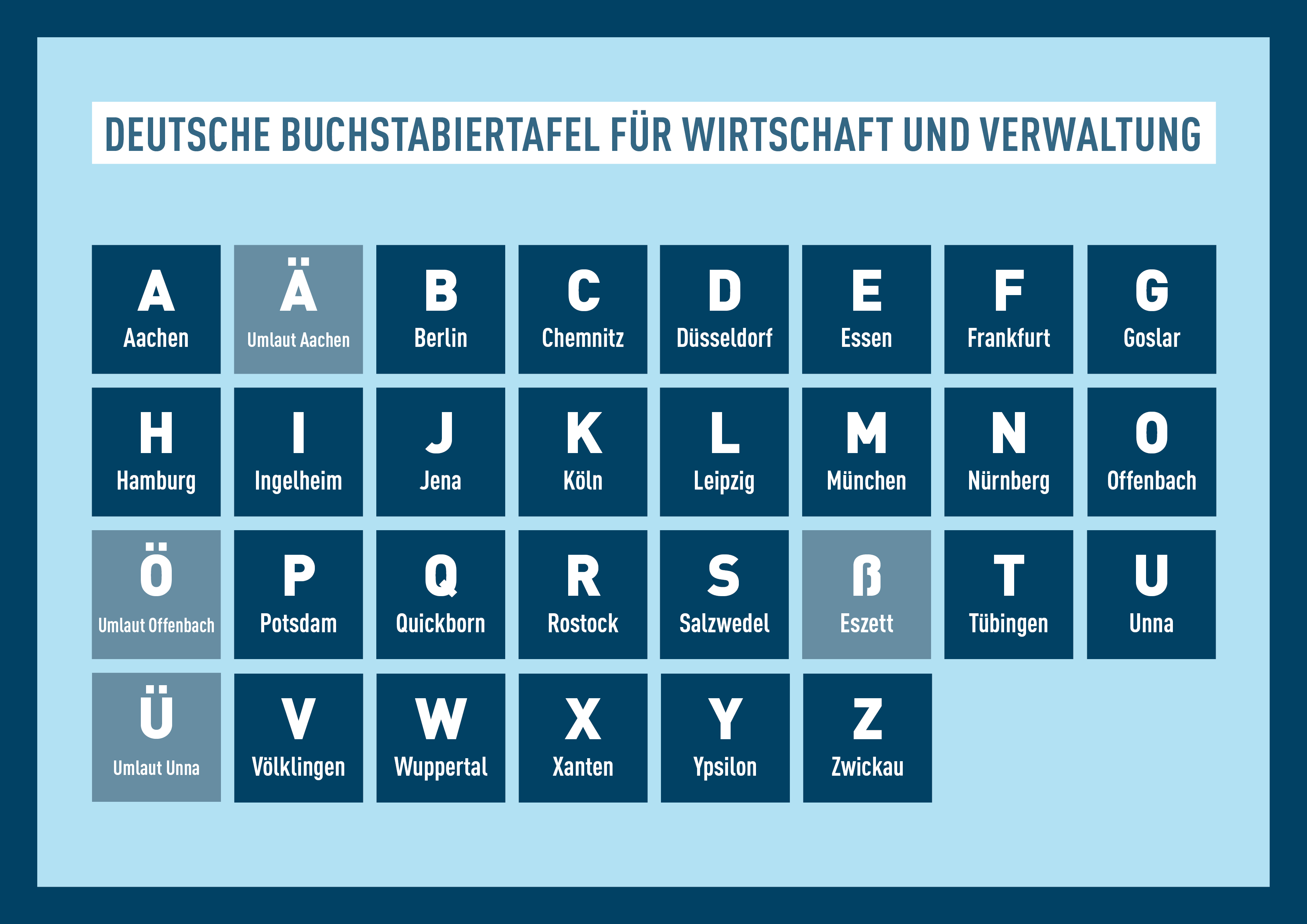
In a future lesson, we will learn to use this official spelling chart to spell out names and words—an essential skill for official appointments or phone calls.
In our next lesson, we will build directly on what you learned today. We will move from the names of the letters to the sounds they make within words, focusing on the specific German sounds and letter combinations that are most challenging for English speakers.