Introduction
In our previous lesson, we developed an analytical framework to distinguish between a legitimate grievance, which seeks resolution, and manufactured guilt, which seeks control. You now have the tools to diagnose the intent behind challenging online interactions. This naturally leads to the next critical question: what do you do when you identify reality-distorting tactics like gaslighting?
This lesson transitions from diagnosis to defense. Our objective is to apply documentation strategies to create a factual, unshakeable record against gaslighting. Rather than viewing this as an act of preparing for conflict, think of it as a method for preserving your own sanity. Given your background in statistics and analysis, you can appreciate the power of having a clean, objective dataset to ground your perception when an adversary is actively trying to introduce noise and uncertainty. Documentation serves as your external, verifiable memory, protecting your own perception from manipulation.
We will cover the psychological rationale for documenting, a systematic process for evidence collection, and how to apply these techniques to the specific online environments you navigate.
The "Why": Documentation for Mental Fortitude, Not Confrontation
The primary goal of gaslighting is to make you doubt your own memory, perception, and sanity. An effective manipulator doesn't want to debate the truth; they want to destroy your ability to recognize it. Therefore, confronting a gaslighter with evidence often backfires. They are masters at turning the tables, making your act of recording the new "problem." They might accuse you of mistrust, paranoia, or even doctoring the evidence.
The true power of documentation lies in its use as a private tool for self-validation. It’s for your benefit, to anchor your reality when you feel it slipping.
The YouTube video "Safely recording things with Narcissists can help protect you against gaslighting & manipulation" provides a powerful explanation of this dynamic. The speaker, who has Narcissistic Personality Disorder, offers a unique insider's perspective on why this is the case.
Safely recording things with Narcissists can help protect you against gaslighting & manipulation
This video explains the core purpose of documenting manipulative behavior and warns against the common pitfall of using evidence for confrontation.
Watch the introduction from the beginning, where he explains how subtle gaslighting makes you question reality and why documenting is a way to combat this. Pay close attention to the segment from "A narcissist's goal isn't the truth," which clarifies that the manipulator's objective is to plant a "seed of doubt." The most critical insight is from this section. The speaker explains that recordings are for your own mental protection and details exactly how a manipulator will twist the act of recording against you, making it a "bigger issue than what they actually did."
As the video makes clear, your collection of evidence is not ammunition for a future fight. It is a shield for your own mind. It serves as a personal, factual log that you can review to reaffirm your experiences, especially during moments of self-doubt or when the effects of trauma bonding make you consider re-engaging with a manipulative person.
The "How": A Systematic Process for Creating Your Factual Record
To be effective, documentation must be systematic and thorough. A haphazard collection of random screenshots can be just as confusing as the gaslighting itself. We can use a structured approach, inspired by forensic best practices, to build a clear and indisputable record.
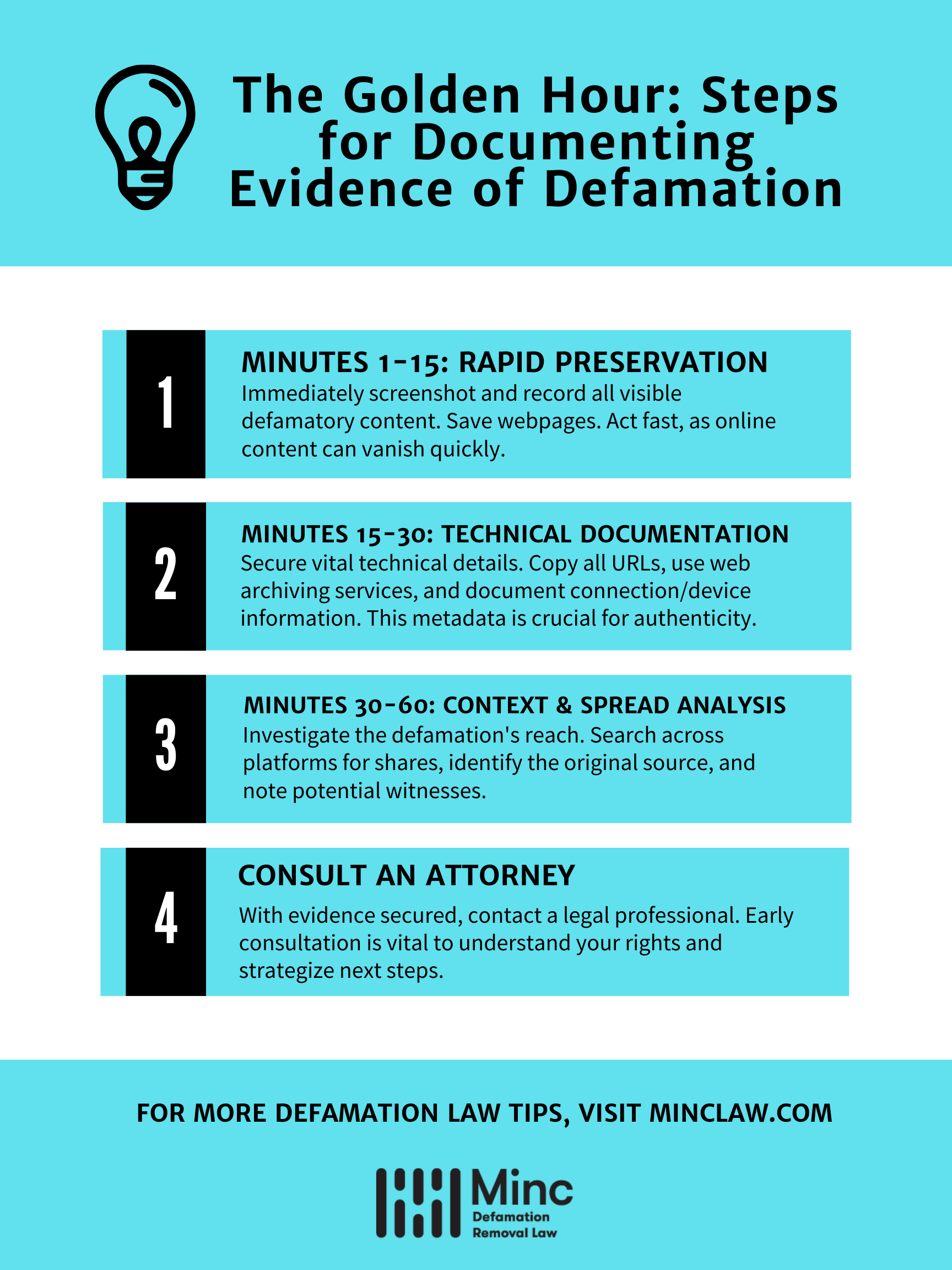
Let's break down how to implement these steps in practice.
1. Rapid Preservation: Capture the Message Immediately
Digital content is ephemeral. Messages can be deleted, posts removed, and stories vanish. The first rule is to act fast.
The guide, "How to Gather Technology Abuse Evidence for Court," offers excellent, practical instructions on the various methods for capturing content. While its focus is legal, the techniques are directly applicable to our goal of personal documentation.
[PDF] How to Gather Technology Abuse Evidence for Court
This guide provides the technical "how-to" for capturing digital evidence across different platforms and formats.
First, review the section on taking screenshots. This covers the basics for different devices. Note the crucial warning that apps like Snapchat will notify the sender when you take a screenshot. Next, read about alternative methods. The section "Take a photo" describes using a second device to record the screen, which is a key strategy to avoid detection on apps with screenshot notifications. Similarly, the "Record a Video" section explains how to use screen recording for dynamic or lengthy content. Finally, jump to the platform-specific advice for Snapchat. Read the entire section from "IMPORTANT NOTE". This details how to handle disappearing messages, a common tool for gaslighters as it leaves no immediate trace.
In addition to screenshots and recordings, you should prioritize saving original files whenever possible. As the article "Spotting Gaslighting in Online Conversations" advises, these are much harder to dispute.
Spotting Gaslighting in Online Conversations
This article explains how to move beyond simple screenshots to more robust forms of documentation.
In the "Step-by-Step Guide," find the subsection "Tracking and Documenting Conversations." Read the paragraph that begins "Whenever you can, save original files." This emphasizes exporting entire chat histories from apps like WhatsApp or saving emails as .eml files, which preserve critical metadata.
2. Technical & Contextual Documentation: Tell the Whole Story
A single, out-of-context message is weak evidence. Gaslighting is a pattern, and your documentation must capture that pattern. This means collecting not just the offending message, but the surrounding conversation and critical metadata.
The "How to Gather Technology Abuse Evidence" PDF provides a checklist of what to capture.
[PDF] How to Gather Technology Abuse Evidence for Court
This resource details the specific information needed to provide full context to your evidence.
Read the section "Capture More Than One Message." It explains the importance of showing the entire conversation and provides a specific technique for creating overlapping screenshots of long text threads. Next, review "Who Sent the Message?" and "When Was It Sent?" This covers capturing usernames, phone numbers, and, critically, how to reveal hidden timestamps in various messaging apps. Scan the platform-specific advice for Instagram, Email, and Facebook in the sections titled "INSTAGRAM" and "EMAIL" and "FACEBOOK." This will give you a clear idea of what to document, from profile URLs to email headers.
3. Systematic Organization: Turn Chaos into a Clean Dataset
A folder full of randomly named screenshots is not useful. You need to organize your evidence into a coherent timeline. This is where your analytical skills come into play.
- Consistent Naming Convention: Adopt a clear and sortable naming format. The article "Spotting Gaslighting in Online Conversations" suggests a great model:
YYYY-MM-DD_Platform_User_Description.png.- Example:
2023-11-15_Instagram_DM_UserX_DeniesPreviousStatement.png
- Example:
- Create a Log or Journal: Supplement your visual evidence with a written log. In a simple spreadsheet or a private document, record the date, the file name(s) of the evidence, a brief description of the incident, and—importantly—your emotional and psychological reaction.
- This connects the objective data (the message) to its subjective impact ("Felt confused and anxious; started to question my memory of the conversation."). This log becomes a powerful tool for recognizing patterns over time.
Applying the Strategy: Scenarios from Your World
Let's ground this process in situations you might encounter.
Scenario 1: Gaslighting in the DMs
You've been exchanging messages with a follower who is interested in your lingerie designs. Initially, they were very complimentary, but now their tone has shifted. After you politely declined a request for a personal photo, they sent a message saying, "You're being so cold. I was just trying to be supportive. You're reading way too much into this." This is a classic attempt to invalidate your feelings.
- Your Documentation Protocol:
- Preservation: Immediately take screenshots of the entire exchange. Use the overlapping screenshot technique to capture the flow from the initial complimentary messages to the manipulative turn.
- Context: Ensure the screenshots include their username, your username, and timestamps for every message.
- Organization:
- Save the files:
2023-11-15_IG_DM_FollowerY_InitialPraise.png,2023-11-16_IG_DM_FollowerY_DeclineRequest.png,2023-11-16_IG_DM_FollowerY_Invalidation.png. - Update your log: "Date: 2023-11-16. Evidence: [file names]. Description: Follower Y accused me of being 'cold' and 'reading too much into it' after I set a boundary. Impact: Felt a flash of guilt, wondered if I was overreacting."
- Save the files:
Scenario 2: Public vs. Private Contradiction in a Community Group
In a private Facebook group for your polyamorous community, a prominent member publicly posts about the importance of "radical transparency." However, in a private chat with you about a community event, they insist a certain detail be kept secret from others, saying, "We never talked about making that public, you must be misremembering."
- Your Documentation Protocol:
- Preservation: Take a screenshot of their public post about "radical transparency." Take separate, full-context screenshots of the private chat where they contradict this and deny your memory.
- Context: The public post screenshot should show their name, the date, and the group it was posted in. The private chat screenshots must show their name, timestamps, and the full conversation.
- Organization:
- Save the files:
2023-11-10_FB_Group_UserZ_PublicPostOnTransparency.png,2023-11-16_FB_Chat_UserZ_DeniesConversation.png. - Update your log: "Date: 2023-11-16. Evidence: [file names]. Description: User Z publicly advocates for transparency but privately insisted on secrecy, then denied our agreement. Clear public/private contradiction. Impact: Felt frustrated and invalidated. This is the second time they've done this."
- Save the files:
The goal in both scenarios is not to confront "Follower Y" or "User Z." The goal is to have an undeniable, private record that confirms your reality. When you feel that flicker of self-doubt, you can review your log and see the pattern laid out in black and white.
Conclusion
This lesson provided a systematic, defensive strategy to protect your sense of reality from gaslighting. By treating documentation as a form of rigorous data collection for personal validation, you build a powerful shield against manipulation.
Here are your key takeaways:
- The Goal is Self-Validation: Documentation is a private tool to protect your mental state, not an offensive weapon for confrontation. Confronting a gaslighter with evidence is often counterproductive.
- Act Fast and Be Thorough: Digital evidence is fragile. Capture it immediately using screenshots, screen recordings, or by saving original files.
- Context is Everything: A single message proves little. Capture the entire conversation flow, including sender information and timestamps, to reveal the full pattern of behavior.
- Organize Systematically: Use a consistent file naming convention and a detailed log to turn a chaotic collection of files into a clear, chronological record of your experiences.
You now know how to identify covert control tactics (from previous lessons) and how to create a factual record to defend your perception against them. The next logical step is to move from passive defense to active response.
In our next lesson, we will address the final learning outcome of this module: Formulate assertive, boundary-setting responses to covert control tactics in both public and private digital spaces. We will build upon your newfound clarity and confidence to develop communication strategies that effectively shut down manipulation while maintaining your integrity.