Introduction
In our recent lessons, we have systematically deconstructed several key tactics of deceptive attachment. We began with the overwhelming intensity of love bombing, moved to the alluring promises of future faking, and then dissected the addictive, low-effort pattern of breadcrumbing. Each of these represents a different strategy for manipulating your time, attention, and emotions.
Today, we transition from identifying these specific tactics to building a more comprehensive analytical framework. The goal of this lesson is to empower you to analyze interactions to distinguish between genuine interest and strategic attention from your followers. This is a crucial skill for anyone with a public-facing persona, especially in niches like yours where authenticity is paramount, yet attention can be a currency.
Drawing on your background in analysis, think of this lesson as developing a decision model. We will define the characteristics of our "signal" (genuine interest) and "noise" (strategic attention), and then establish a set of diagnostic tests to differentiate between them in real-time.
The Spectrum of Attention: Genuine Connection vs. Strategic Investment
First, it is vital to understand that attention is not a binary concept of "good" or "bad." It exists on a spectrum. At one end, you have genuine interest, and at the other, purely strategic attention.
- Genuine Interest is rooted in connection and mutuality. The other person is interested in you as a whole individual—your thoughts, feelings, and experiences. The goal is to build a relationship, whether it's a friendship, a romantic connection, or a professional collaboration. It is a two-way exchange.
- Strategic Attention is instrumental. The person giving it is not primarily interested in you, but in what you can provide for them. This could be status, validation, access to your audience, or simply the ego boost of being associated with you. The attention is an investment made with an expected return. Your role is that of a resource to be utilized.
To begin building our analytical framework, we first need to establish a clear benchmark for what authentic, healthy interest looks like.
Baseline Analysis: The Hallmarks of Genuine Affection
Before you can reliably spot a forgery, you must be intimately familiar with the real thing. Let's use the following resource to define the characteristics of genuine affection, which will serve as our "control group."
Distinguishing Love Bombing from Real Affection - Sanity Center
This article from the Sanity Center provides a clear breakdown of the differences between manipulative love bombing and authentic affection. It will help us establish a clear, positive baseline.
Begin by reading the section "Understanding Love Bombing" for a quick recap of the manipulative side. Next, read the section that defines our baseline, "The Characteristics of Genuine Affection". Pay close attention to the concepts of emotional intimacy, active listening, and support. Finally, read the direct comparison under "Love Bombing vs. Genuine Affection". The three key differentiators listed here—Timing and progression, Quality vs. quantity, and Underlying motivations—are the foundation of our analytical model.
As you've just read, genuine interest is characterized by three core qualities:
- Pacing: It develops at a natural, unhurried pace, allowing for mutual discovery.
- Quality: It prioritizes meaningful connection over sheer volume of contact.
- Motive: It stems from a sincere desire to know and connect with the other person, not to control or use them.
With this baseline established, we can now turn our attention to the indicators of its opposite: strategic attention.
The Strategic Follower: Identifying the Clout Chaser
One of the most common forms of strategic attention you'll encounter online comes from what we can term the "clout-chasing narcissist." This is an individual who uses proximity to influential or interesting people to regulate their own sense of self-worth. For them, your attention, or even just being seen interacting with you, is the prize.
Your unique position—as a lingerie designer with a "provocative" brand and a voice in alternative lifestyle communities—makes you a potent source of this social capital. Associating with you can make someone else appear more edgy, desirable, or interesting.
The following resource provides a psychological profile of this behavior.
The Clout-Chasing Narcissist: When Attention Becomes a Substitute ...
This article by psychotherapist Sherry Gaba, LCSW, explains the underlying psychology of individuals who use attention and association as a substitute for self-worth.
Read the introduction and the section "What Is a Clout-Chasing Narcissist?" to understand the core concept. Then, review the bulleted list under "Common Characteristics". This is a powerful checklist of behaviors associated with strategic attention.
The key insight here is that for the clout chaser, the relationship is performative. Their praise and interest are often directed not at you, the person, but at your image and the benefit they derive from being in your orbit. Their compliments may feel intense but generic, focusing on your status or appearance rather than your specific ideas or creative choices.
A Framework for Real-Time Analysis
Now, let's combine these concepts into a practical, analytical framework you can use to triage incoming attention from followers, potential collaborators, or romantic interests. Think of this as a mental checklist you run when an interaction feels "off" or overly intense.
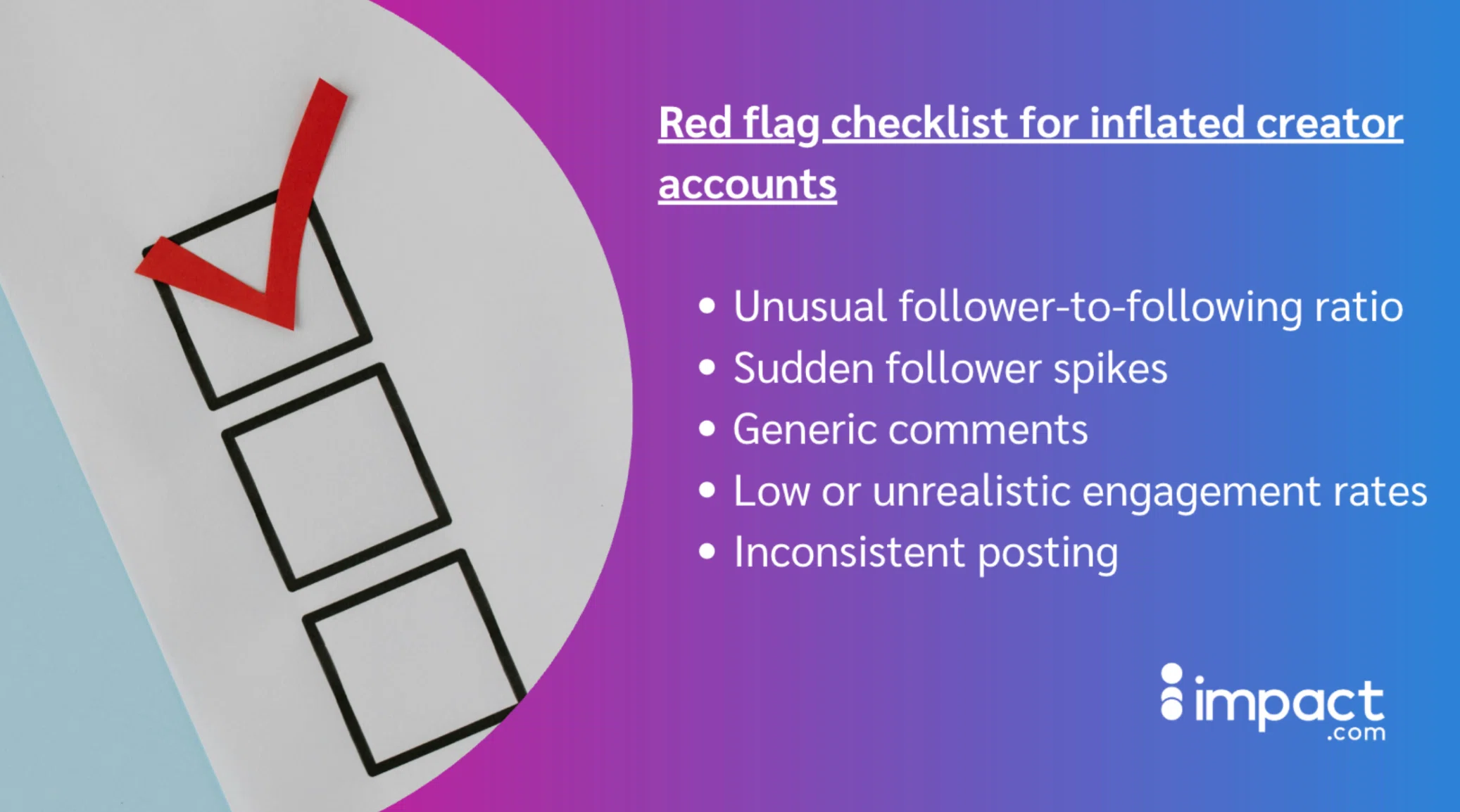
Here is your diagnostic checklist. Ask yourself these questions when analyzing an interaction:
-
The Pacing & Intensity Test: Does the speed of the interaction feel natural or rushed? Is the level of praise and attention proportionate to the length and depth of our acquaintance?
- Genuine: The conversation evolves over time. Compliments are specific and earned.
- Strategic: It feels like they're trying to rush to a state of intimacy or obligation. The praise is immediate, overwhelming, and often generic ("You're a goddess," "You're my everything"). This is a classic love bombing signal.
-
The Reciprocity Test: Is this a monologue or a dialogue? Are they as interested in understanding you as they are in being seen by you?
- Genuine: They ask thoughtful questions about your life, your work, your opinions. They listen to your answers.
- Strategic: The conversation orbits them. They use your posts or stories as a launchpad to talk about themselves. If they ask questions, they are often leading questions designed to elicit more praise for them, or they ignore your answers.
-
The Consistency Test: Is the attention steady and reliable, or does it follow a pattern of intermittent reinforcement?
- Genuine: Communication has a reasonably consistent rhythm.
- Strategic: They appear with intense flurries of attention when they want something (e.g., a response, validation) and then disappear, only to reappear later. This is the breadcrumbing pattern we discussed.
-
The Boundary Test: What happens when you say "no," are unavailable, or express a different opinion?
- Genuine: They respect your boundaries. Disagreements are handled with respect.
- Strategic: They may react with guilt-tripping ("I was just trying to be nice"), subtle punishment (silent treatment), or by simply ignoring the boundary and continuing their pursuit. Their "affection" is conditional on your compliance.
-
The Motivation Test: Based on their behavior, what seems to be their primary goal? Connection or value-extraction?
- Genuine: The goal appears to be mutual understanding and connection.
- Strategic: The goal appears to be something else: getting free products, gaining a follower, borrowing your status, or securing an ego boost.
Applying the Framework: Your Contexts
Let's run two scenarios through this framework.
Scenario 1: The "Collaborator" for your Lingerie Brand
An account DMs you: "OMG your designs are FIRE 🔥 I'm a model/photographer, we HAVE to work together. Your brand is everything I'm about. When can you send me some pieces for a shoot?"
- Pacing & Intensity: Fails. Rushed, intense, immediate demand.
- Reciprocity: Fails. No questions about your brand, your process, or what a collaboration would look like for you. It's all about what they can get.
- Motivation: Fails. The goal is clearly to extract free products. This is strategic attention.
Contrast this with: "Hi, I'm a photographer and I've been following your work for a while. The corsetry details on your 'Midnight' top are stunning. I'm working on a project with a similar aesthetic and was wondering if you'd be open to discussing a possible paid or TFP collaboration. You can see my portfolio here." This passes the initial tests and warrants a conversation.
Scenario 2: The "Admirer" in a Polyamory Forum
You share a personal insight in a hotwife community group. Someone immediately DMs you: "That was the most profound thing I've ever read. You are so incredibly wise and brave. I feel like I've been waiting my whole life to meet someone with your perspective. When can we talk?"
- Pacing & Intensity: Fails. Over-the-top praise for a single comment, rushing towards a private conversation. Classic love bombing.
- Reciprocity: Fails. They aren't asking a follow-up question to understand your perspective better; they are idolizing you based on a snapshot.
- Motivation: Fails. They are likely projecting an ideal onto you and seeking to fulfill a personal fantasy, not connect with you as a person. This is strategic.
Conclusion
Today, we've moved from simply defining manipulative tactics to building a robust framework for real-time analysis. You now have a set of diagnostic tests to help you distinguish between the signal of genuine interest and the noise of strategic attention.
Your key takeaways are:
- Genuine interest is built on natural pacing, high-quality interaction, and a motive of mutual connection.
- Strategic attention is instrumental, often characterized by rushing, low reciprocity, inconsistency, and a disregard for boundaries.
- The clout-chasing narcissist is a useful psychological model for understanding followers who use you for status.
- Your analytical framework involves testing for Pacing, Reciprocity, Consistency, Boundaries, and Motivation.
You are now equipped to diagnose the nature of the attention you receive. In our next lesson, we will focus on action. We will develop personal boundaries and response protocols for managing unsolicited intense attention, turning your analysis into effective self-protection.