In our previous lesson, we navigated the pivotal moment where the benefactor's motive was reframed—not as an act of control, but as a misguided gesture of care born from fear. Leo’s confession and act of penance didn’t erase the harm done to Maya, but it did shift the emotional calculus, opening a narrow path from betrayal toward understanding. The vee is still fractured, but the raw materials for repair are now on the table.
Today, we complete the "Hidden Benefactor" scene structure by addressing its final and most constructive learning outcome: Write the resolution where trust is rebuilt through a conversation that establishes new boundaries for secrecy. This lesson moves beyond emotional processing into the realm of systemic change. For a relationship to recover from a breach of this magnitude, apology and forgiveness are insufficient. The underlying structural flaw that permitted the breach must be identified and redesigned. This is where trust is truly rebuilt—not on promises, but on a new, transparent, and mutually agreed-upon protocol.
1. The Formulaic Framework: Engineering a New Social Contract
Your work in operations research and relationship analysis has shown you that when a system fails, you don't just replace the broken component; you re-evaluate the entire process that led to the failure. The same principle applies here. The resolution conversation is not simply about Leo's actions; it's about the triad's implicit, unstated, and clearly inadequate rules regarding secrecy, privacy, and autonomy.
This conversation is a design session for a new social contract. Its goal is to produce a clear, robust, and explicit agreement that all three partners can commit to.
Here is the sequence for engineering this resolution:
- Stage the Conversation for Repair: The setting must be intentional. As described in the resource Conflict Resolution and Repair, this means choosing a neutral space, setting a goal for the conversation (e.g., "to define our rules around secrecy"), and ensuring all parties are regulated and ready to engage constructively. This isn't a continuation of the fight; it's a scheduled negotiation.
- Move from Rules to Agreements: A critical distinction, drawn from therapeutic practice, is between rules, boundaries, and agreements. A rule is a unilateral demand ("You can't keep secrets"). A boundary is a statement of one's own action ("If I discover a secret that affects me, I will need space to re-evaluate our trust"). An agreement is a co-created, mutually beneficial commitment ("We will not take actions that materially impact another's career without group discussion"). The goal here is to collaboratively forge agreements.
- Formalize the Expression of Need: To avoid spiraling back into blame, the conversation needs a clear structure. A powerful formula is: "When X happens, I feel Y. I need Z. To help me feel safe, I am asking that we agree to A." This transforms a vague feeling of hurt into a specific, actionable need and a proposal for a new protocol.
- Define All Roles: In the "Hidden Benefactor" scenario, it's easy to focus only on the benefactor (Leo) and the harmed party (Maya). However, for the vee to stabilize, the third partner (Sam) is essential. He is not just a witness; he is a party to the new agreement. His needs and perspective must be integrated, or the new system will be just as fragile as the old one. He helps ensure the solution is robust for the entire triad.
- Codify the New Boundaries: The conversation should result in one or more clear, explicit agreements about what constitutes acceptable secrecy vs. unacceptable secrecy. This is about defining the API for your relationship's information exchange. What data must always be shared? What can remain private? What's the protocol for handling sensitive information?
The following resources provide the language and structure for this complex negotiation.
Polyamory Boundaries Worksheet for Therapists (+ Fill-In Template)
This worksheet from Supanote offers a clinical-grade framework for defining relationship protocols. It's the theoretical underpinning of your resolution scene.
Pay close attention to the definitions in the first table; this distinction is the core of a healthy negotiation. Then, review the formula in Step 3 for how a character can clearly articulate their needs. Finally, study the Information-Sharing Example and the common pitfalls described under "My Boundary Is You Can't...". Your characters should be aiming for the "Agreement option," not imposing rules.
Conflict Resolution and Repair | Couples Therapy and Marriage ...
This article by therapist Erika Labuzan Lopez provides the practical "how-to" for the conversation itself. It focuses on setting the stage and using communication tools that foster repair rather than renewed conflict.
Focus on the sections "How to Set the Stage for Conflict Resolution" and "Important Tools for Conflict Resolution." The concepts of setting an intention, sticking to one topic, and making "specific, measurable, attainable, relevant, and timely" requests are directly transferable to your scene's dialogue. The dialogue example combining a Truth Statement with Empathy and a Request is a perfect model for your characters.
The output of the conversation you're about to write is, in essence, a verbal version of a relationship agreement. It formalizes the informal, and makes explicit what was dangerously implicit.
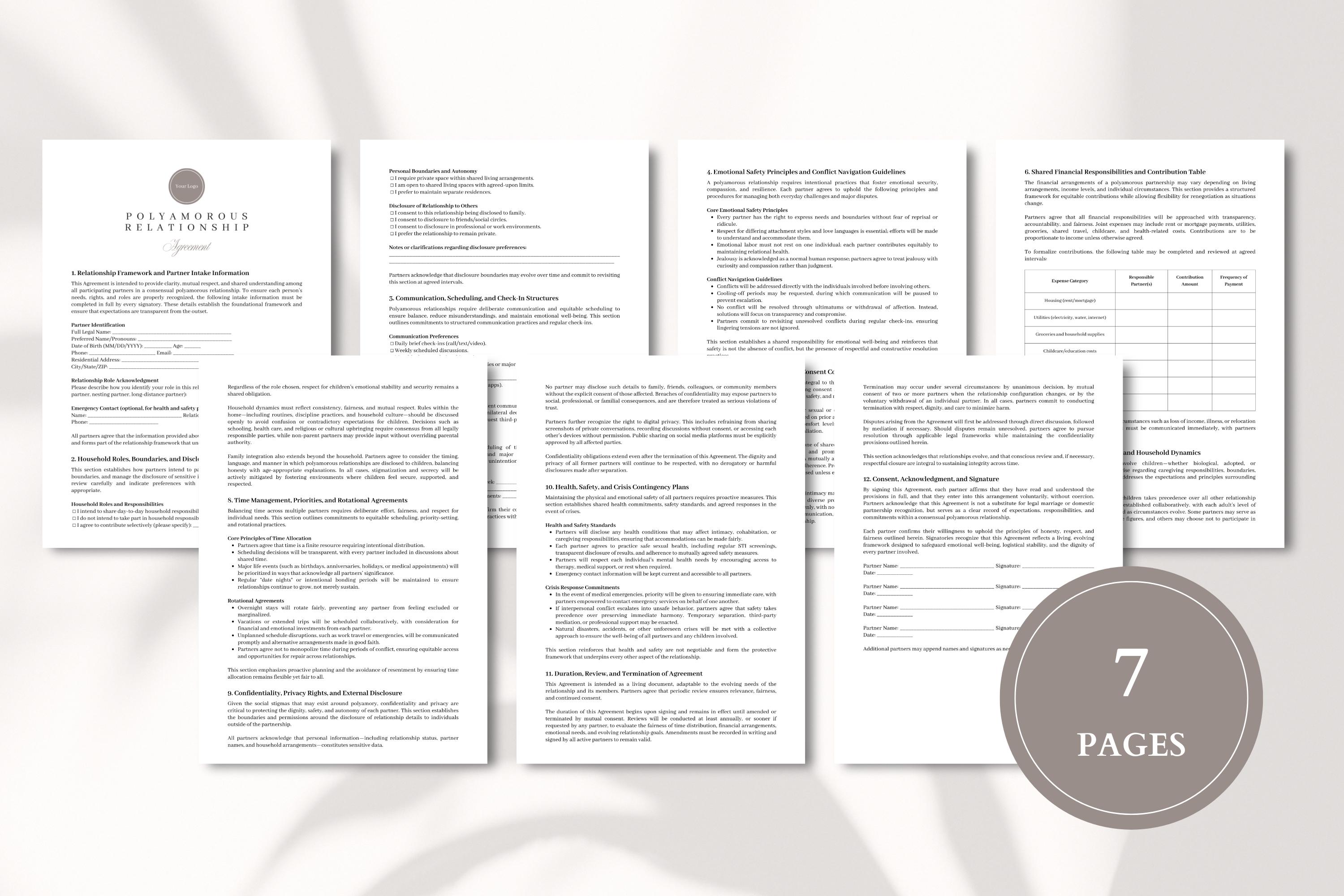
2. Concrete Example: The Secrecy Protocol
Setting: The living room of their shared apartment. It's evening, two days after Leo dismantled the table. The space is neutral, tidy. Maya called this meeting. All three are present, sitting in a triangle, but a more open one than before. We are in Maya’s POV, using free indirect discourse to track her internal state as she navigates this structured conversation.
(Scene opens, from Maya’s POV)
The silence felt different tonight. Not the ringing, angry silence of the studio, but a heavy, expectant quiet, like the air before a thunderstorm decides whether to break. Maya had asked them to be here. She had a goal. Not to rehash the pain, but to build something over the crater it had left.
She looked at Leo, then at Sam. "Thank you for coming. I don't want this to be another fight. I want this to be... a negotiation. About how we operate."
Sam nodded slowly, his hands clasped tight in his lap. He looked exhausted. A casualty. Leo just watched her, his face stripped of the defensiveness she was so used to. He just looked... ready to listen.
"Okay," she began, her voice steadier than she expected. She was reciting a script she'd practiced in her head a hundred times, a formula borrowed from a therapist's blog. "I'll start. When I found out that you, Leo, had intervened to get me the commission, I felt like my accomplishment was stolen. I felt humiliated and like my agency was completely erased."
She paused, letting the "I feel" statement hang in the air, unburdened by accusation. She looked directly at Leo. "I understand now, from what you said, that you were acting out of fear for me. But the impact remains."
Leo's nod was immediate. "I hear that. The impact was humiliation and a loss of agency. I accept that."
"So," Maya continued, turning her focus to the system itself. "My need is for my professional life to be mine. The wins, the losses, all of it. So I am proposing an agreement."
This was the hard part.
"I need us to agree that any action taken by one of us that directly impacts the career or finances of another has to be discussed by all three of us. No more secret help. No more 'clearing stones from the path.' The path is mine to walk."
Sam spoke for the first time, his voice raspy. "I need to be part of that agreement, too. I was in the dark as much as you were, Maya. When it all came out, I was just... collateral. I need to know what's happening in my own home, in my own relationship. I can't be blindsided like that again. It makes me feel like I’m not an equal partner."
This was it. It wasn't just about Leo's transgression. It was about the triad's flawed operating system.
Leo looked from Maya to Sam, and a deep sigh escaped him. "You're both right. What I did was unilateral. It treated you, Maya, like a project, and you, Sam, like you weren't even in the room. It was a failure of the partnership." He leaned forward, his hands open on his knees. "So, yes. I agree. No unilateral actions that affect our careers or finances. Full stop. And I'd like to add a clause to that."
Maya raised an eyebrow.
"If one of us feels that same fear I felt—that protective, stupid fear—the new protocol is to bring the fear to the group, not a secret solution. I should have come to you both and said, 'I'm terrified Maya will get hurt again by this panel. How do we, as a team, support her?' Not, 'How do I fix this?'"
Maya felt a knot in her chest loosen. He wasn't just agreeing to her terms; he was debugging the process. He was proposing a new algorithm. Bring the fear, not the fix. It was concrete. It was measurable. It was a procedure designed to prevent this exact failure mode from happening again.
"I can agree to that," Sam said, a little life coming back into his eyes. "A regular check-in about these things. No more assumptions."
Maya looked at Leo, truly looked at him. The apology two days ago had been about the past. This was about the future. "Bring the fear, not the fix," she repeated softly. "Okay. I can agree to that, too. That's a good rule." She corrected herself. "That's a good agreement."
The trust wasn't whole. It was a shattered vase painstakingly glued back together, the cracks still visible. But with this new, explicit agreement, it felt like it could hold water again.

Conclusion
This lesson demonstrates that a meaningful resolution is not an emotional event, but a structural one. Trust is not a feeling that magically returns; it is the observable output of a reliable and transparent system. By having the characters negotiate a new, explicit protocol, you show them actively rebuilding their relationship's foundation.
Your key takeaways are:
- Resolution is an act of engineering. It involves diagnosing a systemic failure and designing a new, more robust process.
- Differentiate between rules, boundaries, and agreements. Lasting resolutions in a polyamorous context are built on co-created agreements, not unilateral rules.
- A structured conversation prevents relapse into conflict. Using formulas like "When X, I feel Y, I need Z" focuses the dialogue on needs and solutions rather than blame.
- The new protocol must be concrete and actionable. "Bring the fear, not the fix" is a powerful example of a clear, memorable, and effective new rule of engagement.
You have now completed the entire arc of the "Hidden Benefactor" scene, from the initial friction of the secret help, through the tension of its discovery and fallout, to this final, constructive resolution.
In our next module, we will pivot to an entirely new dynamic: The Moral Inversion. We will explore a scenario where social status clashes with truth, and a respected character's declaration is challenged by someone with less power, forcing the third partner—and eventually the entire group—to confront the difference between perception and reality.