Bonjour ! Welcome back.
In our last lesson, you learned how to ask essential personal questions like Comment allez-vous ? and D'où venez-vous ?, which are crucial for starting a conversation. Today, we'll focus on another fundamental aspect of communication: politeness. This lesson is absolutely key to your goal of working in a customer service role, where politeness is non-negotiable.
Our learning outcome for today is to use common polite expressions: s'il vous plaît, merci, de rien, and excusez-moi. Mastering these phrases will not only make your French sound more natural but will also show respect and cultural awareness in your interactions.
Let's begin with a quick overview of these essential phrases.
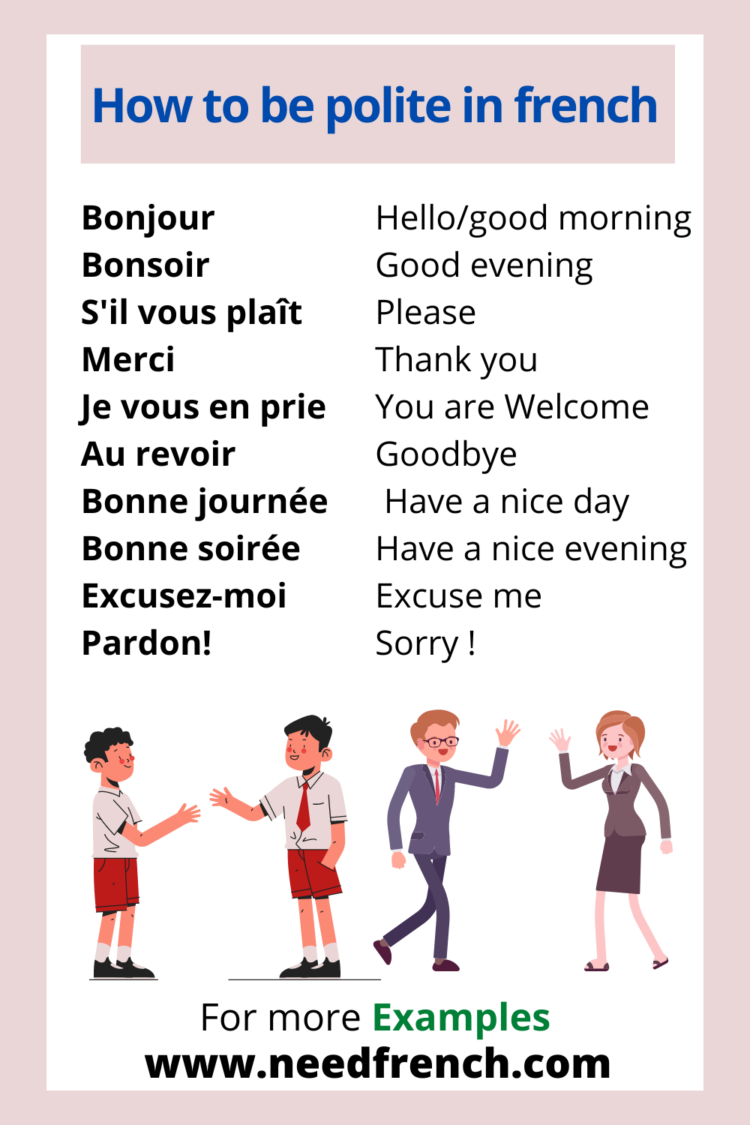
1. How to Say "Please": S'il vous plaît
The French equivalent of "please" is s'il vous plaît or s'il te plaît. The one you choose depends on the situation, reinforcing the tu vs. vous distinction we've discussed.
S'il vous plaît(formal/plural): Use this when speaking to someone you don't know, an older person, a person in a position of authority (like a customer), or a group of people. It literally means "if it pleases you." It is often abbreviated as SVP in writing.S'il te plaît(informal): Use this with friends, family, children, and people you know well. The abbreviation is STP.
In a professional setting, like a call center, you will almost always use s'il vous plaît.
To see these phrases in action and perfect your pronunciation, let's watch a short video.
10 Beginner French Phrases To be Polite | Super Easy French 160
This clip from the 'Easy French' channel demonstrates how to use 's'il vous plaît' and 's'il te plaît' in everyday situations. Pay attention to the pronunciation and the context in which each is used.
Watch the segment from 02:52 to 04:19. Notice how 's'il vous plaît' is used in a shop and how the informal 's'il te plaît' is used between friends.
For a clear summary, you can also refer to this handy table from the Lawless French website.
This table clearly lays out the different ways to say 'please' in French. It's a great quick reference.
Read the short section titled 'please'. You can click on the audio links on the website to hear the pronunciation of each phrase.
2. How to Say "Thank You": Merci
Saying "thank you" is just as important. The French use merci frequently, often more than in English-speaking cultures. It's a sign of good manners that is expected in almost every transaction, no matter how small.
Merci: Thank youMerci beaucoup: Thank you very much
Let's see how to use merci and get some pronunciation tips.
10 Beginner French Phrases To be Polite | Super Easy French 160
The next part of the 'Easy French' video focuses on saying 'thank you.' It highlights when to use it and provides a very useful tip for pronouncing the 'e' in 'merci'.
Watch from 08:57 to 10:34. Focus on the pronunciation of 'merci' and 'beaucoup'.
3. How to Say "You're Welcome": De rien and Je vous en prie
After someone says merci, you need to know how to respond. There are a few options, again ranging from informal to formal.
De rien: This is the most common, all-purpose response. It literally means "of nothing" or "it's nothing." It's suitable for most everyday situations.Je vous en prie(formal) /Je t'en prie(informal): This is a more formal and polite way to say "you're welcome." It's the equivalent of "my pleasure" or "don't mention it." In a professional customer service context,je vous en prieis an excellent choice as it sounds very polished and respectful.
This video clip explains the different ways to respond to merci.
Expressions de politesse en français pour demander poliment, saluer...
Let's watch a clip from 'Français avec Pierre' that explains the responses to 'merci.' This will give you more context on when to use each phrase.
Watch from 06:57 to 08:28. Pay attention to the different options presented, like 'De rien' and 'Avec plaisir'. The video mentions 'Je vous en prie' is another polite option, which is confirmed in the Lawless French resource.
Test your understanding!
A customer on the phone says, Merci beaucoup pour votre aide (Thank you very much for your help). Which is the most professional and polite response?
De rien.Merci.Je vous en prie.
Show answer
The best answer is 3. Je vous en prie. While De rien is correct, Je vous en prie is more formal and professional, making it the ideal choice for a customer service environment.
4. How to Say "Excuse Me": Excusez-moi and Pardon
The phrase excusez-moi is versatile and has two main uses:
- To get someone's attention: For example, to ask a question or call a waiter. (
Excusez-moi, je peux vous poser une question ?- Excuse me, can I ask you a question?) - To apologize for a minor inconvenience: For example, bumping into someone.
Just like with s'il vous plaît, there's a formal and informal version:
Excusez-moi(formal)Excuse-moi(informal)
You can also use Pardon in many of the same situations, especially when you need to get past someone in a crowd.
This final video clip will clarify the usage.
10 Beginner French Phrases To be Polite | Super Easy French 160
This last clip from 'Easy French' will show you how and when to use 'excusez-moi' and its informal version.
Watch from 11:32 to 12:46. Notice the two main situations for using this phrase: getting attention and apologizing.
5. Politeness in a Professional Context
Now let's see how these phrases fit directly into your goal of working in a call center. These expressions are the lubricant that makes professional conversations run smoothly.
French Phone Phrases for Smooth Calls
This article on French phone phrases contains excellent, practical examples of how polite expressions are used. We'll focus on a few key examples.
Please read the sections '4. Transferring' and '6. Problems'. Look for these specific phrases and imagine using them with a customer: 'Un instant, s’il vous plaît.' (A moment, please.) - Used when putting someone on hold. 'Vous pouvez répéter, s’il vous plaît ?' (Could you repeat, please?) - Used when you didn't understand something.
As you can see, s'il vous plaît is essential for making polite requests over the phone. You'll also end almost every call with Merci, au revoir (Thank you, goodbye) or Merci pour votre appel (Thank you for your call).
Conclusion
You've done an excellent job today! Mastering these simple but powerful polite expressions is a huge step toward sounding fluent and professional in French.
Key Takeaways:
- Please: Use
s'il vous plaîtfor formal/plural situations ands'il te plaîtfor informal ones. - Thank you:
Merciis used frequently. Usemerci beaucoupfor extra gratitude. - You're welcome:
De rienis the common response, whileje vous en prieis more formal and very suitable for professional contexts. - Excuse me:
Excusez-moiis used to get attention or apologize.Pardonis a close synonym.
In our next lesson, we will learn how to count from 0 to 100 in French. This is another skill that is vital for your call center goal, as you'll need it for understanding phone numbers, reference numbers, and dates.
À bientôt ! (See you soon!)