Introduction
Welcome back! In our previous lessons, we've established the foundational principles for targeted arm training. We analyzed the bi-articular nature of both the biceps long head and the triceps long head, concluding that shoulder position is the critical variable for manipulating muscle length and, therefore, hypertrophic stimulus.
Today, we will synthesize this knowledge into a practical, actionable guide. The goal for this lesson is to map common arm exercises (e.g., incline curl, preacher curl, overhead extension, pushdown) to their primary anatomical targets. We will create a clear reference that connects each exercise to the specific muscle or muscle head it biases, reinforcing the anatomical reasoning we've already covered. This will serve as your blueprint for intelligent exercise selection in your own and your future clients' training programs.
1. Mapping Elbow Flexor Exercises (Biceps & Brachialis)
When training the front of the upper arm, we are primarily concerned with two muscles: the biceps brachii (long and short heads) and the underlying brachialis. As we've learned, exercise selection determines which of these receives the most emphasis.
Let's review the evidence comparing two of the most popular bicep curl variations.
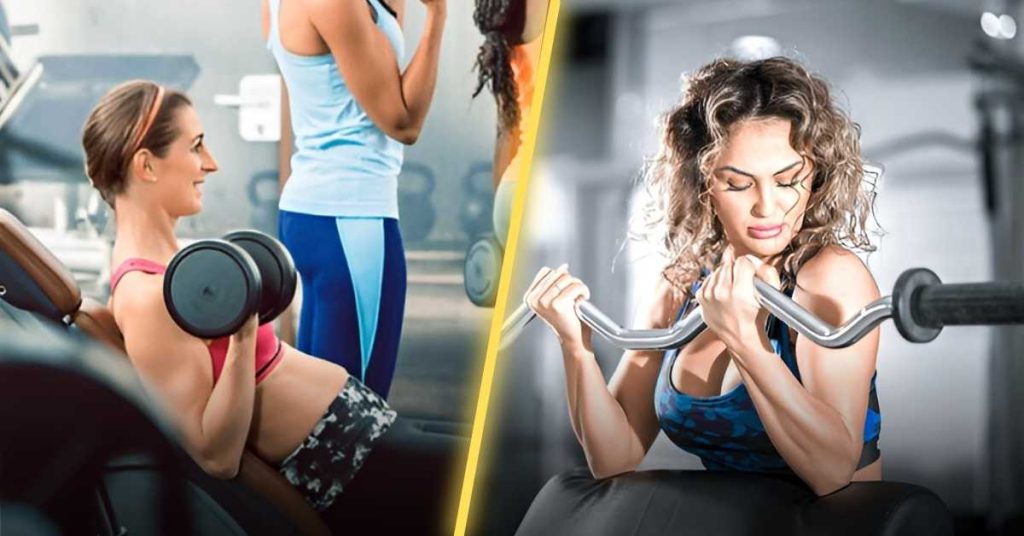
Incline vs Preacher Curls for Biceps Growth (New Study)
To solidify the distinct effects of these two exercises, let's revisit the research comparing them. This video from House of Hypertrophy provides an excellent summary of multiple studies.
Please watch the segment from 07:16 to 09:07. The presenter synthesizes the findings from four different studies, drawing a clear conclusion about which exercise is better for the biceps versus the brachialis.
The findings from the video and the underlying research are clear: different curls produce different outcomes. Let's map them out.
A. Incline Dumbbell Curl
- Primary Target: Biceps Brachii (with a strong bias for the long head).
- Anatomical Rationale: This is a lengthened-position movement. By setting the bench to an incline and allowing your arms to hang behind your torso, you place the shoulder in extension. This stretches the bi-articular long head of the biceps, making it a prime candidate for stretch-mediated hypertrophy. It is arguably the single most effective exercise for targeting the biceps brachii for overall mass.
B. Preacher Curl
- Primary Target: Brachialis and the distal (lower) region of the biceps.
- Anatomical Rationale: This is a shortened- to mid-range movement for the long head. The upper arm is supported in front of the body (slight shoulder flexion), which slightly shortens the long head. The exercise's resistance profile is typically descending, meaning it's hardest at the beginning of the curl when the elbow is more extended.
To understand this better, let's look at the science.
Regional Hypertrophy: The Effect of Exercises at Long and Short Muscle Lengths
This research paper is one of the key studies on this topic. It directly investigated how the resistance profile of preacher curls affects regional growth.
Please read two short sections: Start at the paragraph beginning 'As the aim of our study was to evaluate the effects of resistance profiles...' and read to the end of that paragraph. This details the 'descending resistance curve' of the preacher curl. Read the 'Conclusions' section. This confirms that exercises challenging the muscle in an elongated state, like the preacher curl, promote growth in the distal part of the arm.
As the study concludes, the preacher curl's unique stress at longer muscle lengths (relative to the elbow joint) appears to preferentially stimulate the brachialis and the distal biceps fibers.
C. Standard Barbell/Dumbbell Curl
- Primary Target: General elbow flexor development (Biceps Brachii and Brachialis).
- Anatomical Rationale: This is a neutral-position movement. With the arms hanging at your sides, the shoulder is neither significantly flexed nor extended. This makes it a balanced, "jack-of-all-trades" exercise that effectively trains both the biceps and brachialis without a strong bias toward one over the other.
2. Mapping Elbow Extensor Exercises (Triceps)
For the triceps, our primary goal is to ensure we stimulate all three heads: the long, lateral, and medial. As we saw in the last lesson, the key is manipulating shoulder position to target the bi-articular long head.
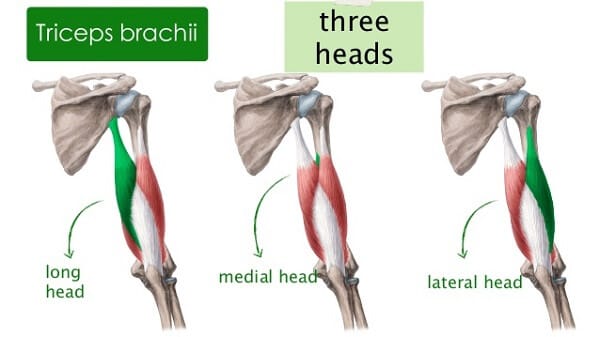
Let's map the common exercises to these anatomical targets.
Tricep Training 101: Anatomy, Research, and Exercise Selection for Massive Arms
This video from MuscleWiki provides a practical demonstration of how shoulder position dictates which triceps heads are emphasized.
Watch the segment from 02:23 to 03:44. The presenter directly maps exercises to the long and lateral heads based on whether the arm is by the side or overhead.
The video provides a great starting point. Let's formalize these mappings.
A. Overhead Triceps Extension (Cable/Dumbbell/EZ-Bar)
- Primary Target: Triceps Long Head.
- Anatomical Rationale: This is the quintessential lengthened-position movement for the triceps. Placing the arm overhead (shoulder flexion) puts a profound stretch on the long head. As we've covered, training a muscle from a stretched position is a powerful driver of hypertrophy. Recent research confirms this is the superior exercise for overall triceps mass, significantly stimulating all three heads, but the long head most of all.
B. Triceps Pushdown (Cable)
- Primary Target: Triceps Lateral and Medial Heads.
- Anatomical Rationale: This is a neutral-position movement. With the arm at your side, the long head is not significantly stretched. This shifts the focus to the uni-articular lateral and medial heads. This exercise is excellent for loading the triceps in their fully contracted (shortened) position, helping to develop the visible "horseshoe" shape contributed by the lateral head.
C. Lying Triceps Extension ("Skull Crusher")
- Primary Target: All three heads, with a bias toward the Long Head.
- Anatomical Rationale: This exercise is a versatile free-weight movement. The degree of long head bias depends on execution:
- Lowering to the forehead: The shoulder is slightly flexed, providing a good stimulus to all three heads.
- Lowering behind the head: This increases shoulder flexion, placing a greater stretch on the long head and making it more similar to a traditional overhead extension.
D. Dips / Close-Grip Bench Press
- Primary Target: All three heads, with emphasis on the Lateral and Medial Heads.
- Anatomical Rationale: These are compound pressing movements. They allow for heavy loading, which is excellent for overall mass. While the long head is active, its function as a shoulder extensor can sometimes conflict with the primary movers (pecs and delts), a phenomenon known as "bi-articular antagonism." Consequently, these presses are fantastic for developing the lateral and medial heads but should be paired with an overhead movement for complete long head development.
Why everyone is wrong about Triceps Long Head training
For a final, detailed perspective on triceps exercise mapping, this article provides a superb summary based on EMG data and hypertrophy research.
Please read the 'TLDR;' summary at the very beginning and the 'Update 2022 July' section at the end. These sections reinforce the key mappings we've discussed, especially the superiority of overhead work for overall growth.
3. Quick-Reference Exercise Map
Given your background in computer engineering, you'll appreciate a structured summary. Here is a table that consolidates our findings, mapping each exercise to its primary target and the underlying anatomical logic.
| Exercise | Primary Muscle Target(s) | Anatomical & Biomechanical Rationale |
|---|---|---|
| Biceps | ||
| Incline Curl | Biceps Brachii (Long Head) | Lengthened Position: Shoulder extension maximally stretches the bi-articular long head. High potential for stretch-mediated hypertrophy. |
| Preacher Curl | Brachialis, Distal Biceps | Shortened Position (Shoulder): Descending resistance curve loads the elbow flexors most when the elbow is extended, biasing the brachialis. |
| Standard Barbell/DB Curl | General Biceps & Brachialis | Neutral Position: Balanced stimulus for all elbow flexors without specific bias. |
| Triceps | ||
| Overhead Extension | Triceps Long Head | Lengthened Position: Shoulder flexion maximally stretches the bi-articular long head. Proven superior for overall triceps mass. |
| Triceps Pushdown | Triceps Lateral & Medial Heads | Neutral Position: Focuses on the uni-articular heads. Excellent for peak contraction and developing the "horseshoe." |
| Lying Extension (Skull Crusher) | All three heads (Long Head bias) | Mid-Lengthened Position: A versatile free-weight movement. Allowing the bar to travel behind the head increases long head stretch. |
| Dips / Close-Grip Bench | All three heads (Lat/Med bias) | Compound Movement: Allows for heavy overload. Bi-articular antagonism can limit long head contribution compared to isolation. |
Conclusion
You have now created a comprehensive map connecting common arm exercises to their specific anatomical targets. This isn't just a list to be memorized; it's a system of logic based on the principles of muscle attachments and joint actions.
Key Takeaways:
- Incline Curls are the premier exercise for targeting the biceps long head in a stretched position.
- Preacher Curls preferentially target the brachialis and distal biceps due to their unique resistance profile and shoulder position.
- Overhead Extensions are the most effective movement for targeting the triceps long head and driving overall arm mass.
- Triceps Pushdowns are ideal for focusing on the lateral and medial heads to build the classic "horseshoe" shape.
- A complete program utilizes a portfolio of exercises that challenge the target muscles across different positions (lengthened, neutral, and shortened).
Preview of the Next Lesson
We now know what exercises to choose and why. The next step is to ensure they are performed with precision. In our next lesson, we will identify common arm training mistakes (e.g., using shoulder momentum, poor elbow tracking) and apply anatomical cues to correct them. This will bridge the gap between knowing the science and applying it flawlessly on the gym floor.