Hallo! Welcome back.
In our last lesson, we learned polite phrases like alstublieft and dank u, which gave us a first glimpse into one of the most important social and grammatical distinctions in Dutch: formality. We saw how the pronouns for "you" — je and u — are embedded right into these common words.
Today, we'll dive deep into this topic. The learning outcome is to distinguish between formal (u) and informal (je/jij) forms of address and use them appropriately in introductions. This isn't just a grammar rule; it's a window into Dutch culture and social dynamics. Given your background in linguistics and psychology, you'll find the interplay between language structure and social context here particularly interesting. This concept, often called a T-V distinction, exists in many languages (like Turkish sen vs. siz), and exploring its use in Dutch is key to sounding natural and respectful.
Let's begin by looking at the core of the issue.
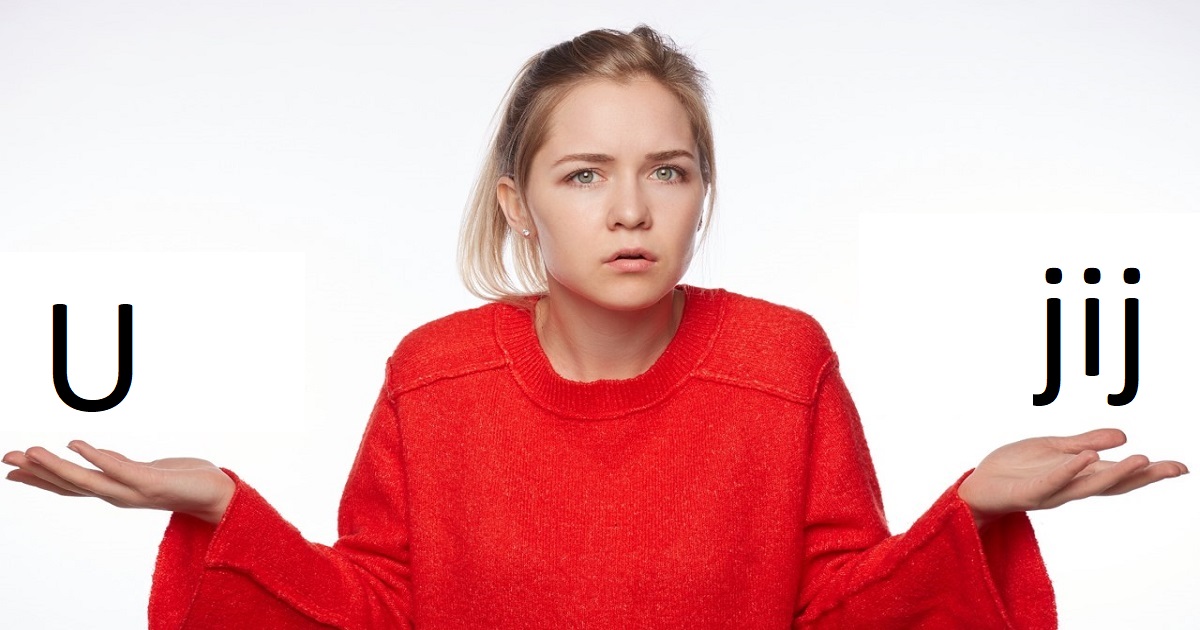
1. The Core Distinction: Rules and Emphasis
At its most basic, the rule is straightforward. Dutch has two main ways to say "you" in the singular:
- Je / Jij: The informal form. You use this with friends, family, children, and people of your own age.
- U: The formal form. You use this with people you don't know, older people, in professional settings, and to show respect.
For a clear breakdown of when to use each, let's start with a practical guide.
Jij vs. U: Master Dutch Politeness and Formality Rules
The article 'Jij vs. U: Master Dutch Politeness and Formality Rules' from Strooptaal gives excellent, clear-cut guidelines for when to use the formal and informal pronouns.
Please read the first three sections: 'The Great Dutch Dilemma', 'The Basics: The Difference Between Jij and U', and 'When to Use "U" (Formal) / When to Use "Jij" (Informal)'. Focus on the bulleted lists that outline the specific situations for each pronoun.
The Nuance of Je vs. Jij
You may have noticed two informal versions: je and jij. The difference isn't about politeness but about emphasis. This is a concept that doesn't exist in the same way for the English "you".
- Je is the unstressed, neutral, and most common form.
- Jij is the stressed form, used to emphasize or contrast the person you are talking to.
Think of the difference in English between "What are you doing?" (using vocal stress) and "What are you doing?" (neutral). In Dutch, this is often achieved by choosing a different word.
- Wat doe je? (What are you doing? - neutral)
- Wat doe jij? (What are you doing? - as in, "I've said what I'm doing, now what about you?")
The following short video explains this distinction very clearly.
Dutch Personal Pronouns Subject | Dutch for Beginners
Let's watch a clip from 'Dutch Personal Pronouns Subject' by SociaTaal. It provides a concise explanation of the stressed/unstressed pronoun system in Dutch.
Watch from 00:56 to 03:06. The first part (until 02:32) explains the 'jij' vs. 'je' distinction. The second part briefly recaps the 'jij' vs. 'u' rule we just covered.
This stressed/unstressed pairing also exists for other pronouns (wij/we, zij/ze), so understanding it now will be very helpful later.
2. The Sociolinguistic Reality: How Rules Bend
The rules we've just covered are a great starting point, but the reality is more fluid. Pronoun choice is heavily influenced by social factors like age, profession, and even personal ideology. Dutch society has become significantly more informal over the last few decades.
To get a real feel for this, let's watch how native speakers on the street describe their own choices. This is where your psycholinguistic lens will be useful—notice not just what they say, but the reasons they give.
When Do the Dutch Use "je" (informal) and "u" (formal)? | Easy Dutch 39
In the video 'When Do the Dutch Use "je" (informal) and "u" (formal)?' from the Easy Dutch channel, the hosts interview people in Amersfoort about their personal use of 'je' and 'u'. This provides authentic, unscripted insight.
Watch the interviews from 00:21 to 09:31. As you watch, pay attention to the factors that influence people's choices: age ('u' makes me feel old), respect, professional context (doctor, teacher, customer service), and upbringing.
What did you notice? Many people, especially younger ones, prefer je because u can create distance or make them feel old. However, in professional or service contexts, or when addressing the elderly, u remains the standard for showing respect.
This tension between egalitarianism and respect is a core feature of modern Dutch culture. Let's explore that connection more deeply.
What's Up with “Je,” “Jij,” “U,” and “Gij”? Mastering Dutch Pronouns
The article 'What's Up with “Je,” “Jij,” “U,” and “Gij”?' from Polyglottist Language Academy provides an excellent analysis of how pronoun choice reflects Dutch cultural values.
Please read section 8, 'How Pronouns Reveal Dutch Culture'. This short section connects the linguistic forms to broader cultural concepts like egalitarianism and directness.
As a point of linguistic interest, that article also mentions gij, an archaic form in the Netherlands but still common in the Flemish dialects of Belgium. This mirrors how English "thou" disappeared from standard use but survived in some regional dialects.
3. Practical Strategy and Practice
So, as a newcomer, what's the best strategy? The golden rule is: When in doubt, start with u.
It is always better to be seen as slightly too formal than as presumptuous or disrespectful. A Dutch person will almost always correct you if they prefer the informal form. This act of switching has its own verb: tutoyeren.
Jij vs. U: Master Dutch Politeness and Formality Rules
Let's return to the Strooptaal article, which explains this switching process very well.
Read the section 'How to Switch: The Art of "Tutoyeren"'. Note the common phrase used to invite someone to be informal. Also, take a look at the very helpful 'Top Tip' in the conclusion.
The key phrase to listen for is Zeg maar je, hoor! (which means "Just say 'je'!"). Once you hear this, you should switch to je. Continuing with u might be interpreted as you wanting to maintain distance.
Practice Scenarios
Let's apply what you've learned. For each scenario, choose the correct pronoun (je or u) and the corresponding verb form. Remember the introductions we've practiced: Hoe heet...? (What is your name?), Bent/Ben...? (Are you...?).
Verb Forms to Use:
- With u: heet u, bent u
- With je/jij: heet je, ben je
-
You are at the university and meet another student who looks about your age. You want to ask their name.
- Hallo, hoe _______?
-
You are at the municipality (gemeente) to register your address. You are speaking to the official at the counter. You want to ask if they are Mrs. Jansen.
- Goedemiddag, _______ mevrouw Jansen?
-
You are introduced to the elderly grandmother of a Dutch friend. You want to ask her name.
- Aangenaam, hoe _______?
-
After class, you are having a coffee with the student from scenario 1. You want to ask if they are also studying linguistics.
- _______ ook een student talenwetenschap? (Are you also a linguistics student?)
Click for answers and explanations
-
Hallo, hoe heet je?
- Reasoning: You are speaking to a peer in an informal setting (university). Je is the default choice.
-
Goedemiddag, bent u mevrouw Jansen?
- Reasoning: This is a formal, official context. You should always use u with officials.
-
Aangenaam, hoe heet u?
- Reasoning: You are addressing an elderly person whom you've just met. Using u is a clear sign of respect.
-
Ben je ook een student talenwetenschap?
- Reasoning: You have already established an informal relationship with this person. You should continue using je.
Conclusion
Great job! You now have a solid understanding of one of the most nuanced aspects of daily communication in Dutch. Mastering this will significantly improve your social integration.
Key Takeaways:
- The Basic Rule: Je/jij is informal (peers, friends), while u is formal (strangers, elderly, officials).
- Emphasis: Jij is the stressed form of "you" used for contrast or emphasis; je is the unstressed, default form.
- Cultural Context: The choice reflects a balance between Dutch egalitarianism (preferring je) and respect for age or authority (requiring u).
- The Strategy: When in doubt, start with u. Listen for the invitation to switch to informal address ("Zeg maar je!").
In our next lesson, we will move from people to things. We will begin exploring nouns and discover another fundamental feature of Dutch grammar: grammatical gender and the definite articles de and het.
Tot de volgende les! (Until the next lesson!)