Hello! Welcome to the third lesson in our course on American poetry.
In our previous two lessons, we established the English poetic context from which American literature emerged. We analyzed the devotional themes and intellectual conceits of Metaphysical poets like Donne and Herbert, and then broadened our scope to map the formal characteristics of the three dominant 17th-century styles: Metaphysical, Cavalier, and the Puritan "plain style."
Today, we cross the Atlantic. This lesson focuses on the first significant body of poetry written in America, the work of the Puritans. Building on your understanding of the plain style, we will analyze the major characteristics of Puritan poetry and explore its core purpose: to be a tool for religious instruction and spiritual contemplation. We will examine the theological beliefs that shaped this literature and see how they are expressed in the works of the three most important poets of the era: Anne Bradstreet, Michael Wigglesworth, and Edward Taylor.
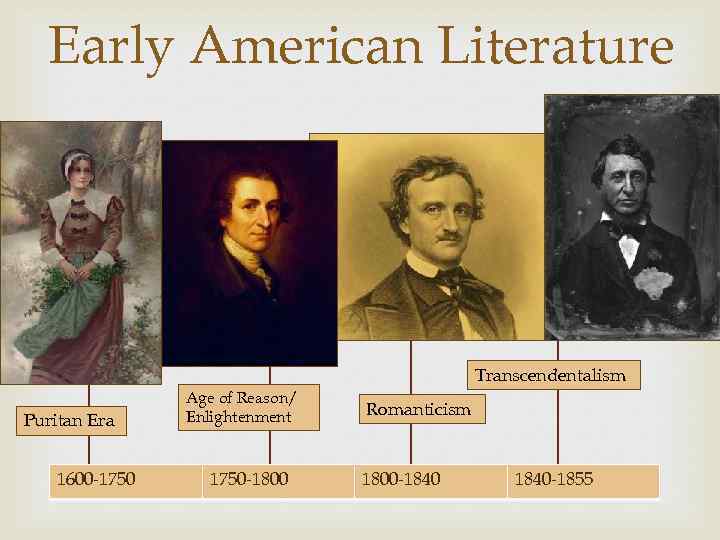
1. The Puritan Literary Doctrine: Purpose over Aesthetics
To understand Puritan poetry, we must first understand the Puritan worldview. For the Puritans, life was a spiritual journey, and all human endeavors, including art, were to be dedicated to the glory of God. This belief system profoundly shaped their literary output.
To grasp the theological underpinnings, let's start with a brief video that introduces the core tenets of Puritan thought.
American Literature: The Puritan Period
This video, 'American Literature: The Puritan Period' by Kenneth Frank, provides a concise explanation of the key Calvinist doctrines that influenced the Puritans, such as predestination and the depravity of man. It also outlines the essential qualities of their literature.
Please watch from 04:48 to 10:26. The first part (ending at 06:12) covers the essential theology of John Calvin. The second part (starting at 08:00) details the characteristics of Puritan literature that arise from this theology.
The video highlights several key characteristics: an intensely religious discourse, an emphasis on simplicity (the plain style), and a preoccupation with sin and guilt, which gave rise to a literary form called the jeremiad—a sermon or work that laments the state of society and calls for a return to piety.
This "obsession with the written word," as one scholar calls it, was not for art's sake. It was fundamentally didactic and devotional. Let's explore this further.
The essay 'Puritanism and Literature' by N. H. Keeble offers a scholarly look at the function of literature in Puritan culture. The sections below explain the Puritan preference for a plain style and their view of the Christian life as a constant struggle.
Please read two sections from this essay: Start with the section titled '5. THE PURITAN STYLE.' It connects the aesthetic preference for plainness with the virtues of integrity and authenticity. Then, read the section titled '6. THE PURITAN LIFE.' It describes how Puritan writing reflects an adversarial worldview, where faith is constantly tested by adversity.
From these resources, we can distill the primary characteristics of Puritan poetry:
- Didactic Purpose: Its main goal is to teach. Poems were vehicles for moral lessons, theological doctrine, and historical record-keeping from a providential perspective.
- Plain Style: As we saw in the last lesson, this style favors simple, direct language over ornate decoration. The goal was clarity and accessibility, ensuring the divine message was not obscured by complex rhetoric.
- Introspection and Self-Examination: Puritan poetry is often intensely personal, focusing on the poet's inner spiritual state, their struggles with doubt, and their relationship with God. The diary and the spiritual autobiography were kindred genres.
- Biblical Foundation: The Bible was the ultimate source of imagery, allusion, and narrative structure. Puritans often practiced typology, a method of interpretation where figures and events in the Old Testament are seen as prefiguring those in the New Testament. Nature itself was often read as a second book of God's revelation, with the natural world providing spiritual lessons.
2. The Doctrine in Practice: Bradstreet, Wigglesworth, and Taylor
Now, let's see how these principles were applied by the three most prominent poets of colonial America. The following lecture provides an excellent overview of their lives and work, showcasing the different ways they embodied the Puritan literary spirit.
American Puritan Poets | Bradstreet, Wigglesworth, Taylor | Lect. 2 | Early American Poetry Course
In 'American Puritan Poets', Dr. Adam Walker introduces Anne Bradstreet, Michael Wigglesworth, and Edward Taylor. He closely reads excerpts of their work, highlighting their distinct styles and purposes within the shared Puritan framework.
Please watch from 01:51 to 35:02. The video is divided into three parts, one for each poet. As you watch, consider how each poet exemplifies the Puritan characteristics we've discussed: Anne Bradstreet (01:51 - 14:45): Notice how she navigates the tension between worldly life (home, family, loss) and spiritual devotion. How does she make the domestic a subject for religious meditation? Michael Wigglesworth (14:45 - 25:22): Observe how The Day of Doom functions as a public, didactic tool. What poetic choices make it effective for teaching and warning? Edward Taylor (25:22 - 35:02): Pay attention to his use of complex, metaphysical-style conceits. How does he use this more elaborate language for a private, devotional purpose?
Analysis of the Three Poets
Dr. Walker's lecture provides a clear sense of the different facets of the Puritan poetic project. Let's summarize and compare them:
| Poet | Primary Mode | Style | Audience | Didactic Purpose |
|---|---|---|---|---|
| Anne Bradstreet | The Holy Domestic | Plain style, clear, introspective | Self, Family, Public | To find and teach spiritual lessons through personal experience and domestic life. |
| Michael Wigglesworth | The Public Prophet | Plain style, ballad meter, memorable | Public | To instruct the entire community in Calvinist doctrine, especially Judgment Day. |
| Edward Taylor | The Private Devotionalist | Metaphysical style, complex conceits | Self, God | To prepare his own soul for administering the sacrament through meditative self-examination. |
Anne Bradstreet represents the personal, introspective voice. Her poetry finds religious meaning in the everyday—the love for a husband, the death of a grandchild, the burning of a house. Her didacticism is gentle, a modeling of how a pious Puritan should process worldly events.

Michael Wigglesworth is the epitome of the public, didactic poet. The Day of Doom is less a personal reflection and more a versified sermon. Written in a simple, memorable ballad meter, it was designed to be memorized and recited, drilling the terrifying consequences of sin and the details of Judgment Day into the minds of its readers. It is a perfect example of the jeremiad.
Edward Taylor presents a fascinating synthesis. He uses the intellectual, often startling, metaphysical conceits we saw in John Donne. However, his purpose was entirely different. His poems were not published in his lifetime; they were private, spiritual exercises—Preparatory Meditations—written to bring his own heart into a state of readiness before he administered the Lord's Supper to his congregation. His didacticism was aimed solely at himself.
To underscore the private nature of Taylor's work, this brief guide from Georgetown University explains the intended audience for his poetry.
Please read the short section titled 'Original Audience.' It clarifies that Taylor's most famous works were written 'for an audience of God or Christ alone.'
Test your understanding!
A Puritan poet writes a poem about a spider catching a fly. Based on what you've learned about the Puritan mindset, what is the likely didactic purpose of such a poem? What might the spider, the fly, and the web represent in a spiritual context?
Show answer
The poem is likely an allegory for the struggle between sin, Satan, and the soul. The spider might represent Satan, cunningly weaving a web of temptation. The fly would be the unsuspecting sinner, trapped by worldly pleasures. The web itself could be sin or heretical doctrine that ensnares the soul. The poem's purpose would be to warn the reader about the ever-present dangers of evil and the ease with which one can be trapped.
(This is, in fact, the premise of a real poem by Edward Taylor, "Upon a Spider Catching a Fly," which you may enjoy seeking out.)
Conclusion
In this lesson, we have defined the essential characteristics of the first poetic tradition in America. Puritan poetry was a literature of purpose, shaped by a theology that valued instruction and introspection above aestheticism.
Key Takeaways:
- Puritan poetry's primary purpose was didactic and devotional.
- Its dominant aesthetic was the plain style, which prioritized clarity and directness.
- It was deeply introspective, focusing on the individual's spiritual condition, and drew its imagery and structure primarily from the Bible.
- Poets like Bradstreet, Wigglesworth, and Taylor demonstrate the different applications of these principles, from the spiritualization of domestic life to public theological instruction and private meditation.
We've now met Anne Bradstreet, the first published poet—man or woman—in America. In our next lesson, we will devote our entire session to her work, taking a much closer look at how she uses biblical typology and imagery to navigate her faith and her world.