Welcome to your first lesson! We're kicking off your journey to becoming a successful freelance developer. Over the next few weeks, our goal is to move from uncertainty about finding clients to a clear, actionable strategy that lands you your first part-time projects.
You've mentioned that your biggest challenge is lead generation. This is the most common hurdle for new freelancers. Your idea to use direct outreach is excellent, and your past attempts to contact art pages on Instagram show great initiative. Now, we'll build on that by adding a layer of strategy.
Today’s lesson focuses on a foundational concept that will make your client-finding efforts much more effective: identifying a niche. By the end of our 60 minutes, you will understand why specializing is so powerful and will have chosen a specific target niche to focus on for the remainder of this course.
Why Specialize? The Power of a Niche
As a full-stack developer, you have a wide range of skills and could technically build a website for anyone. However, marketing yourself as a generalist who "builds websites for businesses" makes it incredibly difficult to stand out. When you try to speak to everyone, you end up connecting with no one.
Choosing a niche means focusing your services on a specific type of client or industry. This focus has several powerful advantages:
- It makes marketing easier: You know exactly who to talk to and where to find them.
- It positions you as an expert: A business owner is more likely to trust a developer who specializes in their industry over a generalist.
- It allows for a highly relevant portfolio: You can showcase projects that speak directly to the problems your target clients face.
- It increases your efficiency: You'll get faster at solving similar problems for similar clients, which boosts your profitability.
To see just how transformative this can be, let's hear from a fellow developer who scaled his business after niching down.
How to pick the best niche for your Web Design business: get more clients!
Watch the first part of this video from BONT, titled "How to pick the best niche for your Web Design business."
Pay close attention to the presenter's personal story from the beginning of his journey. He describes the stress of offering multiple services and how focusing on one niche for one type of client dramatically improved his business and revenue. This illustrates the "less is more" principle in freelancing.
Now that you've seen the "why," let's explore the "how." We'll look at three effective frameworks for identifying a promising niche.
Framework 1: The Local Business Opportunity
One of the most straightforward and effective ways to start freelancing is by serving local businesses. These clients are often underserved, understand the value of a local partner, and their needs are tangible. Your work can have a direct, visible impact on their success.
This infographic highlights the key dynamics of the local freelance market.
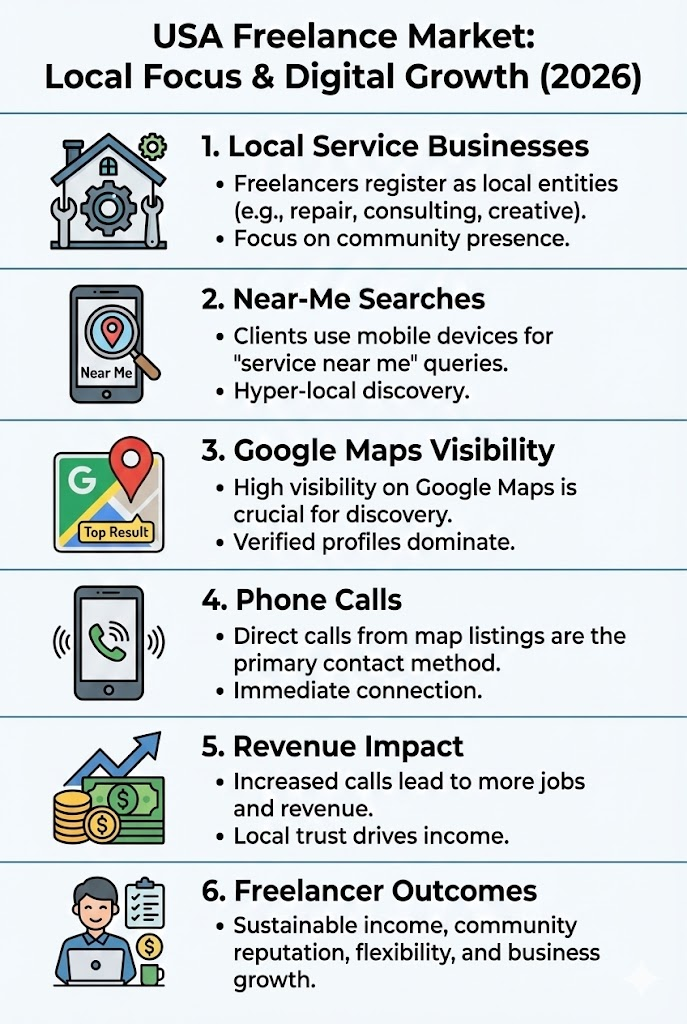
As the graphic shows, the entire chain starts with a potential customer searching for a local service. This makes a strong web presence, especially on Google Maps, critical for these businesses. This is a problem you, as a web developer, are perfectly equipped to solve. Later in the course, we'll use this exact insight to find potential clients.
For now, think about the businesses in your own town or city. Restaurants, dentists, mechanics, real estate agents, construction companies—all of them are potential clients.
Framework 2: Leverage Your Interests and Your Network
Another powerful approach is to look inward at your passions and outward at your personal connections.
How do I find my web developer niche? » Rad Devon
This article from Rad Devon outlines two practical techniques for choosing a niche.
First, read the section on the Passion technique. This is similar to your idea of targeting art pages. Notice the crucial warning: you must ensure the niche can actually pay for your services. The example of musicians vs. record labels is key here. Next, scroll down and read about the Existing Network technique. This is often the lowest-risk path to your first clients.
The "Existing Network" technique is particularly effective because lead generation is the hardest part of starting out. If you already have a connection to an industry through friends or family, you have a massive head start.
This next video reinforces just how critical your existing network can be for getting those crucial first referrals.
How to pick the perfect niche for software services | London, Sep 27
In this talk by João Nina Matos, he breaks down the process of choosing a niche for a software agency.
Watch the section from "who do you know?" where he explains that your first clients often come from your existing network because people do business with those they know and trust. Then, watch his explanation of the technical niche from "what are you good at?". As a full-stack developer, you already have a strong technical foundation. The key is to pair that with an industry where you have an "in."
Framework 3: Identify a Good Market
Passion and connections are great starting points, but they must be paired with real market opportunity. A "good" niche isn't just one you're interested in; it's one where businesses actively need and are willing to pay for your services.
How To Choose a Good Niche for Your Freelancing Business
This article by Kickass Freelancing provides a fantastic breakdown of what makes a niche profitable.
Read the section titled "What characterizes a good niche". The author uses his own successful niche (financial advisors) to reverse-engineer the key factors. Pay close attention to these criteria: Clients have money to invest. They value a website, and it's a core part of their business strategy. You can work directly with the business owner. These points are crucial for avoiding the trap of chasing clients who can't afford your services or don't see the value in them.
Your Turn: Brainstorm and Select Your Niche
It's time to put these frameworks into action. We'll follow a simple exercise to help you brainstorm and then narrow down your options to one experimental niche. Remember, this choice isn't permanent. It's a starting point to focus your efforts.
How to pick the best niche for your Web Design business: get more clients!
Return to the BONT video, "How to pick the best niche for your Web Design business." We'll use the exercise presented here.
First, watch the section on key considerations for your niche. This covers topics like high-ticket vs. low-ticket industries and whether potential clients already have a website. Next, follow the interactive exercise starting at "let's do an exercise". Please pause the video and complete each step as instructed: List 20 potential niches. Use all three frameworks we've discussed: your interests, your network (family/friends' industries), and local businesses in your area. Narrow it down to your top three. From your list of 20, pick the three that best combine your interest, a potential "in," and market viability (using the criteria from the Kickass Freelancing article). Pick one. Make a choice. This will be the niche you focus on for the exercises in the rest of this course.
Take about 15-20 minutes to complete this exercise. Don't overthink it—the goal is to make an educated choice and move forward.
Conclusion
Excellent work today. You've taken the first and most important step in building a successful freelance business: moving from a generalist to a specialist.
Here are the key takeaways from our session:
- Niching is a strategy. Specializing makes your marketing more effective, positions you as an expert, and ultimately makes it easier to find and win clients.
- A good niche lies at the intersection of your interests, your network, and market opportunity. The best niches are those you care about, where you have a connection, and where clients have a budget and a real need for your services.
- Local businesses represent a significant opportunity. Many are actively seeking to improve their digital presence to attract local customers, creating a clear entry point for freelance developers.
Now that you have identified a target niche, our next lesson will focus on crafting your message. We will work on formulating a compelling value proposition that clearly describes how your web development services solve a key business problem for clients in your chosen niche. This will become the foundation of your website, your portfolio, and your direct outreach messages.