Hello! Welcome to the next lesson in our module on Narrative Voice and Point of View.
In our last session, we analyzed how different points of view (first, second, and third person) act as strategic tools to shape an audience's perception and build empathy. You saw that your choice of pronoun isn't just grammatical; it's a deliberate act that can position the customer as the hero, humanize your brand, or establish authority.
Today, we're taking a step back to look at the bigger picture. Point of view is just one element of a much larger concept: brand voice. Our goal in this lesson is to define what 'brand voice' is and, crucially, to understand why its consistency across all communications is fundamental to building a strong, memorable brand. This concept is the bedrock of narrative-driven branding.
1. Defining Brand Voice: The Personality of Your Brand
If a brand were a person, its voice would be its personality. It's the consistent, unique, and recognizable way a brand expresses itself, from the words it chooses to the rhythm of its sentences. It’s less about what you say and more about how you say it.
Given your background in literature, you can think of it like the voice of a well-developed character in a novel. A character like Sherlock Holmes has a distinct voice—analytical, precise, and a bit aloof—that remains consistent whether he's solving a crime or talking to Watson. You recognize him by how he speaks. A brand's voice works in the same way to make it recognizable and distinct.
A strong brand voice is built from several key components. This diagram provides a helpful visual breakdown:
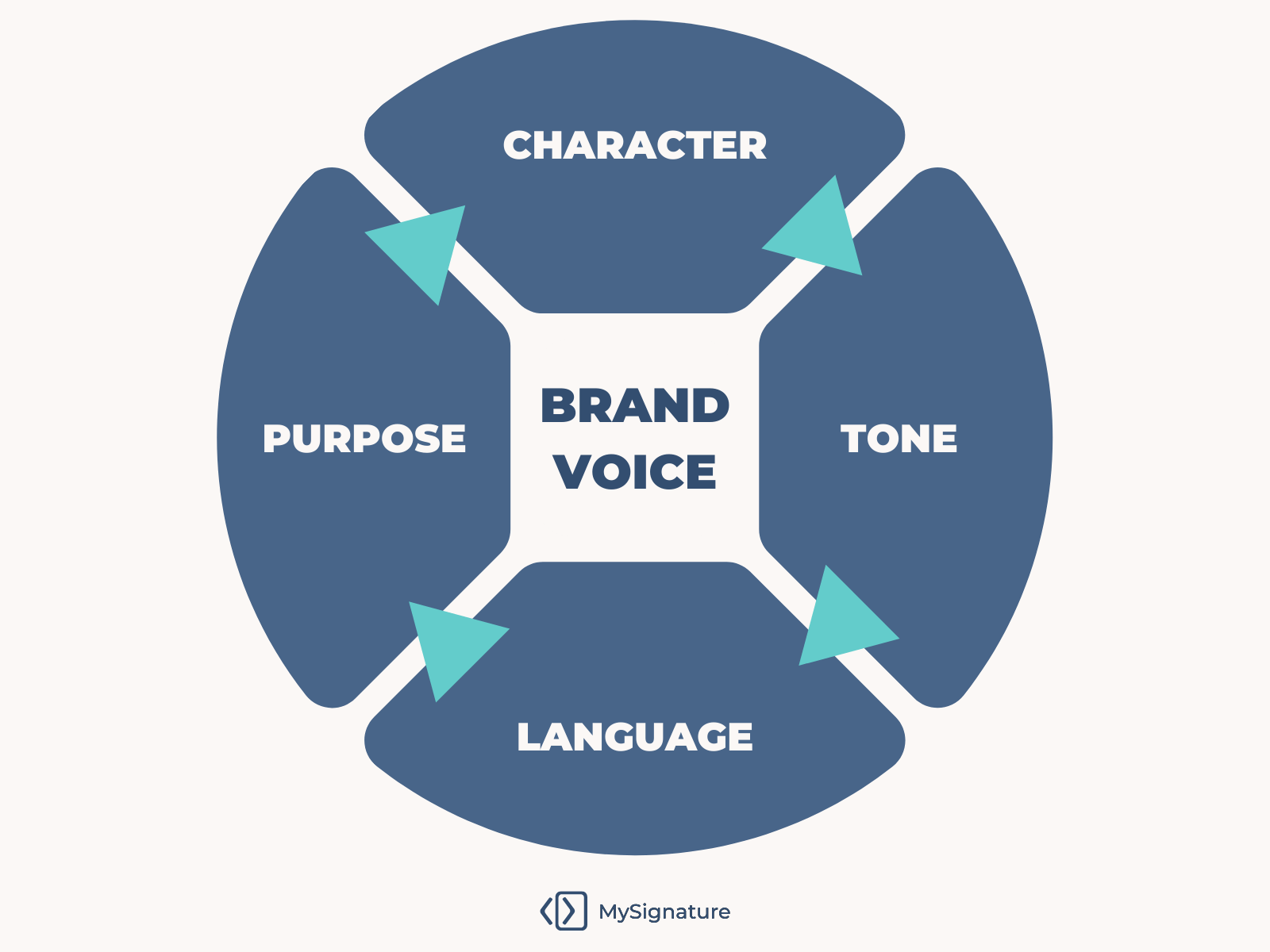
Let's briefly touch on these components:
- Character: The human personality traits you attribute to your brand. Is it playful, authoritative, nurturing, or rebellious?
- Purpose: The core mission or "why" that drives your brand. This gives the voice substance and direction.
- Language: The specific vocabulary, jargon (or lack thereof), and sentence structures you use.
- Tone: The emotional mood that adapts to different contexts. We'll explore this in detail in our next lesson, but for now, it's important to distinguish it from voice. Voice is the personality; tone is the mood. Your personality is stable, but your mood changes depending on the situation.
To solidify this definition, let's turn to a professional resource that breaks it down clearly.
This article from the Helms Workshop branding agency provides an excellent, in-depth definition of brand voice and clarifies its distinction from tone.
Please read the sections 'Defining Brand Voice: Beyond Tone and Style' and 'Voice vs. Tone: Understanding the Distinction'. Pay close attention to how the author describes voice as the brand's 'core personality' that remains stable, while tone adapts.
As the article explains, voice is the constant, underlying character. This consistency is what builds psychological familiarity and trust over time.
For an even more direct explanation, watch the first few seconds of this video.
Tone of Voice Copywriting Tips to Create a Memorable Brand and Drive Growth
The speaker, Coach Carmine Mastropierro, offers a very concise and memorable distinction between voice and tone right at the beginning of his video.
Watch from the beginning (0:00) to 0:15. Notice the simple, clear way he defines the two concepts.
This distinction is one of the most important concepts in brand communication. Now that we have a solid definition, let's explore why it matters so much.
2. The Strategic Importance of a Consistent Voice
Imagine meeting someone who is serious and formal in one conversation, then loud and goofy in the next, and then cold and distant after that. It would be difficult to get to know them, trust them, or build any kind of relationship. The same is true for a brand.
Consistency in brand voice is not about being repetitive; it's about being reliable. It ensures that no matter where a customer interacts with your brand—on social media, your website, in an email, or through customer service—the experience feels familiar and coherent.

A consistent brand voice is crucial for several strategic reasons:
- It Builds Recognition and Differentiation: In a crowded market, a unique personality helps a brand stand out. While competitors can copy features, it's much harder to authentically replicate a personality. A consistent voice makes your brand instantly recognizable, even without a logo.
- It Creates Emotional Connection and Trust: People form relationships with brands that have clear, relatable personalities. Consistency builds familiarity, and familiarity is a foundation of trust. When a brand's voice aligns with a customer's values, it can foster a deep sense of loyalty.
- It Supports Business Objectives: A clear voice makes all communications more effective. It can make marketing messages more engaging, improve customer retention by fostering connection, and even make a company more efficient by giving all team members clear guidelines for how to communicate.
The following resources dive deeper into these points.
Let's return to the Helms Workshop article to explore the strategic impact of a consistent voice.
Please read the section 'The Strategic Importance of Brand Voice'. Focus on the three sub-sections: 'Building Recognition and Differentiation,' 'Creating Emotional Connection and Trust,' and 'Supporting Business Objectives Through Communication.'
Storytelling in Content Marketing That Resonates with Your ...
This next article connects the idea of a consistent voice directly to your goal of brand storytelling.
Read the subsections 'A Memorable Brand Voice and Personality' and 'Consistency Across Channels.' Note how the article emphasizes that a unified story across all touchpoints is essential for the narrative to be effective.
3. The Practical Tool for Consistency: The Brand Voice Guide
How do brands ensure this consistency, especially with many different people (writers, social media managers, customer service agents) communicating on its behalf? The answer is a brand voice guide.
This is a formal document that acts as a "messaging manifesto" or "personality profile" for the brand. It defines the voice and provides clear rules and examples for how to apply it.
To see why this is such a critical tool, let's watch one last video clip.
6 Steps To Crafting A Totally Irresistible & Unique Brand Voice
Alex Cattoni is a copywriter and brand strategist. In this clip, she explains why creating a brand voice guide is the most important step in the process.
Watch the segment from 8:45 to 10:05. Listen for how she describes the guide as the 'central command center' that keeps messaging consistent and prevents a 'Frankenstein funnel' where communications sound like they came from different people.
The brand voice guide is the practical bridge between the abstract idea of a brand personality and its real-world execution.
Test your understanding!
Think of a brand you admire or find memorable (e.g., Nike, Innocent Drinks, Apple, Mailchimp).
- Describe its brand voice using 3-5 adjectives (e.g., "inspirational, competitive, determined").
- Explain why consistency is so important for that specific brand. How does its consistent voice help it build trust or stand out from competitors?
Show answer
Here’s an example using the brand Innocent Drinks:
- Voice Adjectives: Playful, simple, quirky, friendly, and self-aware.
- Importance of Consistency: Innocent's playful and simple voice is its primary differentiator in a crowded smoothie market. This consistency is crucial because:
- It builds a unique identity: While other brands might talk about health benefits in a clinical way, Innocent talks about "tasty little drinks" and puts silly jokes on its packaging. This consistent quirkiness makes it instantly recognizable and memorable.
- It creates a friendly relationship: Their voice makes them feel less like a massive corporation and more like a friendly person you'd want to talk to. This approachable personality, consistent from their Twitter feed to their bottle labels, builds an emotional connection and a loyal following that defends the brand and looks forward to its content. If they suddenly switched to a formal, corporate voice, it would feel jarring and inauthentic, breaking that trust.
Conclusion
Today we've established a foundational understanding of brand voice and its strategic importance. You are now equipped to define this concept and articulate why it's a non-negotiable for any brand aiming to build a lasting connection with its audience.
Key Takeaways:
- Brand voice is the consistent and unique personality of a brand, expressed through its character, purpose, and language.
- While voice remains constant, tone is the adaptive mood used for specific situations.
- Consistency in brand voice is critical for building recognition, differentiating from competitors, and fostering trust and emotional loyalty.
- A Brand Voice Guide is the essential practical tool that organizations use to maintain this consistency across all communications.
Preview of the Next Lesson:
Now that we've drawn the line between voice and tone, our next lesson will be dedicated to mastering that distinction. We will explore how to distinguish between brand voice (personality) and tone (mood) in more detail. You'll learn how a single brand with a consistent voice can (and should) adapt its tone for different contexts—from a celebratory announcement to a serious apology—without ever losing its core identity.