Welcome back! In our last lesson, we systematically analyzed a comprehensive Ayurvedic protocol for a complex metabolic disorder. We practiced integrating diagnostic frameworks, deconstructing the Samprapti (pathogenesis), and evaluating treatment efficacy using both Ayurvedic principles and modern evidence.
Today, we transition from analysis to synthesis. Your challenge is to take the next step and design your own protocol. This lesson focuses on the learning outcome: Develop a comprehensive, evidence-based management protocol for a patient with refractory digestive issues. We will tackle Irritable Bowel Syndrome (IBS), a notoriously challenging functional disorder that aligns closely with the classical concept of Grahani Roga, one of your key areas of interest. By the end of this lesson, you will have a structured framework for building personalized, multi-stage treatment plans for complex, chronic conditions.
1. Understanding the Challenge: Refractory Grahani / IBS
Digestive disorders are considered "refractory" when they fail to respond to standard first-line treatments. This is a common scenario in IBS, both in modern and Ayurvedic practice.
From a modern perspective, IBS is a disorder of the gut-brain interaction. Its refractory nature stems from a complex interplay of factors including visceral hypersensitivity, altered gut motility, gut microbiome imbalances, and significant psychosocial components like stress and anxiety.
From an Ayurvedic perspective, Grahani Roga is classified as one of the Ashta Mahagadas (eight major, difficult-to-treat diseases) precisely because of its complexity. A simple, single-drug approach often fails because the Samprapti involves a deep-seated derangement of Agni, variable Dosha involvement, the potential presence of Ama (metabolic toxins), and a strong connection to the Manovaha Srotas (channels of the mind).
To begin, let's explore these two perspectives to build an integrated understanding of the problem.
Best Practices in the Management of Irritable Bowel Syndrome (IBS)
First, watch this lecture from the Icahn School of Medicine at Mount Sinai. It provides an excellent overview of the modern diagnostic approach, the complex pathophysiology (especially the brain-gut axis), and the tiered treatment strategy for IBS.
Please watch from the beginning of the diagnostic algorithm (09:54) to the discussion on general treatment principles (35:11). Focus on: The Rome IV criteria and the use of alarm features to rule out other diseases. The explanation of the brain-gut axis and its role in pathophysiology. The tiered approach to treatment based on symptom severity (mild, moderate, severe).
Ayurvedic management of irritable bowel Syndrome |Compiled|
Now, let's turn to the Ayurvedic viewpoint with this video from Logical Ayurveda. It frames IBS as Grahani and introduces the classical approach of differentiating treatment based on the dominant Dosha.
Watch the introductory segment (00:00 - 02:16). Pay attention to how Grahani is defined and why a diagnosis based on Dosha and symptoms is considered more important than a simple disease label.
2. The Foundation: A Comprehensive Diagnostic Framework
As both videos emphasize, a successful protocol for a refractory condition hinges on a precise diagnosis that goes beyond a simple label. We need to create a profile of the patient's unique pathological state.
Modern Diagnostic Checklist
Before proceeding with an Ayurvedic plan, it's essential to follow modern best practices to ensure patient safety and rule out organic pathology. Based on the video, our initial checklist includes:
- Symptom Criteria: Does the patient meet Rome IV criteria for IBS? (Recurrent abdominal pain on average at least 1 day/week in the last 3 months, associated with two or more of the following: related to defecation, associated with a change in frequency of stool, associated with a change in form of stool).
- Subtype: Is it IBS-C (constipation), IBS-D (diarrhea), IBS-M (mixed), or IBS-U (unclassified)?
- Alarm Features: Is there evidence of unintended weight loss, rectal bleeding, nocturnal diarrhea, new symptom onset after age 50, or a family history of IBD/colorectal cancer? The presence of these requires further investigation before starting Ayurvedic treatment.
- Basic Screening: For IBS-D, consider celiac serologies and fecal calprotectin to rule out celiac disease and IBD.
Ayurvedic Diagnostic Framework (Samprapti Ghataka Nirnaya)
Once safety is established, we map the patient's condition using Ayurvedic parameters. This allows for a truly personalized treatment. The goal is to identify the key components (Ghatakas) of the disease process.
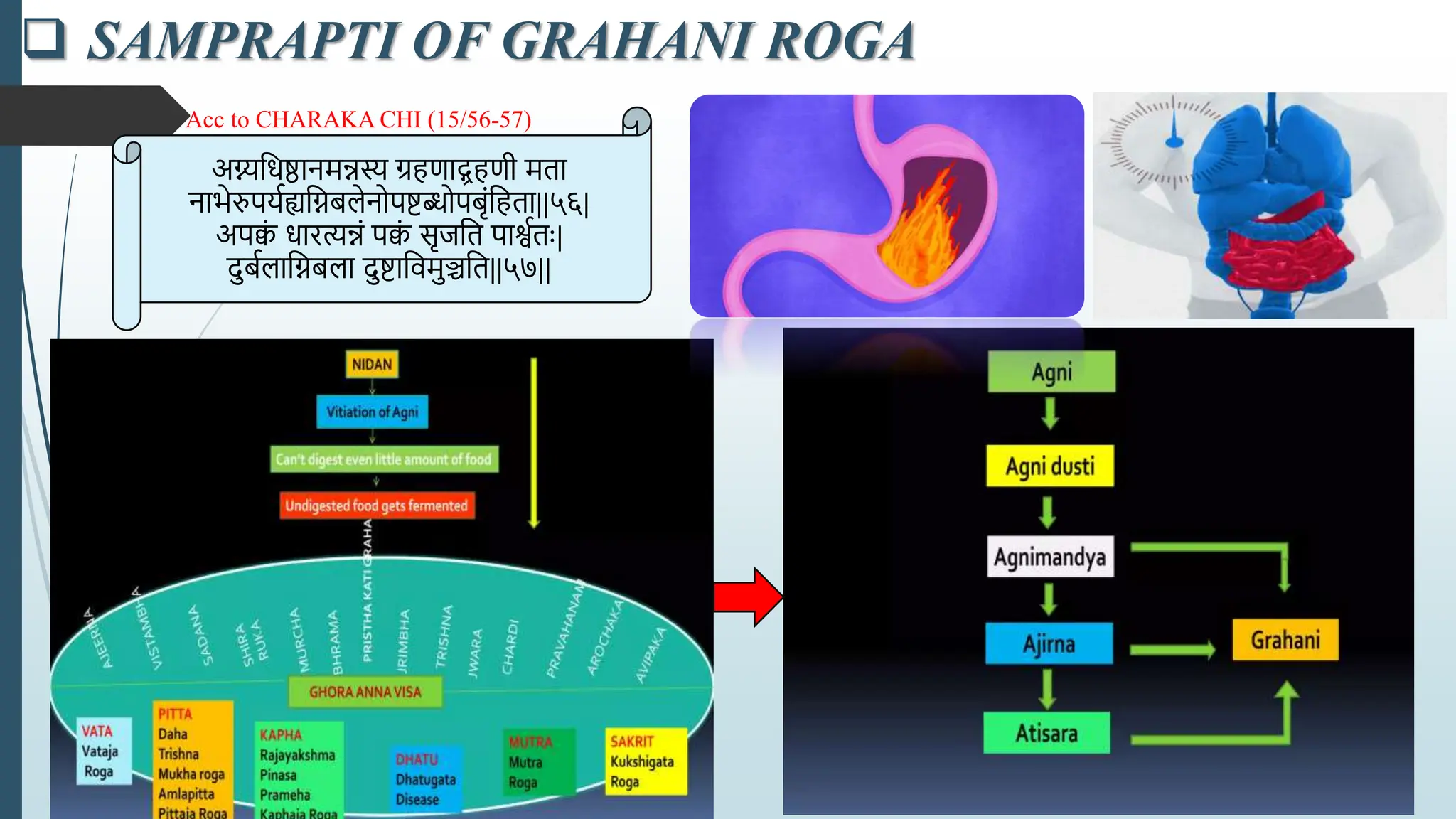
Your assessment should pinpoint the following:
- Agni Bala (Strength of Digestive Fire): Is it Mandagni (slow, leading to Kapha issues), Vishamagni (irregular, classic for Vata), or Tikshnagni (sharp/hyperactive, often with Pitta)? This determines the initial focus of treatment.
- Ama Avastha (Presence of Metabolic Toxins): Is the condition Sama (with Ama) or Nirama (without Ama)? Sama conditions are indicated by a coated tongue, feeling of heaviness, foul-smelling stools/flatus, and stools that sink. This is the most critical initial differentiation, as Amapachana (digesting Ama) must precede other treatments.
- Dosha Pradhanyata (Dominant Dosha):
- Vataja Grahani: Irregular bowel habits, alternating constipation and diarrhea, gassy bloating, abdominal pain, and anxiety.
- Pittaja Grahani: Diarrhea with a burning sensation, yellow/loose stools, foul smell, thirst, and irritability.
- Kaphaja Grahani: Stools mixed with mucus, feeling of heaviness, nausea, sluggishness, and slow digestion.
- Manasika Bhava (Mental/Emotional State): Assess for anxiety (Chinta, Bhaya), depression (Vishada), or stress. This is crucial for addressing the brain-gut axis or Manovaha Srotas involvement.
- Rogi Bala (Patient's Strength): Is the patient Pravara (strong), Madhyama (medium), or Avara (weak)? This will determine the suitability of Shodhana (purification) versus Shamana (palliative) therapies.
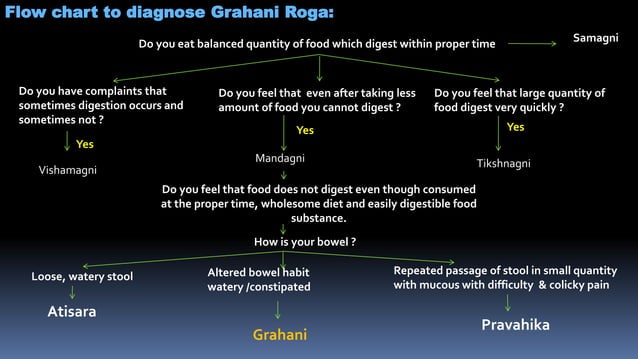
3. Designing a "Whole System" Evidence-Based Protocol
For a complex, multi-factorial condition like refractory IBS, a "Whole System Approach" is more effective than a single intervention. This involves a multi-stage, personalized protocol that adapts to the patient's changing state. A recent clinical trial explored this very concept.
Efficacy of whole system ayurveda protocol in irritable bowel ...
The following paper, 'Efficacy of whole system ayurveda protocol in irritable bowel ...', validates the use of a multi-component, personalized approach for IBS. This provides an evidence-based model for the protocol we are about to design.
Please read the 'Introduction', the 'Intervention' part of the 'Materials and methods' section, and the 'Discussion'. Focus on: The rationale for using a Whole System Research (WSR) approach for a complex disease like Grahani. The components of the Whole System Ayurveda Protocol (WSAP), which included different drugs for Sama/Nirama states, stool types (hard/loose), and Manasika Dosha. The discussion on how different herbs were selected based on their properties to address specific pathological components.
Inspired by the WSAP model and classical principles, we can structure our protocol into four key stages.
Stage 1: The Reset - Nidana Parivarjana & Amapachana
This initial stage aims to stop adding fuel to the fire and to clear the initial layer of metabolic toxins.
- Nidana Parivarjana (Avoidance of Causative Factors):
- Diet: Based on the dominant Dosha, advise the patient to avoid aggravating foods. This aligns with modern advice, such as a temporary low-FODMAP diet for patients with bloating and gas.
- Lifestyle: Regulate meal times, ensure adequate sleep, and incorporate gentle movement.
- Deepana-Pachana (Kindling Digestion & Digesting Toxins): If the diagnosis is Sama Grahani, this is the non-negotiable first step.
- Objective: Convert the Sama state to Nirama.
- Selection of Herbs:
- For Vata/Kapha dominance: Trikatu Churna, Chitrakadi Vati, or Hingvashtaka Churna.
- For Pitta dominance (where strong heating herbs are contraindicated): Shunthi (ginger) powder with warm water, or combinations with Musta (Cyperus rotundus).
Stage 2: The Core Intervention - Shodhana or Shamana
Once the Ama is cleared, we can address the core Dosha imbalance. The choice between strong purification (Shodhana) and gentle pacification (Shamana) depends on the patient's strength (Rogi Bala).
A. Shamana Chikitsa (Palliative Therapy): The preferred route for most out-patients.
This is where we use specific formulations to pacify the dominant Dosha and restore gut function. Let's draw on specific, clinically-tested examples.
Ayurvedic management of irritable bowel Syndrome |Compiled|
The 'Ayurvedic management of irritable bowel Syndrome' video provides an excellent summary of medicines used for different types of Grahani. We'll use this as our pharmacopeia.
Watch the segments discussing Kafaja Grahani (05:24 - 13:02), Pitaja Grahani (13:02 - 19:03), and Vataja Grahani (19:03 - 30:11). For each type, note down 1-2 key formulations and their primary actions (e.g., Grahi, Pachana, Stambhana).
Based on the video and classical texts, our Shamana choices could be:
- For Vataja Grahani (correlates with IBS-M/IBS-A):
- Takrarishta or Buttermilk: The ultimate remedy for Grahani. It is Laghu, Grahi (absorbent), and Deepana.
- Jirakadyarishta: Excellent for post-prandial bloating, pain, and irregular bowels. Jiraka (cumin) is a premier carminative and digestive.
- For Pittaja Grahani (correlates with IBS-D, inflammatory features):
- Kutajarishta or Kutaja Ghana Vati: Kutaja is the drug of choice for diarrhea and dysentery (Atisara) due to its potent Stambhana (astringent/anti-diarrheal) action.
- Pravala Pishti / Panchamruta: These coral/pearl-based formulations are cooling (Sheeta) and help manage the burning sensation (Daha) and inflammation associated with Pitta.
- For Kaphaja Grahani (correlates with IBS-D with mucus):
- Mustakarista: Musta is a fantastic Deepana, Pachana, and Grahi herb, ideal for digesting Ama and absorbing excess fluid.
- Haritaki or Triphala: These help to scrape (Lekhana) mucus and regulate bowel function without being overly purgative.
B. Shodhana Chikitsa (Purification Therapy): For strong patients with chronic, severe symptoms.
This offers a deeper, more lasting reset.
This case study on Pittaj Grahani provides a practical template for how Virechana (therapeutic purgation), a key Shodhana procedure, is implemented.
Quickly review the 'Virechana Karma' protocol description and the 'Discussion'. Note the steps involved: Snehapana (internal oleation), Swedana (sudation), the purgative drug used (Trivrittavaleha), and the post-procedure diet (Samsarjana Krama). This shows the structured nature of Shodhana.
- Virechana (Therapeutic Purgation): As seen in the case study, this is the treatment of choice for Pitta-dominant conditions. It expels vitiated Pitta and Kapha from the body, cleanses the gut, and profoundly resets Agni.
- Basti (Medicated Enema): The primary treatment for Vata-dominant conditions. A series of Basti can regulate bowel function, calm the nervous system (addressing the gut-brain axis directly), and nourish the colonic mucosa.
Stage 3: Calming the System - Manasika Chikitsa
For refractory cases, addressing the mind is non-negotiable.
- Sattvavajaya Chikitsa (Ayurvedic Psychotherapy): This involves counseling, reassurance (Ashwasana), and cognitive restructuring. This was a component of the WSAP trial (LINK).
- Medhya Rasayanas (Nervine Tonics):
- Brahmi (Bacopa monnieri) and Mandukaparni (Centella asiatica): Reduce stress and anxiety.
- Shankhapushpi (Convolvulus prostratus): Calms the mind and improves sleep.
- These can be compared to modern neuromodulators discussed in the LINK video, which are used for pain and mood in severe IBS.
Stage 4: Rebuilding and Maintaining - Rasayana
After the disease process is controlled, the focus shifts to rejuvenation (Rasayana) to strengthen the gut lining (Grahani Bala) and prevent relapse.
- Formulations:
- Amalaki Rasayana or Chyawanprash: Excellent for rebuilding tissue and supporting overall immunity.
- Medicated Ghritas like Dadimadi Ghrita or Mahatikta Ghrita (as used in LINK post-Virechana) in small doses can heal the gut mucosa and pacify Vata.
- Continued Pathya: Reinforce the long-term dietary and lifestyle principles.
Test your understanding!
A patient with refractory IBS-D presents with frequent loose stools (5-6 times/day), a burning sensation in the abdomen, high irritability, and a moderately coated yellow tongue. They are a busy executive with high stress but are physically strong. Outline the first two stages of your treatment protocol, justifying your choices.
Show answer
This patient presents a classic picture of Sama Pittaja Grahani with significant Manasika involvement, and because they are strong (Pravara Bala), a more definitive approach is possible.
-
Stage 1: Nidana Parivarjana & Amapachana.
- Justification: The yellow-coated tongue indicates a Sama Pitta condition. We must perform Amapachana before addressing the Pitta directly.
- Protocol:
- Nidana Parivarjana: Advise immediate cessation of spicy, oily, sour, and fermented foods. Recommend cooling, easy-to-digest foods like mung soup, rice, and pomegranate.
- Deepana-Pachana: Use a formulation that is Pachana but not overly heating. A good choice would be Musta powder or Shunthi powder with a small amount of Guduchi (which is Tridoshic and an immunomodulator). Administer for 5-7 days until the tongue coating clears and the feeling of heaviness reduces.
-
Stage 2: Core Intervention - Shodhana (Virechana).
- Justification: The patient is strong (Pravara Bala), the condition is chronic and refractory, and the dominant Dosha is Pitta. This is the textbook indication for Virechana. It will eliminate the root Pitta and Ama, clear the gut, and reset Agni far more effectively than Shamana alone.
- Protocol: Plan a classical Virechana Karma as detailed in the case study (LINK), including:
- Purvakarma: 3-5 days of Snehapana with a Pitta-pacifying ghrita like Mahatikta Ghrita or Tiktaka Ghrita, followed by Sarvanga Snehana and Swedana.
- Pradhana Karma: Administering a suitable purgative drug.
- Paschat Karma: Following the strict Samsarjana Krama (graded dietary regimen) to rebuild Agni.
Conclusion
Designing a protocol for a refractory disorder is a dynamic process that mirrors the complexity of the disease itself. It requires moving beyond a "one-pill-for-one-ill" mindset to a multi-layered, personalized strategy.
Key Takeaways:
- Comprehensive Diagnosis is Paramount: A successful protocol is built on a thorough assessment using both modern safety checks and a detailed Ayurvedic analysis of Agni, Ama, Dosha, and Manas.
- The "Whole System Approach" is Evidence-Based: As demonstrated in clinical research, tackling the disease from multiple angles—diet, Amapachana, Dosha-specific herbs, mental health, and rejuvenation—yields superior results.
- Protocols Must be Staged and Personalized: The treatment must adapt. Start with clearing Ama, then address the root Dosha imbalance with either Shamana or Shodhana based on patient strength, manage the psycho-emotional component, and finally, rebuild the system with Rasayana.
- Justification is Key: Every choice, from a single herb to a major procedure like Virechana, must be justified based on its role in Samprapti Vighatana (deconstructing the pathogenesis).
Preview of the Next Lesson:
In this module, we have analyzed a protocol and designed one. For our next lesson, we will shift our focus to critically appraising the evidence itself. The learning outcome will be: "Critically evaluate a published research paper on an Ayurvedic neurological intervention and propose a follow-up study." This will hone your research literacy skills, enabling you to not only apply evidence but also contribute to its creation.