Welcome to the final lesson of our course! Over the past several weeks, we have journeyed through the sophisticated landscape of advanced Ayurveda. We began with the foundational principles of Dravyaguna, delved into the mechanisms of drug action, and built a bridge to modern science by exploring phytochemistry and pharmacology. We then equipped ourselves with the tools of research methodology, learned how to appraise evidence, and applied this integrated knowledge to clinical conditions affecting metabolic, digestive, and neurological health. In our last lesson, we mastered the art of optimizing treatments using Samskara and Anupana.
Today, you will bring all of this together. This capstone lesson is designed for you to demonstrate your ability to function as an advanced integrative practitioner. The learning outcome is to present a detailed analysis of a case, defending the integrative treatment choices with classical and modern evidence.
You will step into the role of a consulting physician, critically analyzing a complex, real-world case. Your task is not merely to understand what was done, but to deconstruct the why—justifying every diagnostic and therapeutic step with the full spectrum of your classical and scientific knowledge.
The Capstone Challenge: Deconstructing a Complex Case
We will be working with a published case study that presents a patient with multiple, interconnected health issues—a scenario you will frequently encounter in clinical practice. Your challenge is to analyze the case through an integrative lens, applying a structured framework that synthesizes everything you've learned.
First, let's get acquainted with the case.
To begin your analysis, you will now study a comprehensive case report. This paper details an integrative approach for a patient with dyslipidemia, hypothyroidism, and a history of acute coronary syndrome (ACS). As you read, think like a senior clinician reviewing a case. Your goal is to understand the presented reasoning and then build your own, more detailed defense of the treatment choices.
Please read the entire paper. As you go, gather the information needed for your analysis by focusing on: Patient Presentation & History: Note the chief complaints (constipation, disturbed sleep, weakness), modern diagnoses, and prior allopathic medications (Section 2.1). The 'Panchsutri' Intervention: Identify the five components of the therapy. Pay close attention to the details of the diet, the specific Panchakarma procedures (Abhyanga, thermal vasodilation, PRDA, Hrudaydhara, Shirodhara), and the herbal preparations used (Dashmula Kadha, GHA Kadha, JM Kwath) (Section 2.2). The Results: Scrutinize the changes in key biomarkers (Weight, Abdominal Girth, TSH, Lipid Profile) and the patient's subjective improvements (Section 3). The Discussion: The authors provide their own justification. Use this as a starting point for your own deeper analysis (Section 4).
The Analytical Framework
To structure your analysis, we will use a systematic approach that moves from diagnosis to treatment justification. This process mirrors the "Integrative Approach" that combines traditional examination with modern parameters to create a holistic health assessment.
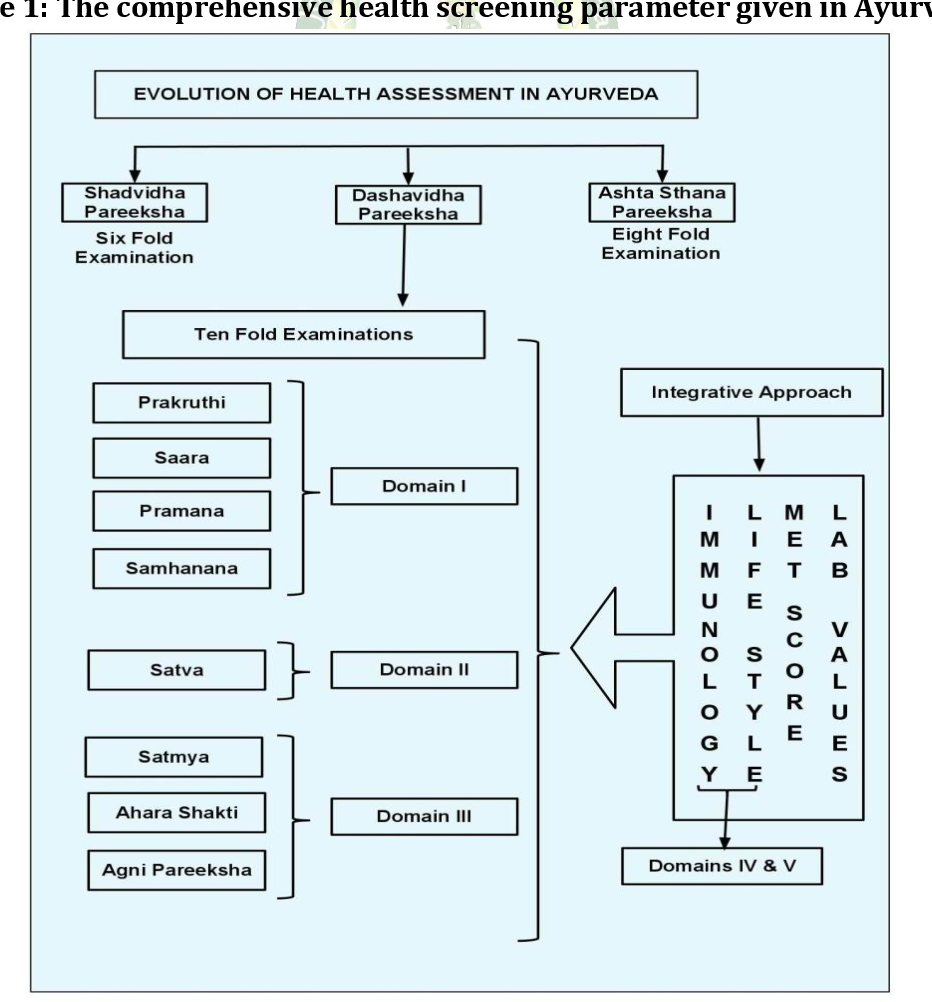
Here is the framework for your analysis:
- Patient Profile & Nidana Panchaka: Briefly summarize the patient's presentation and identify the probable etiological factors.
- Samprapti Vighatana (Deconstruction of Pathogenesis): Correlate the modern diagnoses with Ayurvedic pathogenesis, using the Dosha-Dushya-Agni framework.
- Chikitsa Sutra (Therapeutic Strategy): Define the core Ayurvedic treatment principles based on the Samprapti.
- Defense of Interventions: Justify each component of the Panchsutri therapy, providing both classical and modern evidence.
Let's walk through this process together.
A Guided Analysis of the Case
1. Patient Profile & Nidana
- Patient: A 52-year-old female with a low BMI (21.9).
- Modern Diagnoses: Dyslipidemia, hypothyroidism, and a history of Acute Coronary Syndrome (ACS).
- Presenting Complaints: Constipation, disturbed sleep, general weakness, and insomnia.
- Probable Nidana (Etiological Factors): The paper does not specify the Nidana. However, based on the Samprapti, we can infer factors like:
- Vishmashana (irregular or incompatible food intake) leading to Agnimandya.
- Manasika Hetu like stress (Chinta), which vitiates Vata and contributes to both insomnia and cardiovascular strain.
- Possible consumption of Guru (heavy), Snigdha (oily), and Sheeta (cold) foods that aggravate Kapha and impair Meda Dhatu Agni, despite the low overall body weight.
2. Samprapti Vighatana (Deconstruction of Pathogenesis)
Here, we map the modern conditions to Ayurvedic pathophysiology. The progression of disease, or Samprapti, often follows six stages, from accumulation to manifestation.

Let's deconstruct the pathogenesis for our patient:
- Core Pathology: The root cause is likely profound Agnimandya, especially at the level of the Jatharagni (central digestive fire) and the Dhatvagnis (tissue-level metabolic fires), particularly Meda Dhatu Agni.
- Dyslipidemia: This is a classic sign of Medovaha Srotodushti. Impaired Meda Dhatu Agni leads to the production of abnormal or excessive Meda Dhatu (adipose tissue/lipids). This pathology is primarily driven by vitiated Kapha Dosha.
- Hypothyroidism: From an Ayurvedic perspective, this condition reflects severe Kapha-Vata imbalance with significant Agnimandya. The sluggish metabolism, weight gain tendency (even if not overt), and lethargy are characteristic of Kapha aggravation. The involvement of the endocrine system points to a disruption in the command function of Vata.
- History of ACS & Weakness/Insomnia: These are clear indicators of severe Vata Dosha vitiation. The ACS history points to pathology in the Rasavaha Srotas and Hrudaya (heart), likely involving Dhamani Pratichaya (atherosclerosis). The insomnia, disturbed sleep, and weakness are systemic expressions of aggravated Vata.
In summary, the Samprapti involves a complex interplay of all three Doshas:
- Kapha vitiation leads to Agnimandya and abnormal Meda Dhatu.
- This creates Srotorodha (channel obstruction), which further vitiates Vata.
- The obstructed and aggravated Vata then impacts the nervous system (insomnia) and the cardiovascular system (Hrudaya), culminating in a condition like ACS.
3. Chikitsa Sutra (Therapeutic Strategy)
Based on our Samprapti Vighatana, the line of treatment must be multi-pronged:
- Agni Deepana & Ama Pachana: To correct the root metabolic dysfunction.
- Srotoshodhana: To clear the channels obstructed by improperly metabolized nutrients (Ama) and excess Kapha.
- Lekhana: To "scrape" and reduce the pathological Meda Dhatu.
- Vata Shamana: To pacify the nervous system, improve sleep, and protect the cardiovascular system.
- Hrudya: To provide specific protection and strength to the heart.
- Rasayana: To rejuvenate the Dhatus and prevent recurrence, especially important in chronic, multi-systemic disease.
4. Defense of Interventions
Now for the core of the exercise. We will analyze the key interventions used in the Panchsutri protocol and defend them using both classical and modern reasoning. I will model the analysis for two interventions.
Intervention 1: Shirodhara with JM Kwath (Jatamansi decoction)
- Classical Rationale:
- Action: Shirodhara is a primary therapy for pacifying Vata Dosha, particularly Prana Vayu, which is seated in the head and governs all neurological and mental functions. The patient's symptoms of insomnia and disturbed sleep are direct indications for this.
- Dravya: Jatamansi (Nardostachys jatamansi) is a renowned Medhya Rasayana (nervine tonic) and Nidrajanana (sleep-promoter). Its Tikta (bitter) and Kashaya (astringent) tastes, combined with its Sheeta Virya (cooling potency), make it excellent for pacifying both Vata and Pitta, calming the mind (Manonashamana), and stabilizing the nervous system.
- Modern Evidence:
- Mechanism: The continuous, rhythmic streaming of warm liquid onto the forehead is known to induce a deep state of relaxation, decrease sympathetic nervous system activity (the "fight-or-flight" response), and enhance parasympathetic tone. This directly counters the effects of chronic stress on the cardiovascular and endocrine systems.
- Pharmacology: The paper correctly notes that Jatamansi has documented anxiolytic, hypotensive, and neuroprotective effects. Research indicates that its active compounds may modulate the GABAergic system, similar to modern anxiolytics, which explains its calming and sleep-promoting properties.
Intervention 2: Abhyanga with Centripetal Oleation and Dashmula Kadha Swedana
- Classical Rationale:
- Action: Abhyanga (oil massage) is the foremost therapy for pacifying systemic Vata Dosha (Sarvanga Vata). The patient's general weakness is a key Vata symptom. Swedana (sudation) with Dashmula (a group of ten roots) following Abhyanga serves two purposes: it resolves stiffness, further pacifies Vata and Kapha, and most importantly, it promotes Srotoshodhana (clearing of channels) by helping to liquefy and eliminate Ama (toxins).
- Dravya: Dashmula is a classic Vata-Kapha Shamana formulation known for its anti-inflammatory and channel-clearing properties, making it ideal for metabolic and inflammatory conditions.
- Modern Evidence:
- Mechanism: Massage improves peripheral circulation and lymphatic drainage, which aids in the removal of metabolic wastes. The application of heat in Swedana causes vasodilation, further enhancing circulation and promoting detoxification through sweating.
- Pharmacology: Many compounds in the Dashmula herbs have demonstrated anti-inflammatory and antioxidant properties in laboratory studies. This action helps reduce the low-grade systemic inflammation that is characteristic of metabolic syndrome, dyslipidemia, and cardiovascular disease.
Test your understanding!
Now, it's your turn. Using the same analytical framework, provide a detailed defense for the dietary intervention used in the case study.
Intervention 3: A calorie-restricted diet of 1000 kcal/day
Analyze this intervention considering the patient's low BMI. Justify it using both classical Ayurvedic principles and modern nutritional science.
Show answer
Intervention 3: A calorie-restricted diet of 1000 kcal/day
- Classical Rationale:
- Action: This intervention is a form of Langhana Chikitsa (lightening therapy), specifically Alpahara (reduced food intake). The primary goal is Agni Deepana (to kindle the digestive fire) and Ama Pachana (to digest metabolic toxins). By reducing the load on the digestive system, the body can redirect its energy towards clearing Srotorodha and correcting the impaired Dhatvagni.
- Yukti (Rationale): The challenge, as noted in the paper, is applying Langhana to a low-BMI patient. This requires Yukti (skillful application). The diet would not be simple starvation but would consist of foods that are Laghu (light), Ushna (warm), and easily digestible (e.g., mung bean soup, cooked vegetables, whole grains like barley) while being nutrient-dense. The goal is not weight loss but metabolic correction and reduction of pathological Meda and Kapha, as evidenced by the significant reduction in abdominal girth (a better marker of visceral fat) rather than just body weight.
- Modern Evidence:
- Mechanism: Caloric restriction, even for short periods, is a powerful tool for improving metabolic health. It is known to increase insulin sensitivity, reduce triglycerides, lower blood pressure, and decrease markers of systemic inflammation (like C-reactive protein).
- Application: In this case, the 1000-kcal diet served as a "metabolic reset." For a sedentary individual, this is a significant but manageable deficit. The positive outcomes (improved TSH and lipid profile) demonstrate that the intervention successfully targeted pathological metabolic processes without causing detrimental catabolism (breakdown of healthy tissue), as the patient's LVEF remained stable and weakness improved. This suggests the diet was well-formulated to preserve lean body mass while correcting metabolic dysfunction.
Conclusion and Course Wrap-up
Congratulations on completing this final exercise, and indeed, this entire course. Today, you have demonstrated the pinnacle of integrative Ayurvedic practice: the ability to analyze a complex case, deconstruct its pathogenesis from two different but complementary perspectives, and defend a holistic treatment plan with robust evidence from both ancient texts and modern science.
Key Takeaways from Today's Lesson:
- Integrative Analysis is Synthesis: True integration lies in weaving together the narratives of Samprapti and pathophysiology to create a richer, more complete picture of the patient.
- Defense is Deeper than Description: An advanced practitioner can justify every therapeutic choice—from a single herb to a dietary plan—by explaining its mechanism of action in both Ayurvedic and scientific terms.
- Holistic Treatment for Holistic Problems: Complex, multi-systemic diseases require a multi-pronged Chikitsa Sutra that addresses the root cause (Agni, Ama), balances the Doshas, and manages the manifested symptoms.
You began this journey as a BAMS graduate with a strong foundation and a desire to build upon it. Throughout these twelve modules, you have honed your skills in advanced Dravyaguna, evidence-based practice, and integrative clinical reasoning. You are now equipped not just with more knowledge, but with a more sophisticated framework for thinking.
I encourage you to carry this spirit of critical inquiry, evidence-based integration, and lifelong learning into your future practice. The path of an Ayurvedic physician is one of continuous growth, and you are now exceptionally well-prepared to walk it. Well done.