Welcome back. In our previous lessons, we meticulously constructed our two primary hypotheses for the boudoir competition win: the "body type advantage" (H1) and the "attire/persona contrast" (H2). We translated these general ideas into precise, testable causal statements, complete with operationalized variables and a grounding in psychological theory.
However, a rigorous causal analysis demands more than just articulating a favored explanation. Its strength lies in its ability to withstand challenges from plausible alternatives. To avoid the trap of confirmation bias, where we only seek evidence that supports our initial ideas, we must actively generate and confront rival hypotheses. This lesson is dedicated to that critical task. Our objective is to generate at least three distinct rival hypotheses for the outcome, treating each with the same analytical seriousness as our primary ones.
The Logic of Rival Explanations
In single-case analysis, we can't rely on statistical controls to isolate causal factors. Instead, we use a process of logical elimination. We construct a set of potential "worlds," each defined by a different causal story, and then use the evidentiary record to see which worlds remain plausible. Generating strong rival hypotheses is therefore not an optional step; it is fundamental to the entire endeavor.
This briefing paper on process tracing from TASO outlines the standard methodology for single-case causal analysis.
Please read the introduction and "Step 1: Identify hypotheses." Focus on the principle that evaluators must cast the net widely. Notice the recommendation to consider different categories of explanation, such as those based on individual agency versus structural constraints.
As the paper highlights, this process forces us to be systematic. By setting up a "competition" between hypotheses, we commit ourselves to a more objective evaluation of the evidence later on. Let's now construct the main challengers to our primary account of the contestant's victory.
Rival Hypothesis 1: Superior Posing Skill
Our primary hypotheses focus on static attributes (physique) and a psycho-social effect (contrast). But what if the cause was more dynamic? A competition isn't just a display of bodies; it's a performance. This first rival hypothesis posits that the contestant won simply because she was a technically superior performer.
Rival Hypothesis 1 (HR1): The contestant's victory was primarily caused by superior technical posing skill. This skill, independent of her physique or the surprise value of her attire, manifested as flawless execution of transitions, optimal pose duration, and elegant stage presence, leading judges to award higher scores for presentation and confidence.
This hypothesis redirects our focus from what she presented to how she presented it. An excellent resource for understanding the nuances of this is the "Ultimate Guide to Dominating Your Stage Presence" from Saleyla.com, which details the specific skills that separate winners from losers in bikini competitions.
Bikini Competition Posing Tips: The Ultimate Guide to Dominating ...
This guide for bikini competitors offers insight into the specific skills judges look for. It's a valuable source for operationalizing what "superior skill" means in this context.
Read the introduction, "Why Most Competitors Fail," and the section on "Advanced Posing Techniques." Pay attention to the distinction between having a good body and mastering the execution of the presentation.
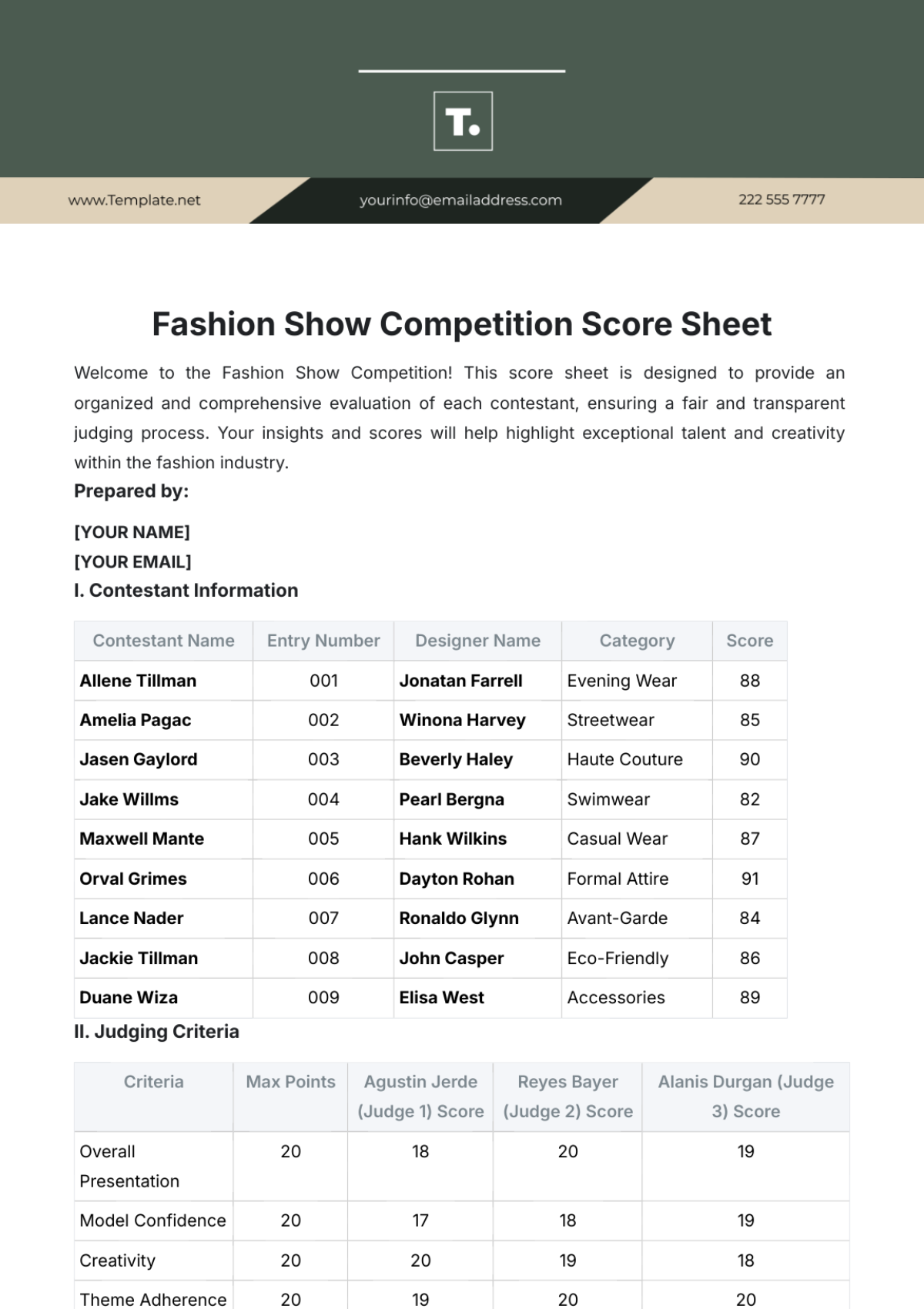
As the guide makes clear, factors like the "3-Second Rule" for holding a pose and mastering the "micro-movements" between them are critical. HR1 claims that our winner excelled in these technical areas, and this was the decisive factor. For instance, while H1 (body type) might predict high scores on physique-related criteria, HR1 predicts high scores specifically on criteria like "Model Confidence" or "Overall Presentation," which reflect performance quality.
Rival Hypothesis 2: Elite Professional Coaching
Building on the first rival, we can ask: if she had superior skill, where did it come from? This leads to a second, distinct rival hypothesis that places the cause one step further back in the causal chain. Perhaps the crucial variable wasn't the skill itself, but access to a resource that produced it.
Rival Hypothesis 2 (HR2): The contestant's victory was primarily caused by access to and implementation of elite professional coaching. The coach provided insider knowledge of judging criteria, a meticulously designed routine, and a level of polish that surpassed that of self-coached or less-expertly coached competitors.
This hypothesis suggests the outcome was determined during the preparation phase. An elite coach might provide a decisive advantage that has little to do with the contestant's "natural" attributes or persona.
Bikini Competition Posing Tips: The Ultimate Guide to Dominating ...
Let's return to the same guide, which also speaks directly to the role of coaching.
Please read the sections "Finding the Best Posing Coach" and the FAQ answer on needing a coach. The text is unambiguous about the importance of coaching for any serious competitor.
This source frames coaching as "non-negotiable" for serious contenders. HR2 is a powerful rival because it suggests that an external factor—an expert third party—was the primary driver of the win. To test it, we would need to investigate not just the performance, but the preparation: Who was her coach? What is their track record? Did other top competitors have coaches of a similar caliber?
Rival Hypothesis 3: Superior Lingerie Design Quality
Our second primary hypothesis (H2) focuses on the contrast created by the lingerie. But what if the lingerie itself was the key, irrespective of any contrast effect? This hypothesis isolates the artifact—the garment—as the central causal factor. Given your own background in lingerie design, you are uniquely positioned to appreciate the nuances of this explanation.
Rival Hypothesis 3 (HR3): The contestant's victory was primarily caused by the superior intrinsic quality of her lingerie. The garment's design—distinguished by an exceptional fit, high-quality materials, and innovative construction—was judged as aesthetically and technically superior to the attire of other contestants, directly elevating scores in categories like 'Creativity' and 'Overall Presentation'.
This hypothesis differs fundamentally from H2.
- H2 (Contrast): The lingerie's power comes from its relationship to the wearer's persona. A simple but provocative piece could be highly effective.
- HR3 (Quality): The lingerie's power is intrinsic. It would be judged as superior on any model because of its design, cut, and material. The cause is rooted in the object itself.
Testing this would involve a different kind of evidence. We would look for judges' comments specifically about the garment, the reputation of its designer, or even a post-hoc expert evaluation comparing her lingerie to that of the other finalists based on criteria like stitching, material choice, and innovation of cut. This hypothesis suggests that had another competitor worn the same piece, they would have received a similar boost in their scores.
Conclusion
We have now established a formidable set of competing explanations for the contestant's victory. Beyond our primary hypotheses focusing on physique (H1) and psychological surprise (H2), we have now articulated three plausible rivals:
- HR1: Superior Posing Skill: The cause was in the performance.
- HR2: Elite Professional Coaching: The cause was in the preparation.
- HR3: Superior Lingerie Design Quality: The cause was in the artifact.
Generating these alternatives is a crucial act of analytical discipline. It prevents us from falling in love with our initial theory and forces us to consider the event from multiple causal angles. We have now populated our "battlefield of ideas." The next steps in our analysis will involve systematically arranging these hypotheses and preparing to test them against the evidence.
In our next lesson, we will take all five hypotheses—the two primary and the three rival—and categorize them as background conditions, proximate triggers, or sustaining factors. This will help us begin to structure the final causal narrative and understand how different types of causes might relate to one another.