Introduction
In our last lesson, we pinpointed the three critical junctures in the boudoir competition case—the moments where key decisions dramatically shaped the contestant's path to victory. We identified the adoption of a "surprise" strategy, the selection of maximally provocative attire, and the judges' positive framing of her performance as the pivotal forks in the road.
Today, we will build directly on that foundation. Our objective is to formally document not only the choices that were made at each juncture but, more importantly, to reconstruct the plausible alternatives that were not taken. This process transforms a simple historical account into a rich analytical landscape. It is the crucial step that bridges narrative construction and formal causal inference. By mapping the "paths not taken," we are essentially defining the set of relevant counterfactual worlds we will need to consider when assessing the necessity and sufficiency of our hypothesized causes.
Your work in causal analysis has likely familiarized you with Judea Pearl's do-calculus, which formalizes interventions. The image below provides a powerful visual analogy for what we are doing today. On the left, we have the "observed, factual" world—the path that was actually taken. On the right, we have an "imagined, counterfactual" world, which results from an intervention—in this case, choosing an alternative path. Our task is to define what these plausible counterfactual worlds look like.
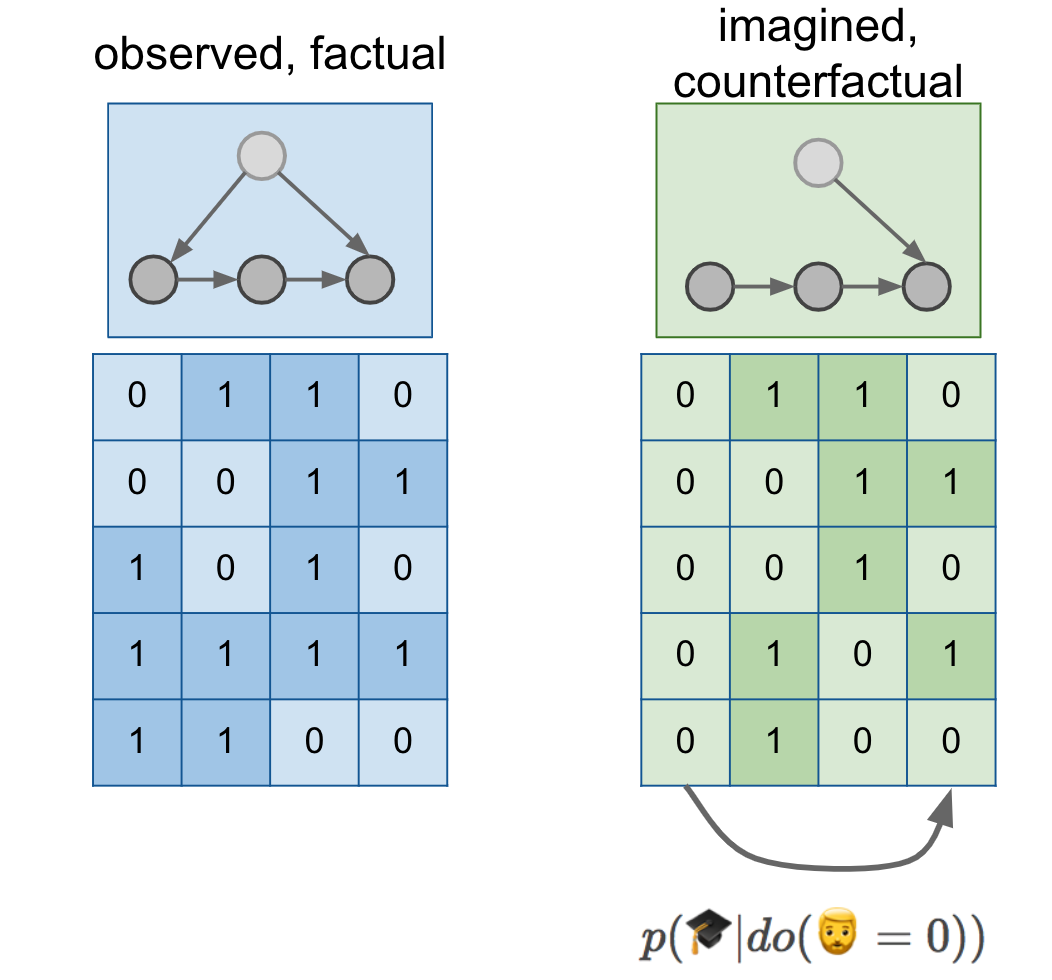
The Logic of Reconstructing Alternatives
Before we dive into the specifics of Event 2, it is essential to formalize why this exercise is so important. A juncture is only "critical" because other viable options existed. If there was only one possible path, the concept of a critical choice would be meaningless. Therefore, to justify a claim that a juncture was critical, we must demonstrate that other outcomes were genuinely possible.
This requires us to move beyond hindsight and adopt an ex ante perspective—to place ourselves in the shoes of the decision-maker at that moment and see the branching paths ahead of them. The academic literature on single-case analysis provides clear guidance for this task.
[PDF] Chapter 5 Critical Junctures
This chapter by Giovanni Capoccia offers a concise methodological guide for the analysis of critical junctures. The following passage clearly outlines the analyst's task.
In the section on contingency, please read the paragraph that provides direct guidance for the analyst. It begins with the sentence "In the analysis of critical junctures..." and explains the need to reconstruct the key decision-makers, the historically available choices, and the potential consequences of alternatives.
As the reading makes clear, our task is not to engage in unbounded speculation but to identify alternatives that were "historically available and not simply hypothetically possible." This disciplined reconstruction is what separates rigorous causal analysis from mere storytelling. For each juncture, we will now articulate the choice made and then delineate the most plausible, viable alternatives.
Documenting Choices and Alternatives in Event 2
Let's apply this logic to the three critical junctures we previously identified for the boudoir competition.
Critical Juncture 1: The Strategic Decision
-
Choice Made: The contestant committed to a high-risk, high-reward strategy of leveraging the element of surprise. This involved creating a jarring contrast between her known modest persona and her bold on-stage presentation. This decision set the entire frame for all subsequent actions.
-
Plausible Alternatives:
- The Incremental Strategy: The most obvious alternative was to accept the conventional terms of the competition and attempt to win by being a "better" version of the typical contestant. This would involve focusing on perfecting posing techniques, showcasing subtle elegance, and selecting high-quality but stylistically safe lingerie. This represents the default, low-risk path.
- The Niche Strategy: Instead of a direct contrast, she could have aimed to capture a specific, less-contested niche within the boudoir aesthetic. For example, she could have adopted a "dark romantic" Goth-inspired look, a "vintage pin-up" style, or an "ethereal and innocent" theme. This would have been a strategy of differentiation rather than one of shock.
- Withdrawal: After analyzing the competition and concluding her chances were slim, a perfectly plausible choice was to withdraw. Recognizing an unwinnable situation and cutting one's losses is a rational alternative that must always be considered in any decision analysis.
Critical Juncture 2: The Attire Selection
-
Choice Made: To execute the surprise strategy, the contestant selected maximally provocative lingerie. Based on our case details, this implies a garment engineered for shock value, likely something from the more extreme end of lingerie design, such as an ouvert (crotchless) style, a cupless bra, or a complex and revealing harness set.
-
Plausible Alternatives: Your expertise in lingerie design allows for a nuanced appreciation of the spectrum of choices here. The alternatives were not simply "less bold," but represented distinct stylistic and strategic paths.
- Moderately Bold Attire: She could have chosen a piece that was daring but still within the established norms of a "sexy" boudoir shoot. Examples would include a high-end sheer lace bodysuit, an intricate push-up babydoll, or a sophisticated garter set. These choices would have been surprising, given her persona, but would not have shattered expectations in the same way. The "contrast" effect would have been diluted.
- Conventionally Elegant Attire: An alternative that abandons the surprise strategy would be to select a garment emphasizing tastefulness and classic beauty, such as a full-length silk chemise or a premium satin bra and panty set. This would have been a technically "safe" choice but would have likely resulted in her performance being perceived as forgettable and failing to stand out.
- Thematically Coherent Attire: If she had chosen the "Niche Strategy" at the first juncture, her attire choice here would have been different. A "dark romantic" theme would call for a leather corset; a "vintage" theme might call for high-waisted briefs and a bullet bra. This highlights how choices at one juncture constrain the available alternatives at the next.
Critical Juncture 3: The Judges' Deliberation
-
Choice Made: The judges, as the final arbiters, chose to frame her performance in a positive light. They interpreted her risk-taking not as a flaw but as a feature, rewarding her for "originality," "unforgettable impact," and "storytelling." This act of interpretation was the final, necessary link in the causal chain.
-
Plausible Alternatives: The contestant's actions created a powerful but ambiguous stimulus. The judges had several other ways they could have plausibly reacted.
- Dismissal as Gimmicky: The judges could have easily viewed her choice as a cheap trick to compensate for a lack of technical skill. They might have acknowledged the boldness but ultimately concluded it was "tacky" or "desperate," ranking her below contestants who demonstrated more traditional posing prowess or elegance.
- Penalty or Disqualification: Depending on the competition's explicit or implicit rules of conduct and taste, the judges could have deemed the attire "inappropriate" or "over the line." This could have resulted in a direct penalty to her score or even disqualification.
- Ambivalent Acknowledgment: A third path would be for the judges to acknowledge the impact but fail to reward it decisively. They might have given her points for "bravery" but ultimately given the win to a "safer" contestant who better embodied the competition's core aesthetic. In this scenario, the risk would not have paid off.
Conclusion
In this lesson, we have moved from identifying critical junctures to mapping the decision space within them. By documenting the choices made and systematically outlining the plausible alternatives, we have achieved a much deeper understanding of the contingency of the contestant's victory.
The key takeaways from this exercise are:
- At each critical juncture, viable alternative paths existed that would have likely led to a different outcome.
- The contestant's victory was not a foregone conclusion but the result of a specific sequence of high-risk choices (strategy and attire) followed by a crucial, positive interpretation by an external actor (the judges).
- Documenting alternatives provides the necessary raw material for the counterfactual analysis that is essential to any robust causal claim. We now have a clear map of the "what if" scenarios to probe.
We have now completed the narrative construction phase for Event 2. In our next lesson, we will return to Event 1, the cuckold-hotwife case. We will begin the critical work of mechanism decomposition, breaking down the high-level hypothesis of "unmet sexual needs" into a precise, step-by-step causal chain that we can then test against the evidence.