Welcome to the third lesson in our exploration of ancient Macedonia. In our previous sessions, we mapped out Macedonia's place in the world, identifying its key physical features and meeting its neighbors: the formidable Illyrians and Thracians, and the culturally influential but often rivalrous Greeks to the south.
Today, we will connect those two themes and explore how Macedonia's very landscape—its mountains, plains, and rivers—profoundly shaped its destiny. This lesson will address how geography determined Macedonia's resources, forged its unique social structure, and dictated its complex relationships with the surrounding peoples. Understanding this is essential, as the kingdom Philip II would inherit was a direct product of its environment.
A Land of Two Halves
To begin, it is crucial to understand that ancient Macedonia was not one uniform territory, but two distinct regions: Lower and Upper Macedonia. This fundamental geographic division was the single most important factor in its internal politics and development.
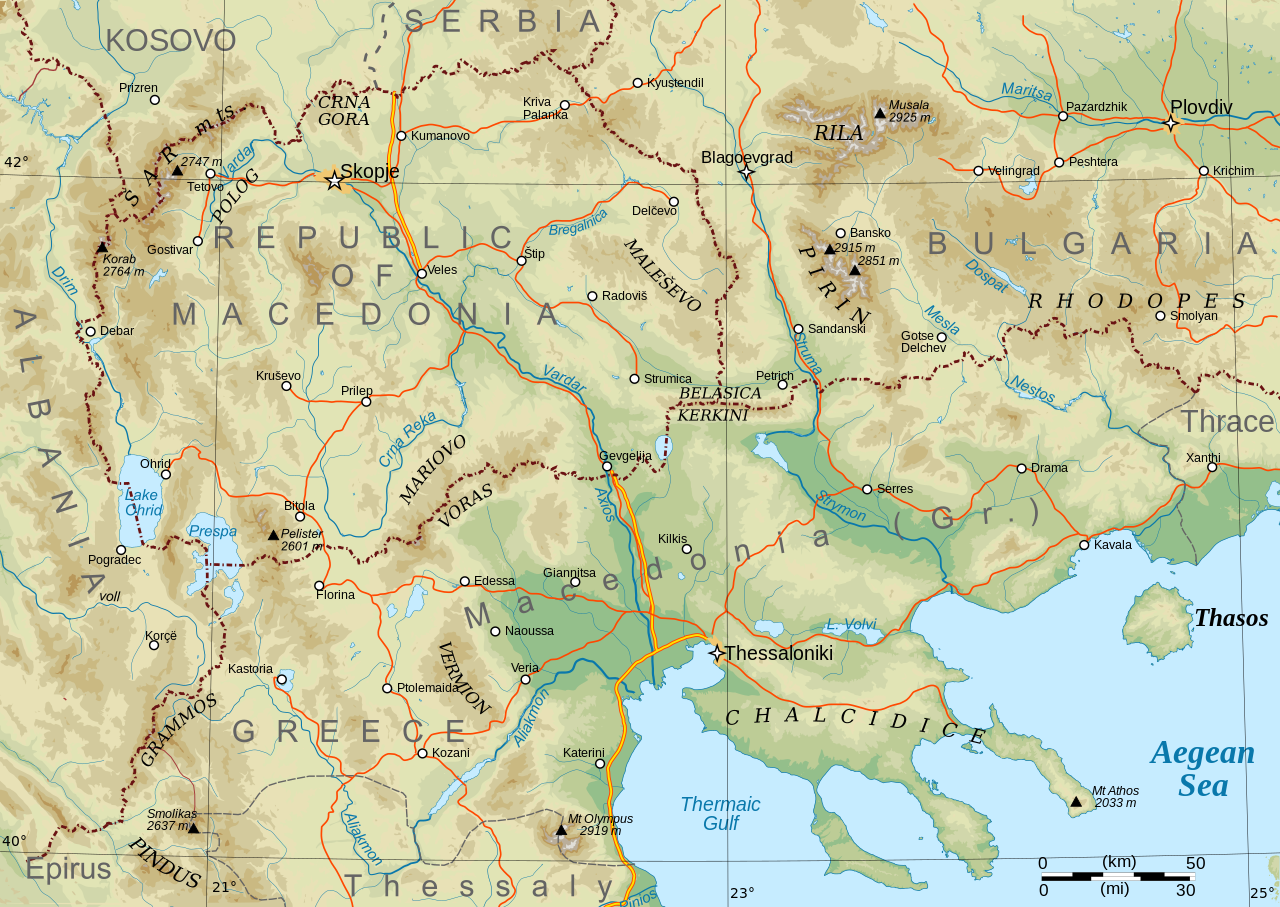
Lower Macedonia consisted of the fertile alluvial plains along the Aegean coast, watered by the Haliacmon and Axius rivers. This was the kingdom's agricultural heartland, producing grain, cattle, and the powerful horses that would become the pride of the Macedonian nobility. The royal family, the Argead dynasty, had its power base here, ruling from cities like Aigai and later Pella.
Upper Macedonia, by contrast, was a rugged, mountainous territory. Comprised of several distinct cantons like Orestis, Elimiotis, and Lyncestis, this region was dominated by forests and pastoral lands. Life here was harder, and society was organized not around cities but around powerful, semi-independent noble families who often challenged the king's authority.
This internal split between the settled, agricultural lowlands and the tribal, pastoral highlands created a constant political tension that early Macedonian kings struggled to manage.
The Resources of a Rugged Land
Macedonia's varied geography endowed it with a wealth of natural resources that were the envy of its neighbors and the foundation of its power. The following text provides a concise overview of the country's natural riches.
This article from Livius.org clearly lays out the resources provided by the two distinct parts of Macedonia.
Please read the entire section titled Country. As you read, take note of how the resources are split between Lower Macedonia (the plains) and Upper Macedonia (the mountains). Also, pay attention to the crucial point about the coastline and its lack of natural harbors.
As you've just read, Macedonia’s wealth was diverse:
- From the Plains: An abundance of grain and pasture for cattle and, most importantly, horses.
- From the Mountains: A seemingly endless supply of timber and pitch, crucial for shipbuilding across the Greek world. The mountains also held rich deposits of iron, gold, and silver, which would eventually fund the Macedonian army. The forests provided game for hunting and valuable furs.
However, notice the critical disadvantage mentioned: the flat coast offered few good harbors. This simple geographic fact meant the Macedonians never developed into a major sea-faring nation like Athens. Their focus, and their strength, would remain on land.
The following clip visually summarizes the richness of the Macedonian landscape and the resources it offered.
Ancient Macedonia: History and Culture (Documentary)
This segment from the documentary "Ancient Macedonia: History and Culture" brings the landscape and its resources to life.
Please watch the section from "a geographically diverse kingdom". This provides a vivid picture of the rivers, forests, wildlife, and mineral wealth that formed the basis of the Macedonian economy and society.
A Society Forged by the Landscape
This unique environment, split between plains and mountains, fostered a social structure quite different from that of the city-states (poleis) in southern Greece. The rugged, isolated nature of Upper Macedonia, in particular, preserved an older, more heroic way of life.
In the highlands, society was organized around powerful, land-owning nobles who lived in fortified rural estates, not cities. These nobles commanded the personal loyalty of the herders and farmers in their canton. This system, where a "king of kings" in the lowlands tried to assert authority over proud, semi-independent highland chieftains, was a source of constant instability.
The Rise of Macedonia under King Philip II (359-336 BC).
This text describes the "Bronze-Age" feel of Macedonian society and the challenges it posed to the king.
In the introductory paragraphs, please read the description of Macedonia's social structure, starting from a rugged mountainous region. This passage highlights the power of the local nobles in their isolated cantons and the extreme precariousness of the king's position.
This social order has often been described as "Homeric" because it resembled the world described in the epics of Homer, where kings were "first among equals," ruling by personal authority and military prowess, constantly having to earn the respect of other powerful warrior-aristocrats. The abundance of forests and game also meant that hunting was not just a source of food but a central pillar of aristocratic male culture, a way to display courage and skill.
This monarchic, tribal, and martial society stood in stark contrast to the emerging democratic and oligarchic city-states of the south, a difference that would heavily influence how other Greeks perceived the Macedonians.
A Fortress, a Prize, and a Frontier
Finally, Macedonia's geography determined its relationship with the outside world, making it simultaneously a fortress, a prize, and a frontier zone.

-
A Natural Fortress: As you can see from the maps, Macedonia is ringed by mountains. The Pindus range to the west formed a difficult barrier against the Illyrians, and other mountains defined its borders with Thrace and Thessaly. This topography made the kingdom a "compact easily defended state," but it also contributed to its relative isolation from the main currents of Greek political life.
-
A Coveted Prize: The very resources that made Macedonia rich—especially its timber and gold—made it a target for more powerful states. As we saw in the last lesson, Athens was highly dependent on Macedonian timber for its navy and established a strategic colony at Amphipolis to control access to these resources. This turned Macedonia into an arena for the ambitions of outside powers.
-
A Frontier Zone: Perhaps most importantly, Macedonia was a frontier state. It was the buffer between the Hellenic world to the south and the tribal peoples of the Balkans to the north. This had two major consequences. First, it bred a tough, resilient, and militaristic society, as the Macedonian kings and nobles were in a state of near-constant, low-intensity warfare with their Illyrian and Thracian neighbors. Second, this constant interaction, which included not just war but also trade and intermarriage with non-Greek peoples, led many southern Greeks to view the Macedonians as not being "fully" Greek—as semi-barbarians, tainted by their proximity to the "other."
Conclusion
In this lesson, we have seen how Macedonia's destiny was written into its landscape. The mountains and plains were not just a backdrop for history; they were active agents in it.
The key takeaways from our discussion are:
- The division between Upper and Lower Macedonia created a fundamental social and political fault line within the kingdom.
- The land provided immense wealth in the form of timber, precious metals, and horses, which gave Macedonia great potential but also made it a target for foreign powers like Athens.
- The rugged geography fostered a distinct, "Homeric" social structure based on a warrior aristocracy, which was very different from the city-state culture of southern Greece.
- Its position as a mountainous frontier state made Macedonia both defensible and militarily hardened, while also shaping the perception of its people as being "less civilized" by other Greeks.
This last point—the perception of Macedonians by their southern cousins—is a fascinating and contentious issue that lies at the heart of our next lesson. We will directly tackle the historical debate over Macedonian "Greekness" and explore how these views on identity shaped the politics of the entire Greek world.