Welcome to Module 2, "The Architecture of Anxiety." In our last lesson, we confronted the difficult but essential question of what we avoid knowing about ourselves. This practice of facing uncomfortable truths is the perfect groundwork for our topic today. Often, the very things we try to suppress or avoid become the primary fuel for our anxiety.
Today's lesson addresses a foundational aspect of this topic. Our learning outcome is to analyze anxiety as a bodily sensation and a signal, distinct from its narrative content.
We will deconstruct the experience of anxiety, moving beyond the whirlwind of worried thoughts to the raw, physical feelings beneath. You will learn to see these sensations not as an enemy to be defeated, but as a form of information—a signal from your body that asks for attention, not resistance. This shift in perspective is a crucial first step in building emotional resilience and inner clarity.
1. The Two Faces of Anxiety: Sensation and Story
We typically think of anxiety as worrying—a storm of "what if" thoughts, catastrophic predictions, and mental replays. This is the cognitive or narrative component. But there is another, more primary component: the physical sensations in your body.
To begin, let's establish a clear framework for this distinction.
Anxiety is more than worry - 10 Scary Physical Symptoms
Dr. Tracey Marks, a psychiatrist, offers a very clear explanation of the two parts of anxiety. This will help you begin to separate them in your own experience.
Please watch from 00:23 to 01:05. Focus on how she defines the 'cognitive' and 'somatic' aspects of anxiety.
The somatic, or physical, side of anxiety is not a metaphor. It is a set of real, measurable physiological events.
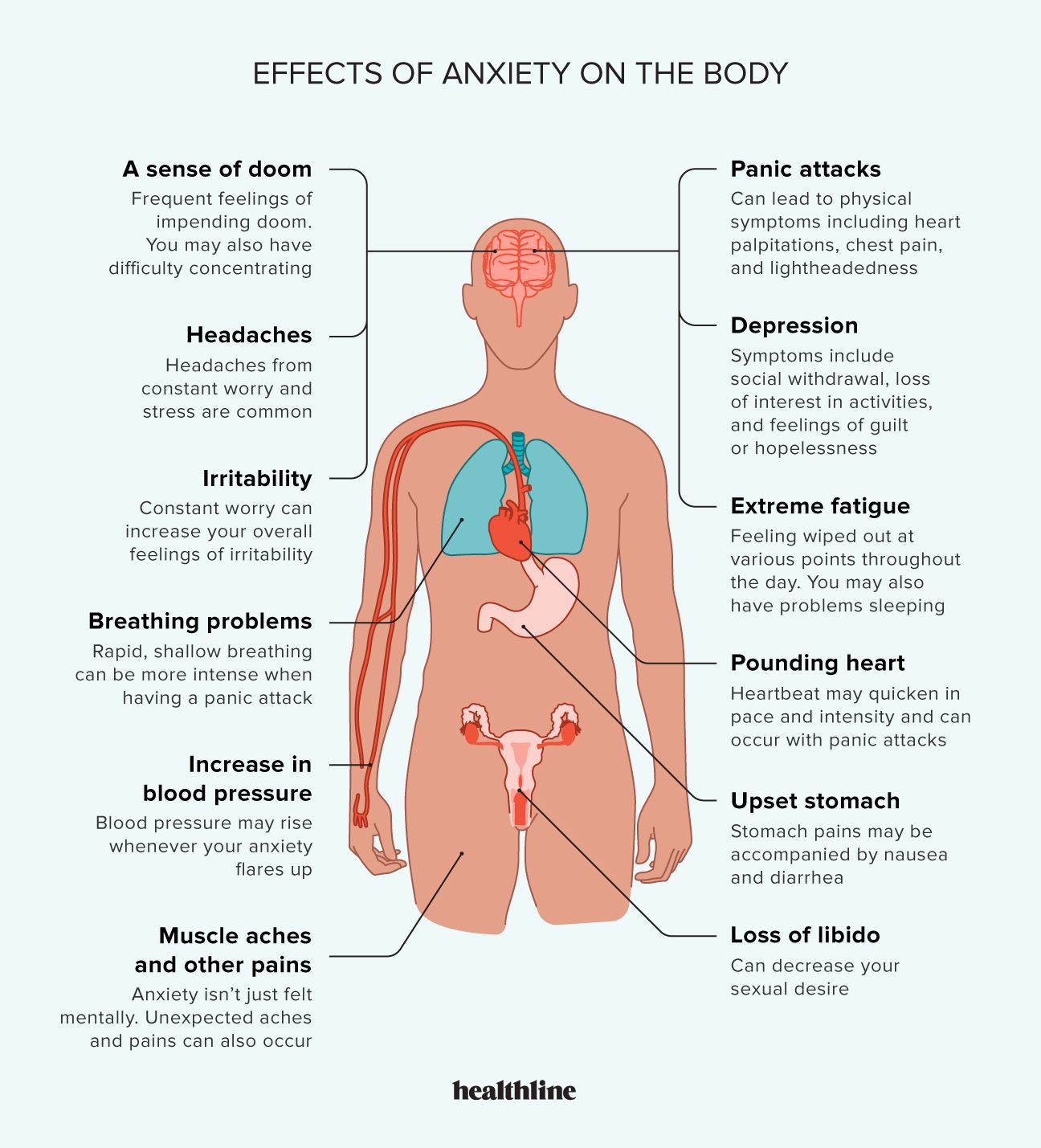
These physical symptoms can be unsettling, and sometimes even frightening. Understanding what they are and that they are a common part of anxiety can itself be a relief.
Anxiety is more than worry - 10 Scary Physical Symptoms
Dr. Marks goes on to list some of the more intense physical symptoms that can surprise people. Recognizing them as part of an anxiety response is the first step toward not being controlled by them.
Now watch from 01:35 to 04:20. As you watch her list the symptoms, notice if any are familiar to you. Pay close attention to her explanation at the end about the 'fight or flight' response and how it can occur even without an obvious trigger.
So why does this happen? Why does a worried thought about a future event cause your heart to pound as if a predator were in the room? The answer lies in our brain's ancient survival wiring.
Anxiety: When Your Body Responds to Made-Up Stories
This article, 'Anxiety: When Your Body Responds to Made-Up Stories,' uses a fantastic analogy to explain this process. It provides the 'why' behind the physical experience of anxiety in a very accessible way.
Please read the sections 'The Evolutionary Basis of Our Physical Response' and 'The Movie Research Connection.' Focus on the key point: the amygdala, your brain's alarm system, cannot differentiate between a real threat and an imagined one. The movie analogy is a powerful illustration of this.
This is a crucial insight: your body responds to the story of danger as if it were a fact of danger. The narrative in your mind triggers a real, physical cascade of events.
2. The Practice of Separation: Isolating the Sensation
Our goal now is to use this understanding to create a space between the sensation and the story. The sensations are real, but the narrative that often accompanies them ("This feeling is unbearable," "Something is terribly wrong," "I'm losing control") is an interpretation. By separating them, we rob the anxiety cycle of its fuel.
This is the core skill of this lesson: to shift from saying "I am anxious" to observing "I am feeling the sensations of anxiety in my chest and stomach."
The article you just read gives direct advice on how to begin this practice.
Anxiety: When Your Body Responds to Made-Up Stories
Let's return to the article one more time for its practical guidance on how to begin this separation.
Please read the section 'How to Calm Your Anxiety,' focusing specifically on the first point: 'Increase Awareness of the Thought-Feeling Connection.' This directly addresses the learning outcome for today.
Test your understanding!
Think of a recent time you felt anxious. On a piece of paper (or just in your mind), create two columns.
- In the first column, list only the raw physical sensations you can recall (e.g., "tightness in throat," "cold hands," "buzzing feeling in legs," "upset stomach").
- In the second column, list the thoughts, interpretations, or stories that were running through your mind at the same time (e.g., "I'm going to make a fool of myself," "What if I get sick?," "This feeling will never end").
The goal isn't to analyze or solve anything, but simply to practice distinguishing these two separate streams of experience.
3. The Sensation as a Signal: A Practical Exercise
Once we can observe the physical sensation without being immediately swept away by the narrative, we can change our relationship to it. Instead of treating the sensation as a threat to be resisted or eliminated, we can approach it with curiosity and view it as a signal.
What is it signaling? It might be a message that you are in a situation that challenges you, that you care deeply about an outcome, or as we saw last week, that you are avoiding something important. The exact message is less important right now than the change in approach: from resistance to listening.
What to do with Anxiety in Your Body - Break the Anxiety Cycle 24/30
The channel 'Therapy in a Nutshell' provides an excellent guided practice for this shift in relationship. It demonstrates how to sit with anxious sensations and treat them with compassionate attention.
First, watch from the beginning to 01:50 to understand why fighting or avoiding the sensations is counterproductive. Then, watch from 02:22 to the end (07:36). As you watch, I encourage you to pause and follow along with the exercise yourself. Find a quiet spot and actually try the technique she describes. The intention is not to make the feeling go away, but to offer it your attention and change your response to it.
This practice—of turning toward the physical sensation with kindness and curiosity—is a profound act of self-regulation. It tells your nervous system, on a pre-verbal level, that you are safe and that you can handle your own internal states.
Conclusion
Today we dissected the experience of anxiety, separating the raw physical data from the mental narrative. This distinction is the critical first step toward reclaiming your inner authority. You don't have to be a hostage to the stories your mind creates in response to physical sensations.
Key Takeaways:
- Anxiety has two distinct components: the somatic (physical sensations) and the cognitive (the mental narrative or story).
- Your body's survival system reacts to imagined threats ("made-up stories") just as it would to real ones, creating tangible physical symptoms.
- A key skill is to practice separating the sensation from the story. You can notice the feeling of a tight chest without being swept away by a catastrophic narrative about it.
- By turning toward physical sensations with curiosity and compassion, you can reframe them as signals or messengers, rather than as enemies to be fought. This changes your relationship with anxiety at a fundamental level.
In our next lesson, we will build on this foundation. Now that you understand the mechanics of anxiety, we will explore its deeper sources, learning to distinguish between fear (a response to a concrete threat) and existential anxiety (a deeper unease arising from facing freedom, mortality, and meaninglessness).