Hello! Let's continue our journey into ESOP taxation in India.
In our last lesson, we focused on the first tax event: what happens when you exercise your options. We learned how to calculate the perquisite value (the "paper gain") and the immediate tax liability (perquisite tax) that your employer deducts from your salary.
Now that you've exercised your options and paid the first tax, you are the proud owner of company shares. The ultimate goal, however, is usually to convert these shares into cash. This brings us to the second major tax event, which is the focus of today's lesson.
Our learning goal is to explain how capital gains tax (short-term and long-term) applies when you sell the acquired shares. We'll break down what this tax is, how it's classified, and what rules apply.
The Second Tax Event: Selling Your Shares for a Profit
After exercising your options, you hold shares as an asset, similar to owning a piece of property or gold. When you eventually sell these shares—for example, after your company goes public (IPO) or gets acquired—you will hopefully sell them for a higher price than what they were worth when you acquired them.
This profit you make is called a Capital Gain, and the government requires you to pay a tax on it.
What is Your "Cost" for Calculating the Profit?
This is a very important point. To calculate your profit (Capital Gain), you need to subtract your "cost" from your "sale price."
Capital Gain = Sale Price - Cost of Acquisition
You might think the cost is the exercise price you paid. However, to prevent you from being taxed twice on the same gain, the tax rules define your Cost of Acquisition as the Fair Market Value (FMV) of the share on the day you exercised it.
Why? Because you already paid perquisite tax on the gain from the exercise price up to the FMV. So, for this second tax event, we only consider the new gain you've made since that day.
Employee Guide to ESOP Taxation and Compliance in India
The article 'Employee Guide to ESOP Taxation' from Ascentium clearly explains this concept. It highlights how your cost for calculating capital gains is the FMV on the exercise date, not the price you paid.
Please read the section titled 'Tax Implication at the time of transfer/Sale of ESOPs'. Focus on the bullet points explaining how capital gains are computed and what is considered the 'purchase cost'.
Short-Term vs. Long-Term Gains: Time is the Key
The amount of capital gains tax you pay depends heavily on one factor: the holding period. This is the length of time you owned the shares before selling them.
The clock for the holding period starts ticking on the date you exercise your options and stops on the date you sell the shares.
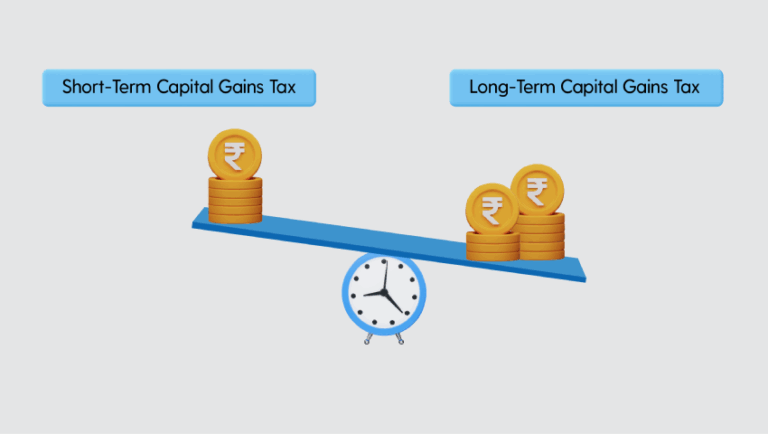
Based on the holding period, your profit will be classified as either:
- Short-Term Capital Gain (STCG): If you sell your shares relatively quickly.
- Long-Term Capital Gain (LTCG): If you sell your shares after holding them for a longer duration.
Generally, the tax rates on LTCG are lower, which incentivizes investors to hold onto their assets for longer.
The Rules of the Game: Holding Periods and Tax Rates
The exact holding period and tax rates depend on whether the company's shares are listed on a stock exchange (like a public MNC) or unlisted (like a private startup).
The video 'How are ESOPs in India taxed' by Mint does an excellent job of explaining the different holding periods for listed and unlisted shares. Watch this short clip to understand the fundamental difference.
Please watch the segment from 02:38 to 03:31. The first part (until 03:05) covers listed shares, and the second part covers unlisted shares. Pay close attention to the timeframes mentioned (one year vs. two years).
As the video explained, the rules are different. Let's summarize them in a table for clarity.
| Share Type | Holding Period for it to be Long-Term | Tax Rate on Short-Term Gains (STCG) | Tax Rate on Long-Term Gains (LTCG) |
|---|---|---|---|
| Listed Shares (e.g., from an IPO'd company or public MNC) | More than 12 months | Flat 15% (+ cess) | 10% (+ cess) on gains over ₹1 lakh per year |
| Unlisted Shares (e.g., from a private startup) | More than 24 months | Taxed at your income tax slab rate (e.g., 30% + cess) | Taxed at 20% (+ cess), potentially with a benefit called indexation.* |
*Note on Indexation: This is a way to adjust your cost price for inflation, which can reduce your taxable gain. However, tax laws evolve, and there have been recent changes around this. The key takeaway for now is that there's a significant tax rate difference between STCG and LTCG.
The most important takeaway from this table is that selling unlisted startup shares too quickly (in less than 24 months) can be very expensive from a tax perspective, as the profit is added to your income and taxed at your highest slab rate (e.g., 30%). By holding for more than 24 months, the tax rate on your profit drops to 20%.
Test your understanding!
Imagine you exercised options in a private Indian startup on April 1, 2024. The Fair Market Value (FMV) on that day was ₹100 per share.
You are considering selling these shares on two possible dates:
- Scenario A: Sell on March 1, 2026.
- Scenario B: Sell on May 1, 2026.
Which scenario would result in a Long-Term Capital Gain (LTCG)?
Show answer
The shares are from a private startup, so they are unlisted. For unlisted shares, the holding period must be more than 24 months to qualify for LTCG.
-
Your holding period starts on April 1, 2024.
-
The 24-month mark is April 1, 2026.
-
Scenario A (Sell on March 1, 2026): The holding period is less than 24 months. This would result in a Short-Term Capital Gain (STCG).
-
Scenario B (Sell on May 1, 2026): The holding period is more than 24 months. This would result in a Long-Term Capital Gain (LTCG).
This simple one-month difference in selling dates changes the entire tax classification of your profit!
Conclusion
Congratulations on completing this lesson! You've now demystified the second and final tax event in the ESOP lifecycle. Understanding this is critical for making informed decisions about when to sell your shares to maximize your final take-home wealth.
Key Takeaways
- Selling your ESOP-acquired shares triggers Capital Gains Tax.
- The gain is calculated as: Sale Price - FMV at the time of exercise.
- The tax you pay depends on whether the gain is Short-Term (STCG) or Long-Term (LTCG).
- This classification is based on the holding period, which starts from your exercise date.
- The rules for the holding period and the tax rates are different for listed (>12 months) and unlisted (>24 months) shares. Holding for longer is generally more tax-efficient.
Preview of the Next Lesson
We've covered the rules of capital gains tax. In the next lesson, we will put this knowledge into practice. We will focus on the learning outcome: Calculate the capital gains tax for a given share sale scenario. We'll work through concrete examples with real numbers to see exactly how much tax you would owe in different situations.