In our previous lesson, we examined how the Strawman fallacy operates through oversimplification, reducing complex choices to simplistic, easy-to-attack caricatures. We now move to a more aggressive and often malicious variant of this fallacy.
This lesson focuses on Strawman by Distortion. The objective is to deconstruct and counter arguments that don't just simplify your position but actively twist your stated reasons into something you never said or intended. Where oversimplification erases nuance, distortion corrupts meaning. This tactic changes your argument from "I am doing X for reason P" to "You are doing X for the twisted, negative reason Q." Your goal is to expose this misrepresentation and refuse to defend the distorted version of your stance.
The Anatomy of Distortion
A Strawman by Distortion is a deliberate misrepresentation. The arguer takes your words, alters their meaning, and then attacks the newly created, indefensible position. As a social researcher, you are precise with your language; this fallacy weaponizes imprecision, twisting your stated motives into their negative opposites.
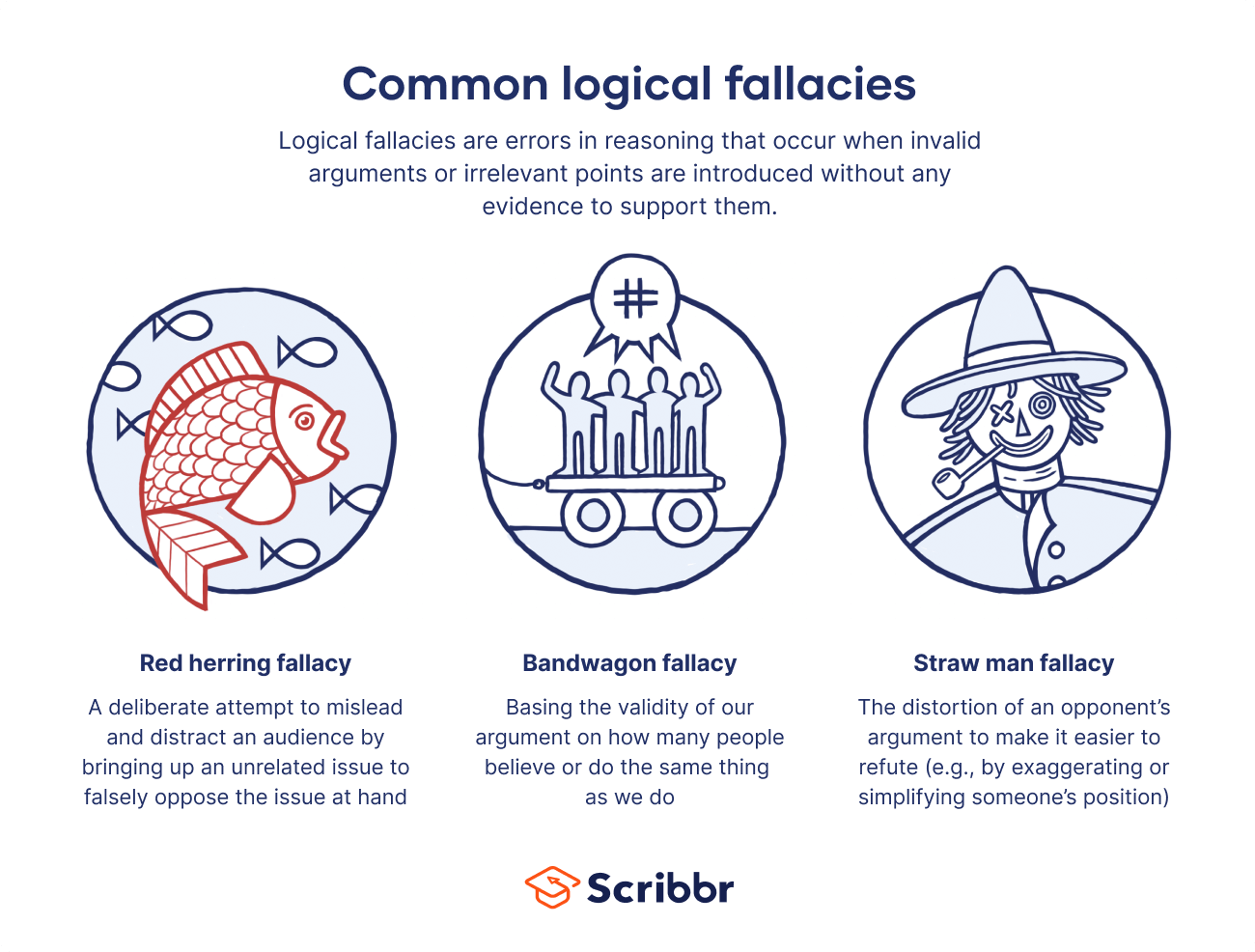
The process is insidious:
- You state your position clearly: "I am choosing this for reasons of personal confidence and consensual agreement."
- The arguer distorts your reason: They re-frame "confidence" as "arrogance" or "indecency," and "consensual agreement" as "manipulation" or "coercion."
- They attack the distorted reason: They then launch an attack against this new, twisted premise, making it seem as if they've defeated your actual argument.
To better understand this as a manipulation tactic, the following article by a couples therapist is highly relevant. It frames the Straw Man not just as a flaw in logic but as a deliberate attempt to control a conversation.
Emotional Manipulation Examples: 5 Tactics & How to Spot Them
This article from My People Patterns explains how logical fallacies can be used as tools for emotional manipulation in relationships. It provides a clear and direct analysis of the Straw Man tactic.
First, read the brief definition of what emotional manipulation is to contextualize the issue. Then, focus on the section "The Straw Man Tactic," paying close attention to the breakdown of how it works. Finally, take note of the direct and actionable advice in the section on How to Respond, as these strategies form the basis of an effective rebuttal.
As the article makes clear, the Strawman by Distortion is designed to derail the conversation and put you on the defensive. Your primary strategy is to refuse the bait. You must calmly and sharply reject the distorted premise and bring the focus back to what you actually said and meant.
Application: Correcting the Distortion
Your response must be a swift rejection of the twisted argument. You are not just clarifying a misunderstanding; you are correcting a deliberate misrepresentation.
Scenario 1: A woman wearing a low-cut outfit for personal style/confidence.
Your stated reason is about self-expression and the confidence derived from your personal aesthetic, perhaps amplified by the pride of having designed the garment yourself.
- Stated Reason: "I designed this top myself, and I feel confident and stylish wearing it."
- Fallacious Argument (Distortion): "So you're saying your 'confidence' is an excuse to be indecent in public? You think your personal 'style' gives you a free pass to make everyone else uncomfortable?"
- Deconstruction: This argument distorts the internal feeling of "confidence" into the external action of "being indecent." It twists "style" into a justification for causing discomfort. The arguer has replaced your positive, self-focused statement with a negative, other-focused accusation and is now attacking that instead.
- Witty, Sharp Rebuttal: "I said 'confident,' not 'indecent.' You're the only one making that connection. Let's stick to what I actually said."
- Alternative Rebuttal (more analytical): "You've distorted my statement. My feeling of confidence is about my relationship with myself and my design work. You've twisted that into a statement about other people. Please don't substitute your negative interpretation for my actual words."
Scenario 2: A wife in a consensual "open vee" relationship engaging with a lover.
The foundation of your choice is the sophisticated emotional and logistical work of maintaining a relationship built on explicit rules, consent, and communication.
- Stated Reason: "This is part of my marriage, which is built on a foundation of radical honesty and a clear, consensual agreement with my husband."
- Fallacious Argument (Distortion): "So 'honesty' is just your code word for hurting your husband without consequences? And this 'agreement' is something you coerced him into so you could cheat? That’s not a marriage, that’s manipulation."
- Deconstruction: This is a severe distortion. It takes the very pillars of your ethical framework—honesty and consent—and twists them into their opposites: deceit ("hurting him") and coercion ("manipulation"). The arguer fabricates a narrative of victimhood and aggression that is a complete distortion of the collaborative structure you described. They are attacking a fictional scenario of abuse, not your actual relationship.
- Witty, Sharp Rebuttal: "It takes a special kind of creativity to hear 'honesty and consent' and interpret it as 'coercion and cheating.' You're arguing with your own script, not with me."
- Alternative Rebuttal (drawing on your expertise): "You are fundamentally distorting the terminology. In the context of ethical non-monogamy, 'honesty' and 'agreement' are the very mechanisms that prevent what you're describing. You've created a straw man of a coercive relationship, which is the antithesis of the consensual structure I'm actually in. Your critique is invalid because it's aimed at a distorted version of my reality."
Conclusion
Strawman by Distortion is a more venomous tactic than oversimplification because it actively corrupts your words. It seeks to re-frame your rational, autonomous choices as something malicious, selfish, or harmful. By learning to spot and name this distortion, you neutralize its power.
Key takeaways from today's lesson:
- Identify the twist: Recognize when an opponent has taken your words and altered their meaning to create a more negative or easily attacked position.
- Name the fallacy: Explicitly point out the distortion. Phrases like, "That's a twist on what I said," or "You're misrepresenting my words," are direct and effective.
- Re-center your original point: After calling out the distortion, calmly restate your actual position to contrast it with the straw man your opponent has created. Do not debate the twisted version.
In our lessons so far, we've seen how arguments can be misrepresented by simplifying their complexity or distorting their meaning. In our next lesson, we will explore the final variant, Strawman by Overextension, where an opponent takes your argument and exaggerates its implications to an absurd degree.