Welcome back. In our last lesson, we examined the Appeal to People, a fallacy that equates popularity with correctness. We developed strategies to counter the pressure of the "crowd" by re-centering the conversation on individual principles and logical merit. Today, we turn our attention to an even more primal form of persuasion: the Appeal to Emotion.
When an argument based on authority or popular opinion fails to land, the next tactic is often to bypass the intellect entirely and target the heart. This lesson will equip you to identify, deconstruct, and counter arguments that substitute feelings—such as fear, pity, or disgust—for factual evidence and logical reasoning. Your goal is to remain grounded in logic when faced with an emotional barrage and to deliver sharp rebuttals that expose the flaw without getting entangled in the emotion itself.
The Logic of Emotion vs. Emotional Logic
At the outset, we must draw a crucial distinction. An argument is not fallacious simply because it mentions or discusses emotion. As a social researcher, you are acutely aware that emotions are a fundamental aspect of human experience and relationships; they are valid topics of discussion and consideration. The fallacy—argumentum ad passiones—occurs when emotion is used to replace a logical argument, with the intent of persuading through an emotional response rather than rational assessment.
The infographic below lists "Emotional Appeal" as a common manipulation technique. The counter-strategy is simple but powerful: "Stay grounded; don't let emotions dictate your decisions."
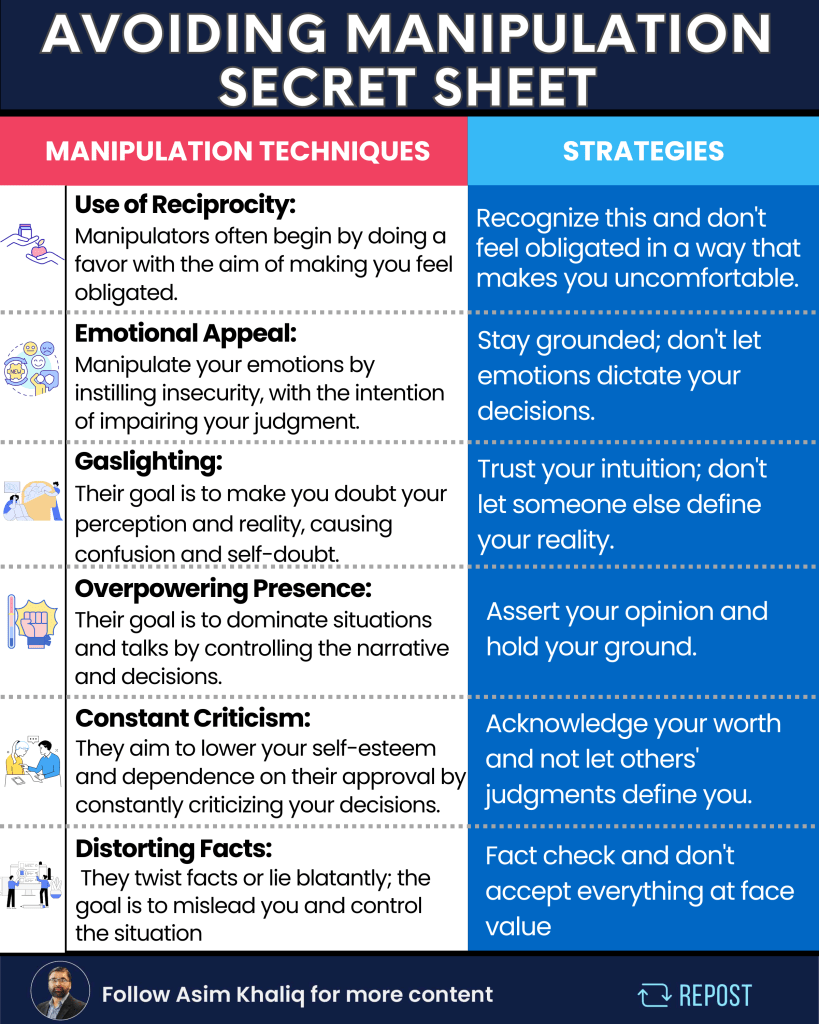
This distinction between a valid discussion of emotion and a fallacious appeal is critical. The following video offers a clear explanation.
How NOT To Use Logical Fallacies (With Examples)
In his video "How NOT To Use Logical Fallacies," Alex O'Connor clearly distinguishes between the legitimate discussion of emotional states and the fallacious use of emotion to bypass logic.
Please watch the segment from the beginning of the section on the Appeal to Emotion. The speaker explains that the fallacy occurs when you try to spark an emotional response instead of providing a proper argument. Then, watch his analysis of the word "innocent" from this real-life example to see how a word with emotional connotations can still be a necessary part of a logical definition, not a fallacy.
As the video clarifies, arguing that a woman's emotional distress should be considered in a debate about autonomy is a valid point based on suffering. Arguing that one should agree with a position because of a heart-wrenching photo is a fallacious appeal. This is the difference between incorporating emotion as a relevant data point in a moral calculus and using it as a weapon to short-circuit reason.

The Special Case of Disgust
In the specific scenarios we are analyzing, one of the most frequently weaponized emotions is disgust. Arguments against non-traditional fashion or relationships often lean heavily on terms like "disgusting," "sickening," or "unnatural." A fascinating paper on the moral psychology of disgust reveals a critical weakness in this line of attack.
[PDF] The Limits of Appealing to Disgust | Josh May
This academic paper by Josh May explores the science behind disgust and its role in moral judgment. It provides a powerful intellectual framework for dismantling arguments based on repugnance.
First, read the section titled "2.2 Disgust Follows Moral Judgments". Pay attention to the argument that disgust is often an effect, not a cause. The examples of vegetarians becoming disgusted by meat and changing attitudes toward smoking illustrate how a moral belief can create the feeling of disgust, not the other way around. Next, read the section titled "3. Changing Minds?". This part synthesizes the evidence, concluding that making an audience feel disgust is unlikely to change their mind because the feeling typically only arises if they already believe the act is wrong. It also notes that sometimes what people call "disgust" is simply a way to express anger.
This research provides an essential insight for your rebuttals: when someone says they are "disgusted" by your choice, they are not presenting evidence against it. Rather, they are describing the emotional symptom of their pre-existing judgment. Their feeling isn't the reason for their condemnation; it's the result of it. This beautifully disarms the emotional force of their claim, reframing it as a subjective reaction rather than an objective argument.
Application 1: Style and Manufactured Fear
Scenario: You are at a friend's party, wearing a low-cut top that you find both stylish and empowering. An acquaintance approaches you and says, "I have to be honest, seeing an outfit like that in public just makes me so anxious for you. It's practically inviting the wrong kind of attention. Don't you worry about what could happen?"
-
Fallacy Deconstruction: This is a classic Appeal to Emotion, specifically fear and anxiety.
- Premise: The outfit provokes feelings of anxiety in the speaker.
- Unstated (and Fallacious) Leap: The speaker's anxiety is presented as evidence of a genuine, imminent threat.
- Conclusion: You should modify your behavior (not wear the outfit) to placate the speaker's fear. The argument avoids any logical discussion of consent or personal responsibility, relying instead on a vague, emotionally charged warning.
-
Witty, Sharp Rebuttal: "I appreciate you sharing your feelings, but I don't make my style choices based on other people's anxieties. My outfit is a statement of confidence, not an invitation for trouble. The only thing we should be anxious about is a culture that blames a woman's clothing for a man's bad behavior."
- Why it works: It acknowledges the feeling ("I appreciate you sharing your feelings") but immediately dismisses its relevance to your decision-making ("but I don't make my style choices based on..."). It reframes your choice in positive terms ("statement of confidence"). The final sentence masterfully turns the appeal to fear back on the faulty premise itself, redirecting the "anxiety" to the true problem: the culture of victim-blaming, not the clothing.
Application 2: Relationships and Projected Disgust
Scenario: During a conversation, a friend discovers that you are in a consensual open vee relationship and that your husband is aware of and supports your relationship with your lover. They recoil and say, "That's just sickening. I can't imagine betraying my partner like that. It's a disgusting way to treat a marriage, and it's heartbreaking to even think about."
-
Fallacy Deconstruction: This argument is a pure Appeal to Emotion, primarily disgust ("sickening," "disgusting") and pity/sadness ("heartbreaking betrayal").
- Premise: The speaker feels disgust and projects feelings of betrayal onto your relationship.
- Fallacy: The speaker's personal emotional reaction is presented as a universal moral verdict on your marriage.
- Conclusion: The relationship is inherently wrong because it provokes negative feelings in the speaker. It completely ignores the logical foundation of your relationship—consent and honesty—in favor of an emotional outburst.
-
Witty, Sharp Rebuttal: "It sounds like you're reacting to the idea of this happening without your partner's consent, which would indeed be heartbreaking. But that's not my marriage. We build our relationship on radical honesty, so what you're feeling is disgust for a betrayal that never happened. The only thing that's truly heartbreaking is judging a relationship you don't understand."
- Why it works: It cleverly agrees with the emotion but applies it to a different, hypothetical scenario ("without your partner's consent"), thus validating their feeling while invalidating its application to you. It uses the phrase "disgust for a betrayal that never happened" to expose the core error in their thinking, directly applying the insight from the Josh May paper. The final line is a sharp reframe that turns the accusation of causing "heartbreak" back on the judgmental person.
Key Takeaways
- Emotion as a Replacement, Not a Topic: The Appeal to Emotion fallacy occurs when feelings are used to bypass or replace a logical argument, not when emotions are simply part of the conversation.
- Feelings Are Not Facts: An interlocutor's fear, anxiety, or disgust is their subjective experience, not objective evidence that your choice is wrong.
- Disgust Follows Judgment: A person's feeling of disgust is often the result of a prior moral judgment, not the reason for it. Pointing this out defuses the power of their claim.
- Acknowledge and Pivot: An effective rebuttal strategy is to briefly acknowledge the emotion, then pivot sharply back to the logic of the situation, exposing the irrelevance of their feelings to your autonomous choices.
In our next lesson, we will address the Appeal to Moderation. This fallacy is more subtle, arguing that a compromise between two positions is always the correct path—another clever way to avoid engaging with the actual logic of a choice.