Welcome back. In our last two lessons, we explored tactics of deflection and faulty justification, such as Whataboutism and Two Wrongs Make a Right. Today, we turn our attention to one of the most frustrating bad-faith tactics you will encounter: Moving the Goalposts.
This fallacy occurs when, in the middle of a debate, one party changes the criteria for acceptance or proof after the other party has already met the original standard. It’s a strategy designed to make it impossible for you to ever "win" the argument or have your position accepted, because the finish line is perpetually moved just out of reach. Your goal in this lesson is to learn not just to recognize this tactic, but to refuse to play the game, exposing the flawed mechanics of the argument itself.
Deconstructing the Moving Goalposts
The "Moving the Goalposts" fallacy is less an error in logic and more a manipulative behavior. It signals that your interlocutor is not interested in truth or understanding, but in ensuring their pre-existing conclusion remains unchallenged. As you meet each objection, they simply invent a new one, ensuring you are always on the defensive and they never have to concede a point.
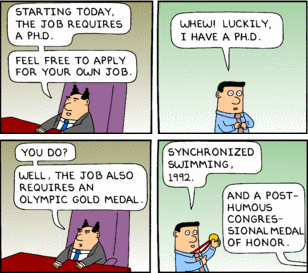
This constant shifting of standards is a signature move of people who are arguing in bad faith. The writer Richard Carrier categorizes this not just as a fallacy, but as a behavioral tactic he calls "Infinite Goal Posts," characteristic of those who substitute an endless quantity of weak arguments for a few good ones.
Three Common Tactics of Cranks, Liars, and Trolls
To better understand the mindset behind this tactic, please read a selection from Richard Carrier's article. It provides a powerful framework for seeing "Moving the Goalposts" as a deliberate strategy rather than a simple mistake.
Start by reading the introduction to these tactics, which distinguishes between logical fallacies and behavioral strategies. Then, read the section titled Infinite Goal Posts, focusing on how the endless repetition of this fallacy becomes a behavior. Pay close attention to Carrier's advice on how to respond, particularly the principle that if your opponent dismisses your best evidence, you are not obligated to address their weaker points. This is the foundation for your counter-strategy.
As Carrier points out, the correct response is not to exhaust yourself trying to score on a field with no fixed goals. The correct response is to stop playing and call out the game master for rigging the rules.
Application 1: Style and Unwinnable Standards of Modesty
Judgments about clothing are fertile ground for moving goalposts, as standards of "appropriateness" are often subjective and easily manipulated.
Scenario: You are at a family gathering wearing a stylish, form-fitting dress with a low-cut neckline that you designed yourself. A relative makes a critical comment: "I'm not sure that dress is appropriate. Decent women don't feel the need to show so much."
- Initial Goalpost: The criterion for "decency" is covering up.
- Your Response: You calmly point out that similar styles are featured on red carpets, in mainstream fashion magazines, and are worn by respected public figures. You state that your style aligns with current fashion and your personal sense of aesthetics. You've met the implied standard by demonstrating your choice is socially normative, not an outlier.
- Moving the Goalposts: Your relative shifts their argument. "I'm not talking about celebrities. I'm talking about real virtue. A truly confident woman doesn't need external validation or to attract that kind of attention. She finds worth in her character, not her body."
- Deconstruction: The goalpost has moved. The original, unstated standard was "wear what is socially acceptable." When you proved your dress met that standard, it was instantly replaced with a new, much higher, and unfalsifiable one: "be motivated by pure, non-attention-seeking virtue." The critic has shifted the argument from an external, objective standard (what is fashionable) to your internal, subjective motive, which they can interpret however they please. They are no longer judging the dress; they are judging your soul, a target you can never prove is "pure" enough.
- Witty, Sharp Rebuttal: "So, a moment ago, the issue was the dress itself being 'inappropriate.' Now that we agree it's a common style, the issue is my internal motivation. It seems that for every reason I provide, you'll find a new character flaw to object to. Let's be direct: Is there any explanation I could offer that you would find acceptable, or is the point simply to disapprove?"
- Why it works: It explicitly traces the argument's path, showing you've noticed the shift ("a moment ago... now..."). It names the pattern ("for every reason I provide, you'll find a new flaw"). The final question forces the issue. It's a calm, direct challenge that exposes their bad faith without being aggressive. It makes them either admit they are committed to their disapproval regardless of evidence, or abandon the attack.
Application 2: Relationships and Shifting Criteria for Validity
Non-traditional relationship structures are often targeted with a barrage of moving goalposts, as critics cycle through objections in an attempt to find one that sticks.
Scenario: You are explaining your consensual "open vee" relationship to a friend who is expressing concern. They start by stating, "You can't have a real marriage without sexual exclusivity. That's the foundation of commitment."
- Initial Goalpost: Commitment = sexual exclusivity.
- Your Response: You explain that for you and your husband, commitment is defined by radical honesty, emotional support, shared finances, and raising a family together. You argue that your agreements around seeing other people are built on this foundation and strengthen it through communication. You have countered their definition of commitment with your own, equally valid one.
- Moving the Goalposts: Your friend concedes that point but immediately raises another. "Okay, I see you have your own definition of commitment. But that can't be a stable environment for your relationship in the long run. Someone is bound to get jealous and it will all fall apart."
- Deconstruction: The goalpost has shifted from definition ("what commitment is") to durability ("will it last?"). When you successfully defended the principle of your relationship, your friend changed the criterion to a negative prediction about its future. If you were to provide evidence of many long-lasting open relationships (and you could), they would likely shift again: "But is it truly fulfilling?" or "But what about what other people will think?" The objections are not a genuine inquiry; they are a sequence of hurdles designed to be endless.
- Witty, Sharp Rebuttal: "We started by discussing whether a relationship could be committed without exclusivity. Now we're speculating about future jealousy. It feels like every time I address a concern, a new one appears in its place. This conversation is starting to feel less like a discussion and more like an endurance test. Are you genuinely trying to understand, or are you looking for a reason, any reason, for this not to work?"
- Why it works: Like the first rebuttal, it summarizes the shifting argument to show you're paying attention. The metaphor "endurance test" perfectly captures the feeling of being subjected to this fallacy. The final question is a masterful application of Carrier's advice: it confronts the behavior behind the argument. It politely but firmly questions their motive, forcing them to either engage in good faith or reveal that they have no intention of ever being convinced.
Key Takeaways
"Moving the Goalposts" is a powerful tool for those who want to argue without the risk of ever being wrong. Your strategy is not to become a better athlete, but to become the referee who calls out the cheating.
- Recognize the Shift: Notice when the criteria for "winning" the argument change as soon as you meet them.
- Don't Chase the Goalposts: Resist the urge to address the new argument. Engaging with it validates the tactic.
- Expose the Game: The most effective counter is to name the fallacy itself. Describe the pattern of shifting standards you have observed and question the sincerity of an argument that has no stable criteria for success.
By refusing to play this unwinnable game, you reassert control over the conversation and force your interlocutor to confront the dishonesty of their own argumentative strategy.
In our next lesson, we will examine the Masked Man Fallacy, a subtle error in reasoning about identity. This fallacy arises from confusing our knowledge about something with the thing itself, leading to faulty conclusions. It's a shift from the dynamic, bad-faith tactics we've been discussing to a more precise error of logic.