This module turns from the attorney general’s work to the checks on that work. It begins with elections, then examines how courts and other institutions can hold an officeholder accountable. The distinction for this lesson is between choosing who holds an office and deciding what that office is legally allowed to do.
In Texas, voters elect the attorney general statewide for a four-year term. That gives voters a recurring opportunity to judge the officeholder’s priorities and performance. It does not give the winner new authority beyond the Texas Constitution and applicable laws.
What voters choose
The Texas attorney general is an independently elected statewide official. Voters cast a vote for attorney general separately from their votes for governor and other offices. The Texas Constitution provides for a four-year term, so an attorney general who seeks to remain in office must face another election at the end of that term.
Before a general election, candidates may compete for a party’s nomination. A primary contest and a general election therefore serve different purposes: the first helps determine who will represent a party; the second determines who will hold the office. An incumbent can face a challenge for a party nomination as well as opposition in the general election.
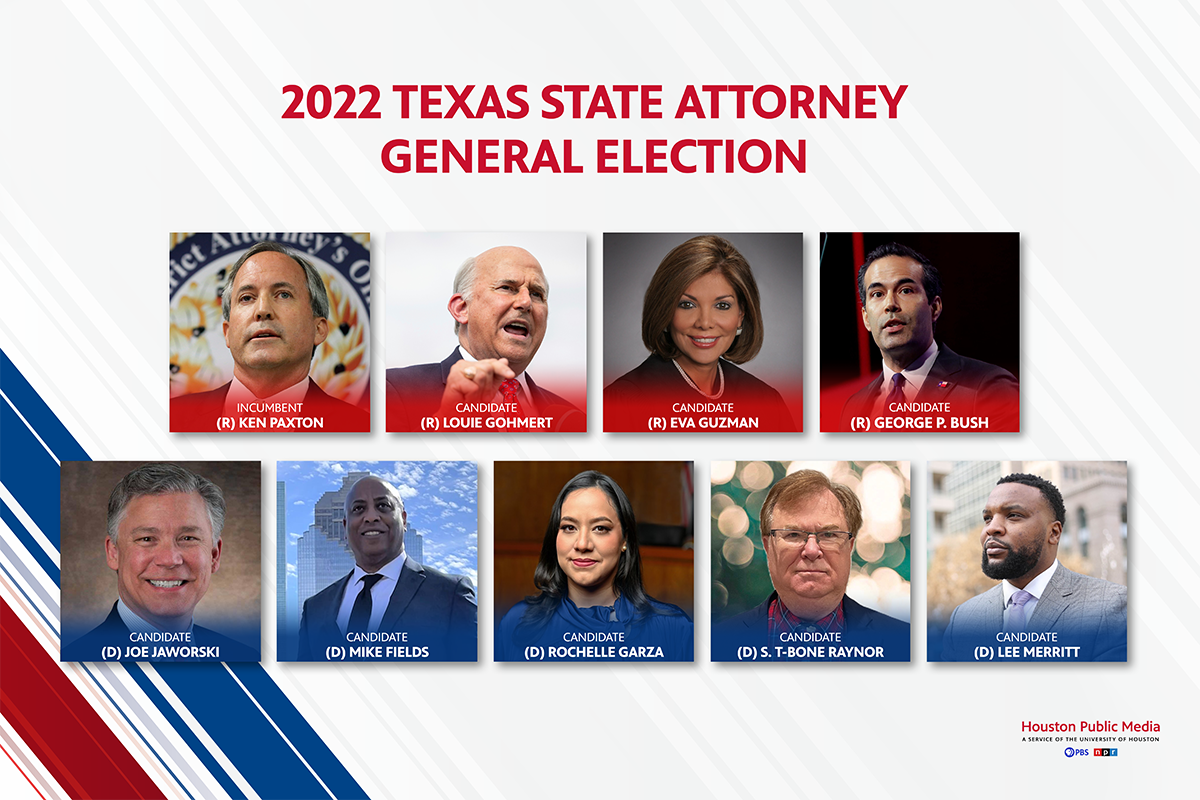
A statewide election gives people across Texas a say in a single officeholder. It also makes the officeholder publicly answerable for decisions made under that office’s name. Voters can retain an incumbent or choose someone else, weighing both a record of service and competing plans for the next term.
This is electoral accountability. It is periodic rather than a vote on every lawsuit or office decision. An election result identifies the person entrusted with the office for the term; it is not a legal ruling that every decision the person made was correct.
Judging priorities and performance
An attorney general’s office has numerous responsibilities, but not unlimited staff time or money. Within the law, its leadership makes consequential choices about emphasis: which authorized civil claims to pursue, how to allocate enforcement resources, and where to focus improvements in services such as child-support administration.
Consider two candidates who both acknowledge the office’s consumer-protection responsibilities. One proposes concentrating enforcement resources on deceptive practices affecting large numbers of consumers. The other proposes more attention to a different category of deceptive conduct. Voters can compare those priorities, then later examine what the elected attorney general actually did. The ability to set a lawful priority is not the ability to invent a new enforcement power.
Performance is broader than a count of cases won. A useful assessment connects what the officeholder promised with what the office was responsible for and what occurred during the term:
- In civil litigation, voters can examine the kinds of authorized cases brought or defended, the office’s stated reasons for pursuing them, and the results. A loss alone does not prove a case was irresponsible, just as a win alone does not prove every choice of resources was wise.
- In consumer protection, voters can consider whether the office pursued public enforcement against deceptive conduct and what those efforts achieved. The attorney general’s role remains public enforcement, not serving as every individual consumer’s private lawyer.
- In child-support services, voters can assess such matters as the administration and timeliness of services. The office must still operate within the legal rules governing those services; an election promise cannot make it either parent’s personal attorney.
- In legal opinions and other official work, voters can assess clarity, consistency, and judgment while remembering that an attorney general’s formal opinion is advisory, not a court judgment.
This kind of assessment calls for context. A court controls its own decision; the attorney general does not. Some duties are required by law, while others leave room for judgment. The officeholder can be held politically accountable for the choices within their control without being credited—or blamed—for everything that happens in a case or government program.
Campaign statements, official actions, court filings, and reported results can help voters compare promises with performance. They should also distinguish a promise about how to use existing authority from a promise that presumes authority the office does not have.
An election does not rewrite the office’s powers
The Texas Constitution and laws define the attorney general’s responsibilities and limits. Election determines who exercises that authority. It does not, by itself, change what the authority is.
| Campaign claim | What election can change | What election cannot do on its own |
|---|---|---|
| “I will devote more attention to authorized consumer-protection cases.” | Put in office someone who favors that priority, subject to legal duties and available resources. | Authorize a claim that existing law does not permit. |
| “I will improve child-support service.” | Put in office someone who directs lawful administrative improvements. | Erase governing requirements or turn the office into a parent’s private lawyer. |
| “I will personally take over every local criminal prosecution.” | Allow voters to endorse or reject the candidate’s stated approach. | Transfer local prosecutors’ ordinary authority to the attorney general. |
The last claim illustrates why popular support and legal power must be kept separate. Texas district and county attorneys ordinarily handle local criminal prosecutions. The attorney general has criminal authority in limited circumstances, but winning a statewide election does not create general power to displace those prosecutors.
The same principle applies to civil lawsuits. An attorney general may favor bringing a particular challenge on the State’s behalf. That preference does not remove the need for legal authority to bring the claim or for the court to accept it. Nor does an election make the attorney general the lawyer for an official’s personal interests or for private individuals.
A useful way to read a campaign promise is to identify what kind of change it proposes:
- A choice within existing authority: “I will place greater emphasis on these legally available cases.” An election can affect this kind of choice.
- A change to the law: “The office should be given a new power.” Electing the candidate does not enact that change; it would require the appropriate lawmaking process and must respect constitutional limits.
- A claim of power the office does not possess: “Because I won statewide, I can act without the usual legal limits.” The election supplies no such exemption.
Candidates can advocate changes to the law, and voters can favor those changes. But a campaign platform is not a statute or a constitutional amendment. Likewise, an electoral victory is not a court judgment approving a proposed lawsuit.
What the four-year cycle accomplishes—and what it cannot
A four-year term gives an attorney general time to administer the office and pursue work that may take longer than a campaign season. It also sets a regular point at which voters can compare the officeholder’s record with alternatives. An incumbent seeking another term has reason to explain past decisions; a challenger can argue for different lawful priorities or criticize performance.
That is a substantial check, but it has limits. Voters choose among candidates for the whole office, not a separate candidate for each duty. They may disagree about which results matter most. They cannot use an election to reverse a court order, excuse unlawful conduct, or expand jurisdiction. Other checks operate during and beyond the election cycle.
The central takeaway: statewide elections make the Texas attorney general answerable to voters for the judgment, priorities, and performance of the office over a four-year term. The officeholder’s lawful powers still come from the Constitution and laws, not from the size of an electoral victory. Next, the course examines a different check: how courts can limit a civil lawsuit even when an elected attorney general wants to pursue it.