Welcome to your second lesson. In our previous discussion, we examined Shah Waliullah's intellectual project from the declining imperial capital of Delhi. We saw how he formulated a comprehensive blueprint for Muslim revival that influenced nearly all subsequent Islamic movements in the subcontinent.
Today, we shift our focus from the intellectual elite of the heartland to the agrarian fields of Bengal. We will explore the Faraizi Movement, a powerful 19th-century revivalist and socio-economic campaign. This lesson will explain its origins in the unique context of colonial Bengal, trace its key events under the leadership of Haji Shariatullah and his son Dudu Miyan, and analyze its profound socio-religious impact. Understanding this movement is crucial as it represents a distinct, populist response to colonial rule and economic exploitation, and it directly addresses questions that have appeared in past CSS examinations.
The Crucible of Colonial Bengal
To understand the Faraizi Movement, we must first understand the world that created it: early 19th-century Bengal. Following the Battle of Plassey in 1757, the British East India Company's rule fundamentally reshaped the region's socio-economic landscape. The most significant change for the rural masses was the Permanent Settlement of 1793.
This policy, while intended to create a stable land revenue system for the British, had devastating consequences for the peasantry.
[PDF] Faraizi Movement and Zamindars of Nineteenth Century Bengal
This research paper by Nurul Hossein Choudhury provides an excellent analysis of the economic conditions that fueled the Faraizi Movement.
Please read the Introduction section of the paper. Focus on how the Permanent Settlement empowered the zamindars and made the peasants vulnerable to exploitation.
As the reading clarifies, the Permanent Settlement made the zamindars (tax collectors) the absolute owners of the land. While their payment to the British was fixed, there was no limit on what they could extract from the peasants. This created a new class of powerful landlords, who were mostly Hindu, ruling over a predominantly Muslim peasantry. This system was rife with exploitation through ever-increasing rents and a plethora of illegal cesses known as abwabs.
This oppressive economic structure was compounded by the arrival of European indigo planters, who coerced farmers into cultivating indigo instead of subsistence crops, often trapping them in a cycle of debt. The following video provides a concise overview of this exploitative ecosystem.
THE FARAIZI MOVEMENT | CSS | PMS | PAKISTAN AFFAIRS | THE SERVICES ACADEMY
This lecture from THE SERVICES ACADEMY clearly outlines the key players in the exploitation of the Bengali peasantry.
Watch the segment from the discussion of the post-Plassey background. Pay close attention to the roles of the three main institutions of exploitation: the zamindars, the indigo planters, and the gumashtas (agents).
Into this environment of economic oppression and social decay, where the Muslim peasantry was losing both its land and its cultural identity, stepped a reformer named Haji Shariatullah.
The Founder: Haji Shariatullah and the Call to 'Faraiz'
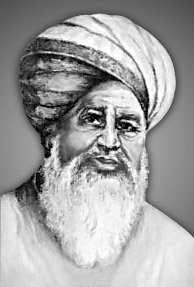
Haji Shariatullah (1781-1840), the visionary founder of the Faraizi Movement.
Born in Faridpur, Bengal, Haji Shariatullah spent twenty years (1799-1818) in Makkah, where he studied religious doctrines. Upon his return, he was shocked by the state of Bengali Muslims, who had absorbed many un-Islamic local customs and were largely ignorant of the fundamentals of their faith.
He launched his reform movement around a simple, powerful idea: a return to the 'Faraiz'—the obligatory duties of Islam.
The movement's core tenets were:
- Emphasis on Faraiz: Strict observance of the five pillars of Islam.
- Tawhid (Monotheism): A relentless attack on all forms of
shirk(polytheism) andbid'at(sinful innovations). This included condemning the worship of saints and shrines, as well as participation in Hindu festivals. - Social Equality: A radical assertion of the equality of all Muslims, which directly challenged the caste-like distinctions between the
ashraf(elite) andatrap(lower classes) prevalent in Bengali Muslim society. - Declaration of Dar-ul-Harb: Shariatullah declared British-ruled India to be a Dar-ul-Harb (Abode of War), where the full rites of congregational Friday and Eid prayers were not obligatory until Muslim political power was restored. This was a significant political statement, effectively a doctrine of non-cooperation with the colonial system.
Initially a purely religious movement, it quickly entered the economic sphere. Shariatullah directed his followers to stop paying the illegal abwabs and taxes levied by Hindu zamindars for religious festivals like Durga Puja. This direct challenge to the economic interests of the landed elite marked the beginning of a long and bitter conflict.
The Organizer: Dudu Miyan and the Agrarian Struggle
After Haji Shariatullah's death in 1840, the leadership passed to his son, Muhsinuddin Ahmad, popularly known as Dudu Miyan. While his father was the ideological founder, Dudu Miyan was the master organizer who transformed the movement from a religious reform society into a well-knit, militant agrarian force. He famously declared:
"The earth is God’s and that no one has a right to occupy it as an inheritance, or levy taxes upon it."
This simple slogan was a direct ideological assault on the entire zamindari system established by the Permanent Settlement. Under Dudu Miyan's leadership, the movement's focus shifted decisively towards protecting peasants from the oppression of zamindars and indigo planters.
To achieve this, he established a sophisticated parallel administrative structure. The video below explains this three-tier system in detail.
Faraizi Movement | Haji Shariatullah |
This video from CSS Knowledge Inn provides a clear and structured breakdown of Dudu Miyan's organizational hierarchy, a key aspect for exam answers.
Watch the segment explaining the Faraizi organizational structure from the discussion of the volunteer corps and local government. Focus on the two main objectives and the three-tier Khilafat system: the Gaon Khalifa, the Superintendent Khalifa, and the Upara Khalifa.
As the video explains, Dudu Miyan's organization had two primary goals:
- Protecting the Peasantry: Achieved through a volunteer corps of
lathials(clubmen) who defended Faraizi villages from the zamindars' enforcers. - Securing Social Justice: Implemented through a parallel government and judicial system.
This Khilafat system was a hierarchy of leadership that operated independently of the colonial state, settling disputes and administering justice within the Faraizi community. It effectively created a state within a state, collecting contributions, dispensing justice, and mobilizing the peasantry for collective action.
Confrontation and Impact
Under Dudu Miyan, the Faraizis engaged in organized non-cooperation, systematically refusing to pay illegal taxes. When zamindars resorted to violence, the Faraizis retaliated with their trained lathials.
[PDF] Faraizi Movement and Zamindars of Nineteenth Century Bengal
This paper details the confrontations and highlights the movement's social and political impact.
First, read the subsection "Setting of the Faraizi Movement" to understand how the Faraizi ideal of social equality attracted the lower classes and antagonized the Muslim elite. Then, jump to the section "Faraizi Action Plan: Violence" and read about the campaigns against the oppressive Ghose and Sarkar families. Notice how these successful confrontations cemented Dudu Miyan's status as a champion of the poor.
The confrontations with the zamindars of the Ghose and Sarkar families are prime examples of the Faraizi method. After enduring extortion and torture—including the imposition of a "beard tax"—Dudu Miyan led his followers in organized attacks that forced the zamindars to cease their oppressive practices. These victories galvanized the peasantry, and the movement grew to an estimated 80,000 followers.
The zamindars and British indigo planters retaliated by filing numerous false lawsuits against Dudu Miyan, leading to his frequent arrest. Despite this, the movement's grassroots organization ensured its resilience.
Socio-Religious and Political Impact:
The Faraizi Movement left a deep and lasting legacy:
- Empowerment of the Oppressed: It was one of the first movements in the subcontinent to successfully organize the rural masses, giving the downtrodden Bengali peasants a sense of dignity, solidarity, and the power to resist their oppressors.
- Political Awakening: It created a profound political and rights consciousness among the Muslim peasantry, linking their economic grievances directly to their religious identity. This laid the groundwork for future political mobilization in Bengal.
- Religious Revival: It succeeded in purging many un-Islamic customs and instilled a greater awareness of and adherence to Islamic tenets among the rural population.
- A Model of Resistance: By establishing a parallel administration and successfully challenging the authority of the zamindars and the colonial state, it provided a powerful model of populist, faith-driven resistance.
Although the movement declined after Dudu Miyan's death in 1862 due to a lack of comparable leadership and intensified British suppression, its spirit lived on. It had irrevocably changed the political landscape of Bengal.
Conclusion
The Faraizi Movement was a complex phenomenon—simultaneously a religious purification movement, an agrarian rebellion, and a nascent political struggle.
Key Takeaways:
- Origins: The movement was born out of the severe economic exploitation under the Permanent Settlement and a desire to purify Islamic practices in Bengal.
- Leadership: Haji Shariatullah provided the ideological foundation, while his son Dudu Miyan transformed it into an organized, militant force for peasant rights.
- Methods: It used religious ideology for mobilization, establishing a parallel government (Khilafat system) and a defense force (
lathials) to challenge the authority of zamindars and the colonial state. - Impact: It fostered a powerful sense of political and religious consciousness among the Bengali Muslim peasantry, empowered them to resist oppression, and left a lasting legacy of populist activism.
The Faraizi Movement demonstrates how the broader theme of Muslim revival, which we began discussing with Shah Waliullah, took on a unique, grassroots character when intertwined with the harsh economic realities of colonial rule.
In our next lesson, we will explore another major 19th-century movement that emerged in response to British rule: the Deoband Movement. We will see how, in contrast to the Faraizis' agrarian activism, the Ulema at Deoband chose to preserve Muslim identity through the establishment of a vast network of religious seminaries, offering a different strategy for navigating the challenges of the colonial era.